
The Unexpected Value of Family Traditions: My Story
Family traditions have a way of becoming our most treasured memories way before we realize we’re creating them. The ordinary moments can quietly become the memories your children carry with them for a lifetime. Discover the value of family traditions that transform ordinary moments into unforgettable memories for generations to come.
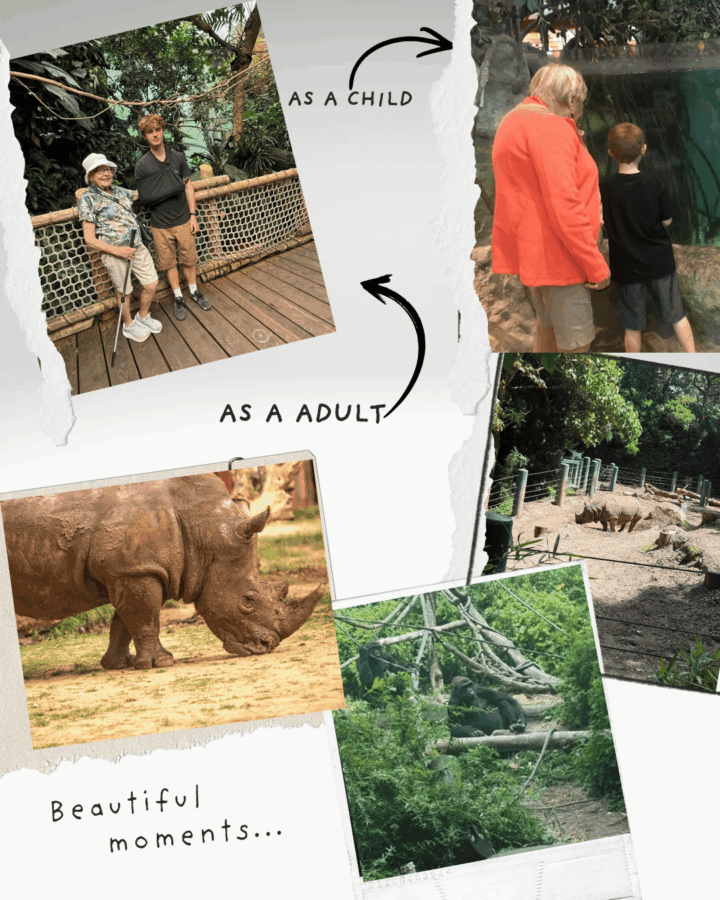
Several weeks ago, my son surprised me and asked if we could go to the zoo with Grandma and I. He leaves for college in several weeks.
He’s eighteen.
He didn’t ask to to to the theme park. Or a concert. Not a day at the lake with friends. He wanted to spend the day at the zoo—the same zoo we visited countless times when he was little. The place where we celebrated birthdays, packed peanut butter sandwiches, raced to see the elephants first, and ended every trip with ice cream before the drive home.
So this week my mom, my son, and I spent the day wandering paths we once knew by heart. We stood in front of the same lion exhibit. Walked the same winding trail past the aviary. Even found the same boat near the penguins where Alex remembered playing on. We also found the same benches we use to take a moment to rest when my boys feet didn’t reach the ground.
For a few precious hours, time folded in on itself. I wasn’t just looking at my eighteen-year-old son. I was catching glimpses of the little boy who used to grab my hand and pull me toward the giraffes with wide-eyed excitement. My mom wasn’t just “Grandma.” She was the younger woman who helped create those afternoons without realizing they would someday become treasured family history.
It struck me that the day wasn’t really about the animals.
It was about returning to a place where love had quietly accumulated over years of ordinary moments. When my older son caught wind that we were going, he wanted to go too!
Key Takeaways
- Family traditions create cherished memories from ordinary moments that might seem routine at the time.
- Simple activities like zoo visits or pizza nights often become the most treasured traditions.
- Research shows the value of family traditions lies in strengthening relationships and enhancing wellbeing over time.
- Engaging in these traditions helps children feel a sense of belonging and creates lasting emotional bonds.
- Prioritizing ordinary moments fosters connection, as they often become the memories your children will want to relive later.
The Unexpected Truth About Family Traditions: The Memories That Last a Lifetime
That’s the remarkable thing about family traditions. They rarely feel extraordinary while you’re living them. They’re built one Saturday morning, one holiday recipe, one annual camping trip, one bedtime story, one zoo visit at a time. And then, years later, they become the memories your children carry into adulthood—the places, people, and rituals they long to revisit when life begins to change.
As parents, we often wonder if the little things matter. They do. More than we realize. Long after the toys are gone and the schedules are forgotten, the traditions we create become the threads that keep a family connected across generations.
Sometimes the greatest gift we give our children isn’t something we buy. It’s a memory they want to come back to eighteen years later.
Why Family Traditions Pay Off Later, Often When You Least Expect It
We never called it a tradition. The trips to the zoo was just something we did together often.
Zoo days weren’t planned events. They were just part of being our family. That’s usually how traditions start: quietly, without a name, built by nothing more than doing the same thing enough times that it becomes part of who you are.
The reward for that ordinary repetition doesn’t usually show up right away. It shows up later, and it can genuinely surprise you.
What Science Says About The Importance Of Traditions
- A 50-year review published by the American Psychological Association found that family routines and rituals are linked to marital satisfaction, teens’ sense of personal identity, academic achievement, and stronger family relationships overall.
- The Institute for Family Studies puts it simply: traditions help kids make sense of life. They create a sense of belonging and predictability that kids carry with them into how they build their own adult lives.
- And the effects don’t stop at childhood. A study on family rituals and subjective wellbeing found that rituals established early on kept predicting wellbeing years later, well into college and adulthood.
I didn’t build zoo days as a strategy. I built them because they were fun, and free, and easy on a Tuesday. Eighteen years later, on the edge of leaving for college, that ordinary habit is the exact thing my son asked for, on his own, without being prompted.
That’s what a tradition actually does. You rarely see its value while you’re building it. You see it years later, when it turns out to be the thing your almost-grown child wants before everything changes.
Don’t Underestimate the Ordinary Time With Your Children
If there’s one thing I’ve learned as a parent, it’s this: don’t underestimate the ordinary. You don’t need extravagant vacations or expensive experiences to create the memories your children will treasure forever. The traditions they remember most are often the simplest ones—repeated year after year with the people they love.

Some of the most meaningful family traditions can be as simple as:
- Friday night pizza and a family movie
- A special birthday breakfast with pancakes and candles
- An annual trip to the zoo, pumpkin patch, or apple orchard
- Sunday morning walks or bike rides
- Camping or a beach trip every summer
- Decorating cookies together every Christmas
- A yearly family game night tournament
- Stopping for ice cream after the first day of school or a big game
- Reading the same holiday book together every year
- Volunteering together as a family
- Taking a family photo in the same spot every year
- Celebrating small wins with a favorite meal or dessert
- Having one-on-one “date days” with each child
- Writing notes or letters to each other on birthdays or graduations
The beauty of family traditions isn’t in how elaborate they are—it’s in the consistency. These small rituals become the heartbeat of your family’s story.
Years from now, your children probably won’t remember every toy they received or every perfectly planned vacation, but they’ll remember how you made them feel. They’ll remember the laughter around the dinner table, the songs you sang in the car, and the traditions they couldn’t wait to experience each year. So create them. Protect them. Repeat them.
One day, when your children are grown, you may be surprised to find that those ordinary traditions became the memories they wanted to relive all along.
Why Revisiting Memories With Your Grown Kids Matters Just as Much
Nostalgia used to get a bad reputation, as if looking backward meant you weren’t moving forward.
Current psychology says the opposite.
- The American Psychological Association reports that nostalgic reflection measurably boosts wellbeing, lowers anxiety, and increases feelings of meaning and social connection.
- Research from the Institute for Family Studies found that when people feel nostalgic, they overwhelmingly think of family and close relationships first. Nostalgia, it turns out, is a spotlight pointed at what matters most.
- A study in Personality and Social Psychology Bulletin found that nostalgia actively predicts relationship satisfaction over time, and helps people feel more loved, supported, and socially confident.
- And here’s the part that matters most, whether your kids are eight or heading off to college: fond, secure memories, especially of time spent with parents, are linked to better health and lower rates of depression well into adulthood.
A tradition you keep returning to doesn’t just feel nice. It reinforces the exact foundation that helps our kids carry resilience into whatever comes next.
Why Stepping Away From “Normal Life” Matters
For a few hours, there was no laundry, no calendar, no phone buzzing with reminders. Just animals, sunshine, and each other.
That break from routine isn’t just a nice feeling. It’s doing something.
Psychology Today notes that stepping outside our routines, even briefly, restores a sense of freedom and curiosity that daily life tends to wear down.
The American Psychological Association reports that stepping away from responsibilities lowers cortisol, improves focus, and helps prevent burnout. Those benefits apply just as much to a family tradition as they do to a real vacation.
Then there’s the wonder factor.
A 2025 clinical trial published in Scientific Reports found that experiencing awe, the kind you feel watching a giraffe stretch for leaves or an elephant amble by, measurably reduced depressive symptoms and boosted wellbeing.
Put wonder and a break from routine together with the people you love most, and you get something rare: a shared escape that becomes a shared memory, and eventually, a tradition.
Start (or Keep) the Tradition, No Matter Their Age
If you have a place like this, a zoo, a lake, a diner, a hiking trail, anywhere you spent countless ordinary days together, I want to gently push you to go back.
Not just with your six-year-old. With the teenager. The one packing for college. The one who’s already gone.
You never know, while you’re in it, which ordinary habit is quietly becoming the tradition your child will ask for one day. So here’s what I’d suggest, from a mom who did it this week and is still smiling about it:
- Say yes to the small, ordinary stuff. The thing that becomes a tradition rarely looks important at the time. It just looks like a normal Tuesday.
- Bring whoever was there the first time, if you can. Having my mom with us made the whole afternoon feel full-circle.
- Leave your phone in your bag. Take a few photos, then put it away. The research on nostalgia only works if you’re actually present.
- Talk about what you remember. Tell them the stories they were too young to remember themselves.
- Don’t force meaning onto it. The ordinary repetition, done without fanfare, is exactly what turns a place into a tradition.
The Takeaway
I didn’t know that ordinary Tuesdays at the zoo would turn into something my son would ask for before leaving for college.
But they did.
Family traditions are usually invisible while you’re building them. You don’t announce them. You don’t plan them. You just keep showing up. And then one day, your almost-grown child asks for one more afternoon of the thing you never realized mattered so much.
So here’s my real point: say yes to the small, ordinary things. You never know which one becomes the tradition your child holds onto.
If this resonated, I’d love to hear about the tradition your own kids would ask for. Drop it in the comments below.