11 Surprising Health Benefits of Honey: What Science Says
I used to think of honey as the thing you stirred into tea when you had a sore throat. Sweet, comforting, a little old-fashioned. Then I started reading the research, and honestly, I couldn’t stop. I have always appreciated how the busy bees can create such a masterpiece. Honey may beat cough syrup and even improve cholesterol. Here are 11 surprising, research-backed benefits of honey.
Scientists are studying honey for everything from memory to cholesterol to burns, and some of what they’re finding is genuinely surprising. The newest research on honey and Alzheimer’s is the part I’m most excited about. I’ve also found a couple of popular claims that don’t hold up, and I’ll tell you which ones.
Here are 11 health benefits of honey backed by research, with a link to every study so you can read it yourself. The information shared in this article is for educational purposes only and is not intended as medical advice.
1. Honey May Help Protect Your Brain From Alzheimer’s
This is the newest frontier in honey research, and the one I find most hopeful. Honey is rich in plant compounds called polyphenols and flavonoids, and researchers are finding they may protect brain cells in several ways at once.
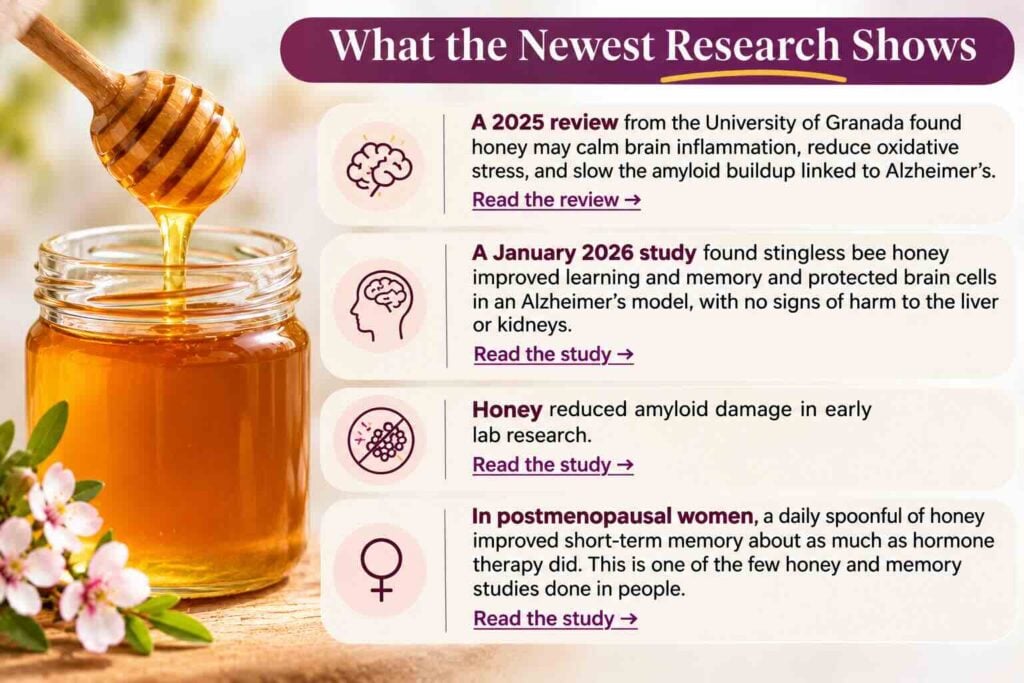
What the Newest Research Shows
- A 2025 review from the University of Granada found honey may calm brain inflammation, reduce oxidative stress, and slow the amyloid buildup linked to Alzheimer’s. Read the review
- A January 2026 study found stingless bee honey improved learning and memory and protected brain cells in an Alzheimer’s model, with no signs of harm to the liver or kidneys. Read the study
- Manuka honey reduced amyloid damage in early lab research. Read the study
- In postmenopausal women, a daily spoonful of honey improved short-term memory about as much as hormone therapy did. This is one of the few honey and memory studies done in people. Read the study
I want to be straight with you: most of this research is still in the lab and in animals, and honey isn’t a treatment for Alzheimer’s. But serious scientists are taking it seriously, and that gives me hope.
Watch Out for “Brain Honey” Scams
Because this research is exciting, scammers are cashing in. In 2026, fake ads for products like “Brain Honey” and “Mind Boost” claimed to reverse dementia, often with made-up celebrity endorsements. Forbes reported there’s no evidence any honey product treats Alzheimer’s. If an ad promises to reverse memory loss, it’s a scam.
I dug into every study in my full post: Honey and Alzheimer’s: What the Research Shows.
2. Honey Can Improve Blood Sugar and Cholesterol (When It Replaces Sugar)
This one stopped me in my tracks. University of Toronto researchers found that honey lowered fasting blood sugar, LDL (“bad”) cholesterol, and triglycerides, and raised HDL (“good”) cholesterol. Read the research
The catch: the benefits came from swapping honey for other sugars, not adding it on top. Raw honey and single-flower honeys like clover worked best.
3. Honey May Support a Healthier Liver
The same Toronto research found honey improved a marker of fatty liver disease, a condition that becomes more common for women after menopause. Read the research It’s an early finding, but an interesting one.
What the research suggests
Honey contains antioxidant compounds, including polyphenols and flavonoids. Laboratory research has found that some varieties can protect cultured liver cells against chemically induced oxidative damage. That provides a possible biological explanation for a benefit, but protecting cells in a laboratory does not establish that eating honey improves liver health in people.
4. Honey Calms a Cough Better Than Some Cough Medicines
Grandma was right. Oxford researchers found honey eased cough and cold symptoms better than usual care, including some over-the-counter cough syrups and antihistamines. They called it “more effective and less harmful.” Read the research
5. Honey Helps the Whole Family Sleep Through a Cough
Here’s one for the moms and grandmas. A study in Pediatrics found a spoonful of honey at bedtime eased nighttime coughing in children ages 1 and up, and both the kids and their parents slept better. Read the research
Important: never give honey to a baby under 12 months old, because of the risk of infant botulism.
6. Honey Helps Heal Minor Burns
Honey has been used on wounds for thousands of years, and a Cochrane review found it may help mild to moderate burns heal faster than some conventional dressings.
Wound healing—with medical-grade honey: Specially prepared medical-grade honey may help some wounds and burns heal. This is a topical medical use, not a benefit of eating honey.
Read the research The same review didn’t find clear benefits for cuts or surgical wounds. For real wound care, use medical-grade honey and check with your doctor. Don’t spoon honey out of the kitchen jar onto a burn.
7. Honey Eases Mouth Sores During Cancer Treatment
Radiation and chemotherapy often cause painful mouth sores. Research shows honey can help prevent the worst sores and reduce pain during treatment. Read the research If you or someone you love is in treatment, this is worth asking the oncology team about.
8. Honey Helps Your Yogurt’s Probiotics Survive
University of Illinois researchers found that a tablespoon of clover honey stirred into yogurt helped more of its good bacteria survive digestion. Read the research If you eat yogurt for gut health, honey is the smarter sweetener to add.
9. Honey May Be Good for Your Bones
This one connects to my favorite topic. A review of the research found honey’s antioxidants protected bone in animal studies and called it a “potential functional food for bone health.” Read the review It’s still early, and nothing replaces the exercises that build bone density, but it’s one more reason to choose honey over sugar.
- May help slow bone breakdown. Some laboratory studies suggest honey’s antioxidants may reduce the activity of osteoclasts, the cells responsible for breaking down bone tissue.
- May support bone-building cells. Honey contains polyphenols and flavonoids that researchers are studying for their potential effects on osteoblasts, the cells that build new bone.
- May reduce oxidative stress. Oxidative stress can contribute to bone loss, particularly as estrogen levels decline after menopause. Honey contains antioxidants that may help counter this process.
- May support calcium absorption. Some animal research suggests certain sugars and compounds in honey could improve calcium absorption, although this hasn’t been established in humans.
- May help regulate inflammation. Chronic inflammation can contribute to bone breakdown. Honey contains compounds with anti-inflammatory properties, but we don’t yet know whether eating honey improves bone density.
10. Honey Fights Harmful Bacteria
Honey’s natural antibacterial power is well studied. In lab research, manuka and clover honey both stopped the growth of bacteria linked to gum disease. Read the study But honey is still sticky and sugary, so brush after eating it. It doesn’t replace your toothbrush.
11. Honey Is Natural Workout Fuel
A 2025 study found honey fueled long endurance workouts just as well as a store-bought sports carbohydrate product. Read the study For a long hike, bike ride, or running a track meet. I used to carry a cute bear filled with honey when I ran track in high school. Apparently, a little honey is a real-food option.
Which Honey Is the Best Choice for Your Health?
Here’s a simple comparison chart you can use in your Gal Pal Lifestyle blog post.
| Honey Type | Why Choose It? | What to Know |
|---|---|---|
| Raw Buckwheat Honey | Best for antioxidant activity | Rich in antioxidant compounds. Laboratory studies also show antibacterial activity, but human health benefits aren’t established. |
| Raw Wildflower Honey | Best for everyday use | Minimally processed, versatile, and often contains beneficial plant compounds. Antioxidant levels vary. |
| UMF-Certified Mānuka Honey | Best for verified quality | Known for distinctive antibacterial properties and quality testing. Expensive, with limited evidence of added benefits when eaten. |
Is Expensive Mānuka Honey Worth It?
For everyday use, probably not. If you’re adding honey to yogurt, oatmeal, or tea, raw wildflower or buckwheat honey is a sensible choice.
Mānuka honey is especially interesting for its antibacterial properties, but the evidence supporting medical-grade honey in wound care doesn’t mean eating mānuka honey will treat infections, prevent Alzheimer’s, or improve gut health.
Gal Pal Tip: Choose honey based on quality, taste, and how you’ll use it—not expensive health promises. And remember, even antioxidant-rich honey is still a source of added sugar. The suggested honey below is available on Amazon. The affiliate links to make the shopping easier for you.
HIGHLY RATED HONEY BRANDS ON AMAZON
FOUR HONEY BRANDS WORTH TRYING
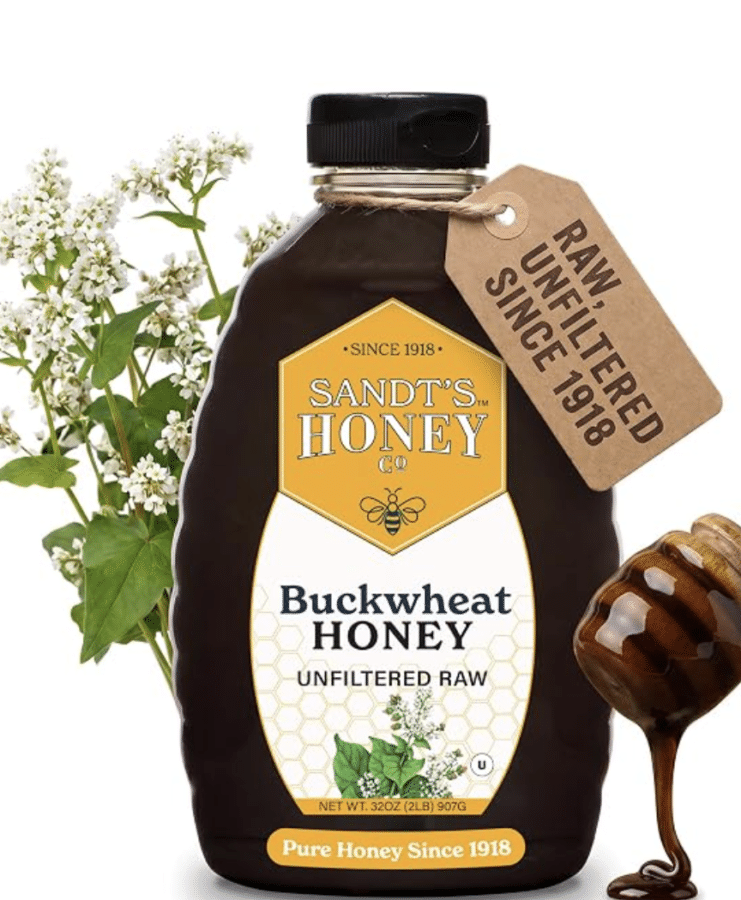
Buckwheat Honey | Natural Raw Unfiltered Honey
Made with 100% pure unfiltered honey gathered from a variety of blooming buckwheat flowers for a naturally rich, floral flavor with a smooth, golden sweetness
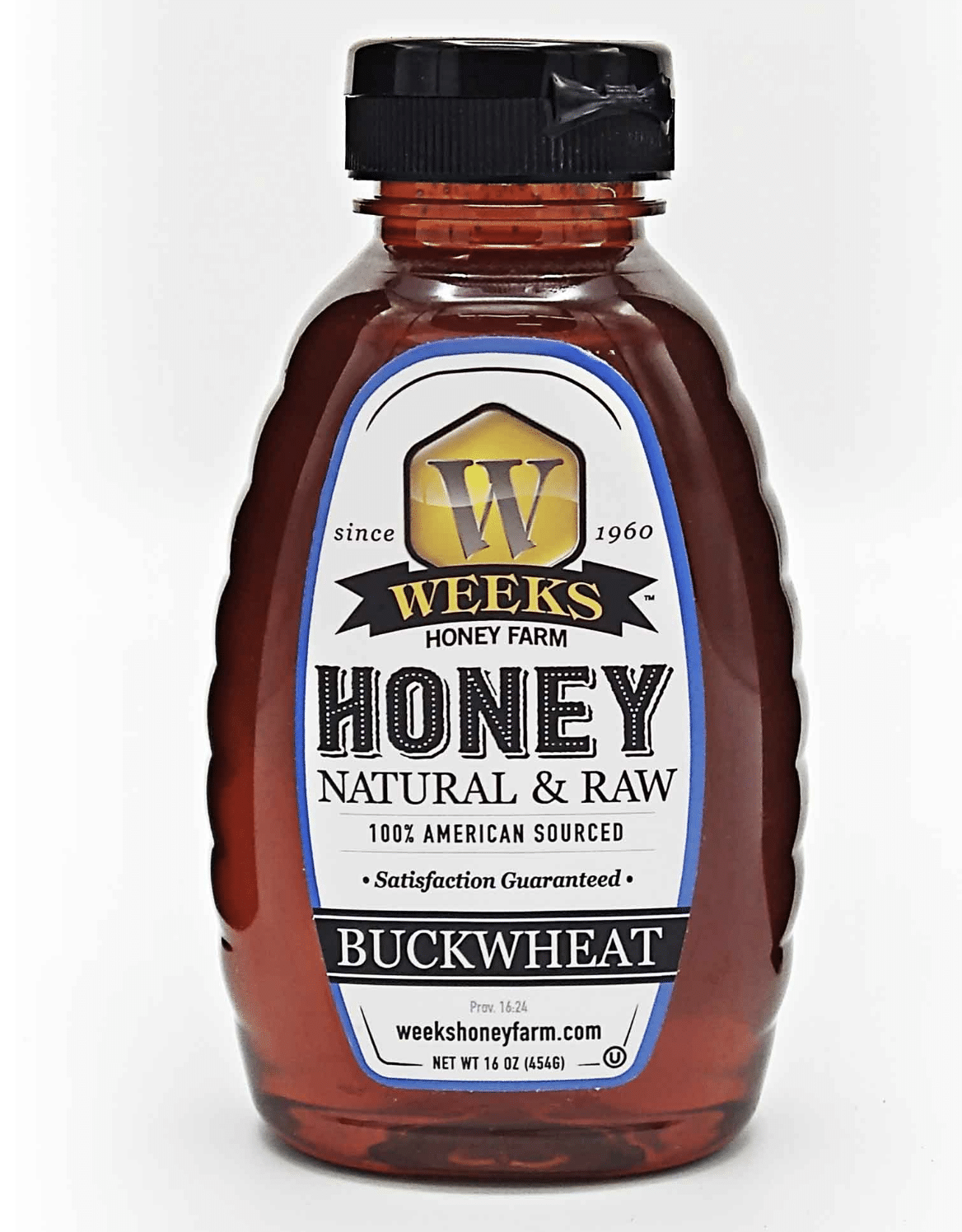
Weeks Honey Farm Buckwheat
Weeks Honey Farm offers raw, unfiltered buckwheat honey with a robust flavor. A good option for anyone who prefers darker honey.
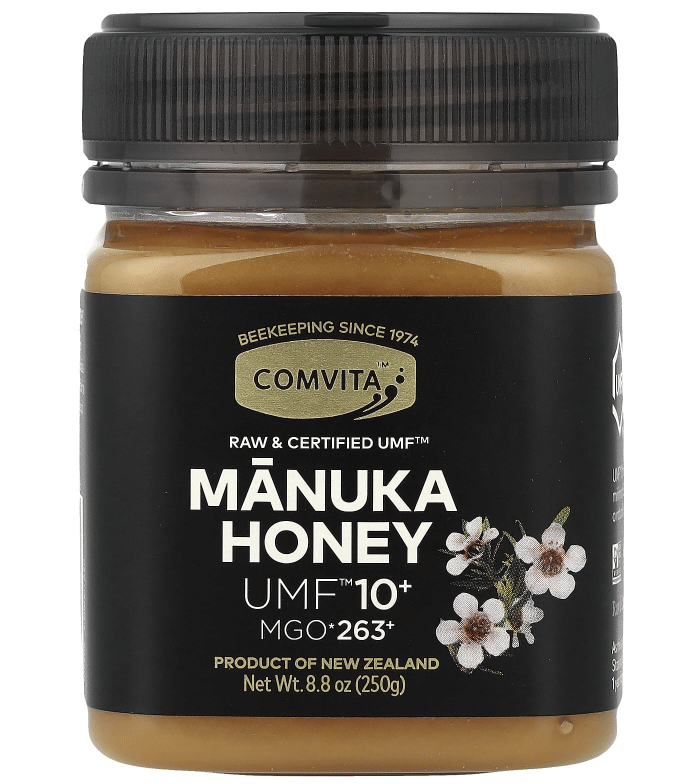
Comvita UMF 10+ Mānuka
Comvita offers UMF-certified New Zealand mānuka honey, with testing for authenticity and quality. UMF 10+ is a reasonable grade to consider without paying for the highest ratings.
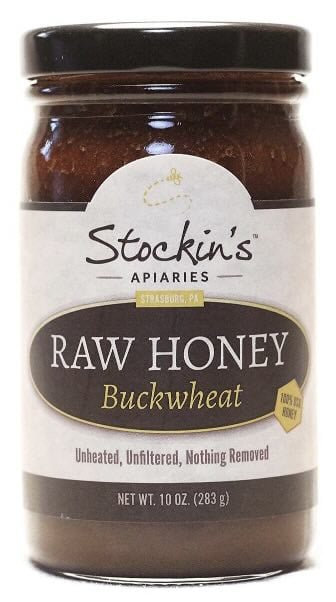
Kauffman Orchards Buckwheat
Kauffman Orchards offers raw buckwheat honey sourced from Washington State. Especially appealing for a Pacific Northwest-focused recommendation.
Bonus: Dark Honey Has the Most Antioxidants
Not all honey is equal. The darker the honey, the more antioxidants it tends to carry. Buckwheat honey has outscored even pricey manuka in lab comparisons. 2018 study · 2024 study It’s my top pick: dark, affordable, and easy to find.
Myth: Honey Clears Up Acne
Honey face masks are all over social media, but a trial of medical-grade honey for acne found no real benefit. Read the study Enjoy a honey mask if you like how it feels. Just don’t expect it to clear your skin.
How to Choose the Healthiest Honey
- Choose raw honey. Heat processing reduces honey’s benefits.
- Go dark. Buckwheat, chestnut, and forest honeys have the most antioxidants.
- Look for one flower on the label, like clover or buckwheat, rather than a vague “blend.”
- Buy local when you can and ask your beekeeper what the bees feed on.
How Much Honey Is Healthy?
Honey is still mostly sugar. A tablespoon has about 17 grams, and the American Heart Association suggests women keep added sugar to about 25 grams a day. The benefits above come from replacing sugar with honey, so think swap, not add.
Who Should Be Careful With Honey
- Babies under 12 months: never give honey, not even a taste.
- Diabetes or prediabetes: talk with your doctor first.
- GLP-1 medications: count honey as added sugar if you’re watching blood sugar.
- Bee or pollen allergies: check with your doctor before trying honey.
Frequently Asked Questions About Honey
Can honey help prevent Alzheimer’s?
Early research is encouraging. A 2025 review and a 2026 study suggest honey may protect brain cells, but most of this research is still in labs and animals, not people. Honey isn’t a treatment, and products claiming to reverse dementia are scams. See my full research breakdown.
Is honey healthier than sugar?
In several ways, yes. Raw honey carries antioxidants that sugar doesn’t, and replacing sugar with honey has been linked to slightly better blood sugar and cholesterol. It still counts as added sugar.
What is the healthiest type of honey?
Dark, raw honeys like buckwheat have the most antioxidants. Buckwheat is affordable and easy to find.
Does honey really help a cough?
Yes. Research found honey eased cough symptoms better than some over-the-counter medicines, and it helped children and their parents sleep better. Never give honey to babies under 12 months.
Does local honey help with allergies?
Probably not. The research shows local honey works about as well as a sweet placebo for most people.
How much honey should I eat a day?
Keep it to a spoonful or two, and use it in place of other sweeteners rather than in addition to them.
My Final Thoughts
Honey isn’t a miracle food, and anyone who says it is is probably selling something. But it’s so much more than “just sugar.” From the newest brain research to cholesterol, coughs, and burns, the science keeps finding reasons to keep a jar in the pantry. My plan is simple: swap the white sugar for raw, dark honey, keep a spoon handy for cold season, and keep watching the Alzheimer’s research. I’ll update you when the first human studies come in.
A Note About the Research
The information shared in this article is for educational purposes only and is not intended as medical advice. While emerging research suggests honey may offer potential health benefits, many findings are based on laboratory or animal studies, and more human research is needed. Honey is not a proven treatment or prevention for Alzheimer’s disease or other medical conditions. It is also a source of sugar and should be enjoyed in moderation. Always consult your healthcare provider before making changes to your health routine or treatment plan.