Why and How to Plant a Vanilla Strawberry Hydrangea Shrub
One Of My Favorite Summer Shrubs- A Show Stopper!
On the bottom, blushing pink in the middle, and deep red at the top — all on the same plant, at the same time — you’ve met a Vanilla Strawberry hydrangea. It’s the one guest at every garden party who nobody can stop asking about, and it’s been one of my favorite additions to my own yard for exactly that reason.
This guide is for anyone who’s fallen for this plant at the nursery (or in a friend’s yard, like I did) and wants the real answers before you buy: what it actually needs to thrive, what it costs, how to keep it blooming, and how to fix it if something’s going wrong.
It’s official botanical name is Hydrangea paniculata ‘Renhy’ — “Vanilla Strawberry” is the trademarked name you’ll see on the plant tag — and that distinction actually matters more than you’d think, so we’ll get into it below. It’s one my favorite hydrangea varieties.
Key Takeaways
- Vanilla Strawberry is a panicle hydrangea (Hydrangea paniculata ‘Renhy’), hardy in USDA zones 3–8, that reaches about 6 to 7 feet tall and 4 to 6 feet wide at maturity.
- Its blooms open white in midsummer, then shift to pink and finally a deep red or burgundy by early fall — all on the same panicle at once, which is what makes it look so dramatic.
- Unlike bigleaf hydrangeas, its color comes from natural aging, not your soil pH — so you don’t need to fuss with soil acidifiers to “turn it pink.”
- It wants at least a half day of sun, well-drained soil, about an inch of water a week, and a single dormant-season pruning — it’s genuinely one of the lower-maintenance flowering shrubs you can plant.
- The ‘Renhy’ cultivar is patent-protected (US Plant Patent 20,670), and that patent is set to expire in 2027 — worth knowing if you’re wondering about propagating your own.

Table of contents
- One Of My Favorite Summer Shrubs- A Show Stopper!
- Key Takeaways
- Quick Overview of Vanilla Strawberry Hydrangea
- Product Details (Vanilla Strawberry)
- Hydrangea Paniculata Overview
- Hydrangea Paniculata ‘Vanilla Strawberry’
- Light Requirements for Vanilla Strawberry Hydrangea
- Soil Recommendations for Hydrangea Paniculata
- Watering Guidance for Vanilla Strawberry- Easy Peasy
- Temperature and Humidity for Hydrangea Paniculata
- Fertilizer and Feeding for Vanilla Strawberry Hydrangea
- Pruning Hydrangea Paniculata
- Where to Plant with Vanilla Strawberry Hydrangea
- What is the difference between a Strawberry Sundae and Vanilla Strawberry Hydrangea?
Quick Overview of Vanilla Strawberry Hydrangea
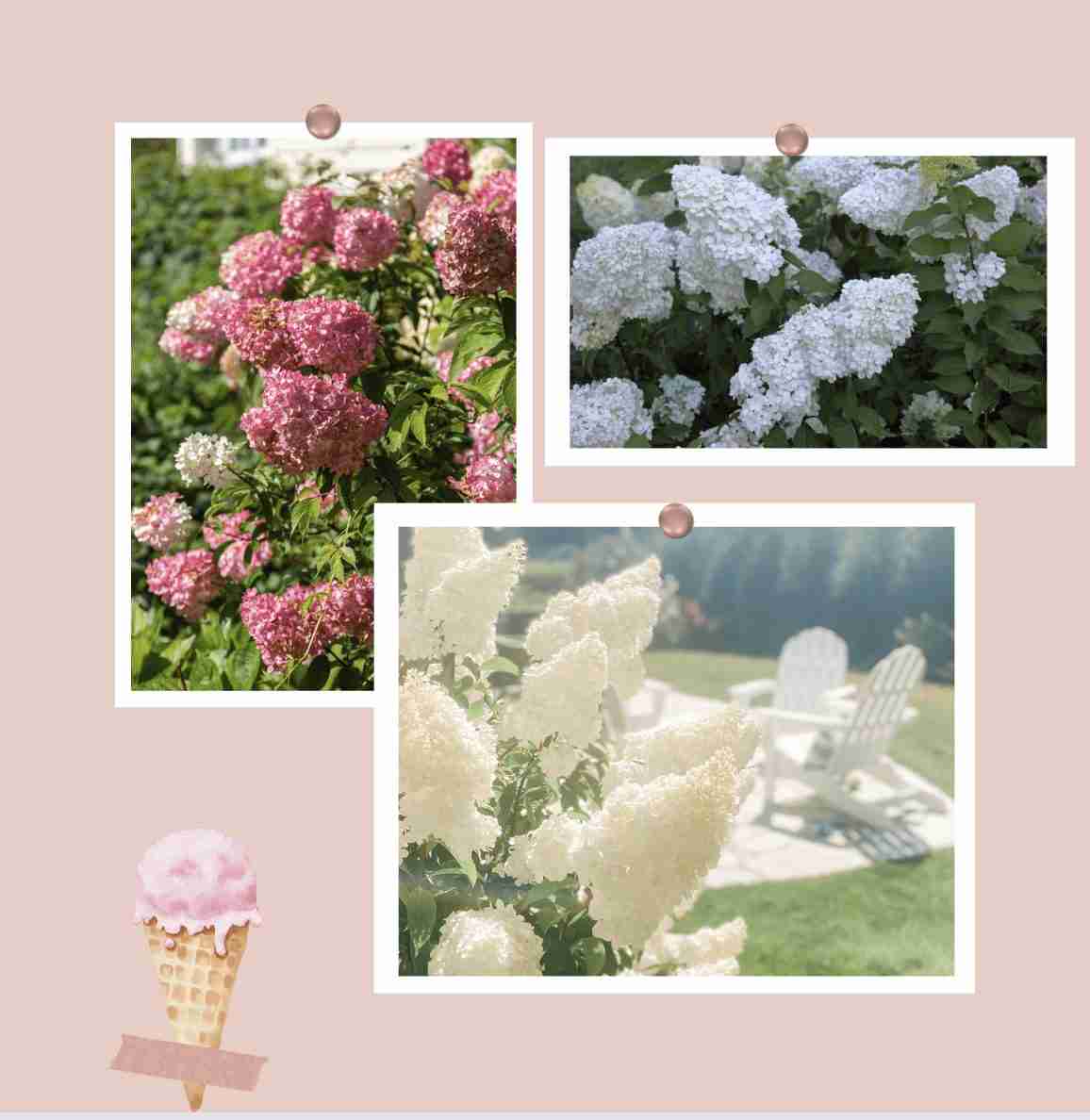
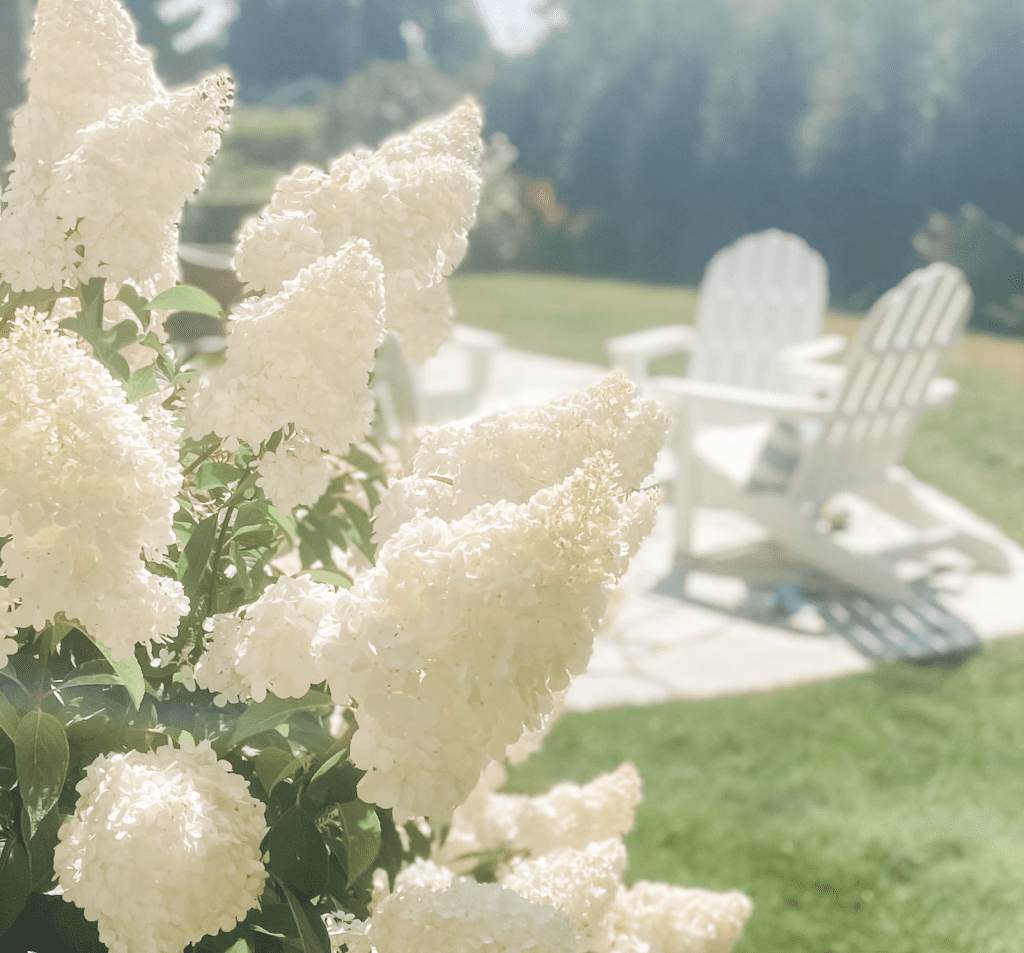
At a glance: this is a medium-to-large flowering shrub, roughly 6 to 7 feet tall and 4 to 6 feet wide once it’s established, that blooms from mid-summer through fall. The cone-shaped flower clusters — technically called panicles — open creamy white and gradually deepen to pink and then a rich strawberry-red, with all three colors often visible on the shrub at once.
It’s a workhorse in the landscape. Use it as a specimen plant near an entryway where you’ll see the color change up close, mass three or more together for a hedge with real presence, or tuck one into a mixed border where its long bloom season carries the show after spring perennials fade. It also holds up beautifully as a cut flower, fresh or dried, which is part of why it’s become such a favorite for anyone who likes bringing the garden indoors.
Product Details (Vanilla Strawberry)
If you’re shopping for one, here’s what to look for on the tag and what to expect to pay:
- Botanical name: Hydrangea paniculata ‘Renhy’
- Trademark name: Vanilla Strawberry™ (also sold under the First Editions® brand)
- Hardiness zones: USDA 3–8
- Mature dimensions: 6–7 feet tall, 4–6 feet wide
- Typical retail price range: roughly $25–35 for a quart-size young plant, $50–90 for a 3-gallon, and $150–250+ for a larger 5-gallon or tree-form specimen. Prices vary by region, retailer, and season.
Hydrangea Paniculata Overview
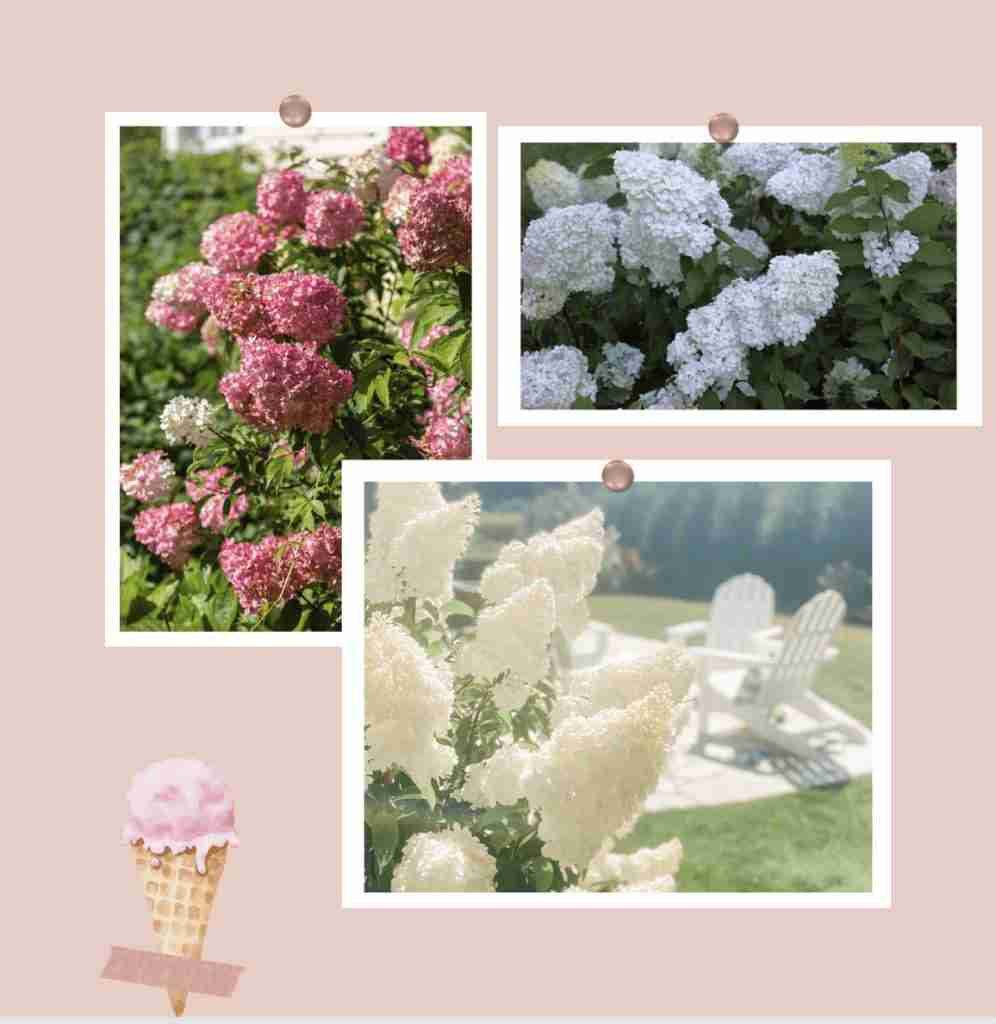
Vanilla Strawberry belongs to the panicle hydrangea family (Hydrangea paniculata), and if you’re comparing hydrangea types at the nursery, this is the detail that matters most: panicle hydrangeas grow their flower buds on new wood — meaning the growth the plant puts out that same spring — rather than on last year’s stems.
That single fact solves two of the most common hydrangea frustrations. First, it’s why panicle hydrangeas are so much more forgiving to prune than bigleaf (Hydrangea macrophylla) or oakleaf varieties, which bloom on old wood and will punish a badly timed pruning with a flower-free summer.
Second, it’s why panicle hydrangeas are dramatically more cold-hardy — a late frost that kills the bloom buds on an old-wood hydrangea barely fazes this one, since it hasn’t built those buds yet. If you’ve ever had a hydrangea that just refused to bloom no matter what you did, there’s a decent chance it was the wrong type for your climate, not something you did wrong.
Panicle hydrangeas also tend to be longer-lived and more drought-tolerant once established than their bigleaf cousins, and their upright, tree-like habit means they hold up in wind and rain better than the floppier mophead types.
Hydrangea Paniculata ‘Vanilla Strawberry’
This is where the cultivar earns its name. Each panicle opens a soft, creamy white, and over the following three to four weeks, the color moves through blush pink to a deep, saturated red — often with all three shades visible in the same cluster, and even in the same flower head, since the color develops from the base of the panicle upward. The stems themselves often take on a reddish tint as the season goes on, echoing the blooms above them.
Because the flowers are sturdy and long-lasting, Vanilla Strawberry is a favorite for both fresh arrangements and dried flowers — the papery texture that develops later in the season actually makes it dry beautifully, holding its color for months indoors.
A note on the name: “Vanilla Strawberry” is a registered trademark, not the plant’s official name. The botanical/cultivar name is Hydrangea paniculata ‘Renhy’ — “Vanilla Strawberry” is the marketing name assigned to it for retail sale (it’s part of Bailey Nurseries’ First Editions® plant brand). You’ll see both names used interchangeably on plant tags, but if you’re ever searching for detailed growing information or trying to verify you have the true cultivar, ‘Renhy’ is the name to search.
Light Requirements for Vanilla Strawberry Hydrangea
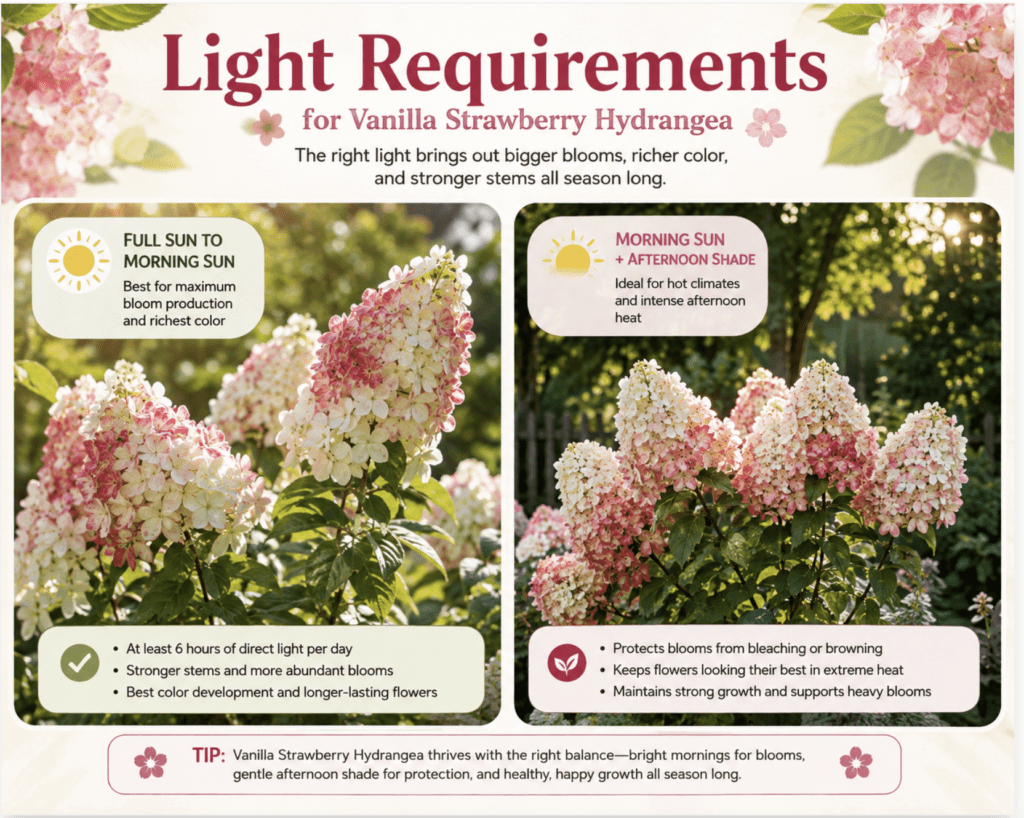
Give it full sun to morning sun for the best bloom production and the richest color development — ideally at least 6 hours of direct light a day. More sun generally means stronger stems, too, which matters on a shrub that gets top-heavy with blooms by late summer.
If you’re gardening somewhere with intense, prolonged afternoon heat (think much of the South or interior West), give it some relief from the harshest afternoon sun. A spot with strong morning light and light afternoon shade will keep the blooms from bleaching out or browning prematurely in extreme heat, without sacrificing flower production.
Soil Recommendations for Hydrangea Paniculata
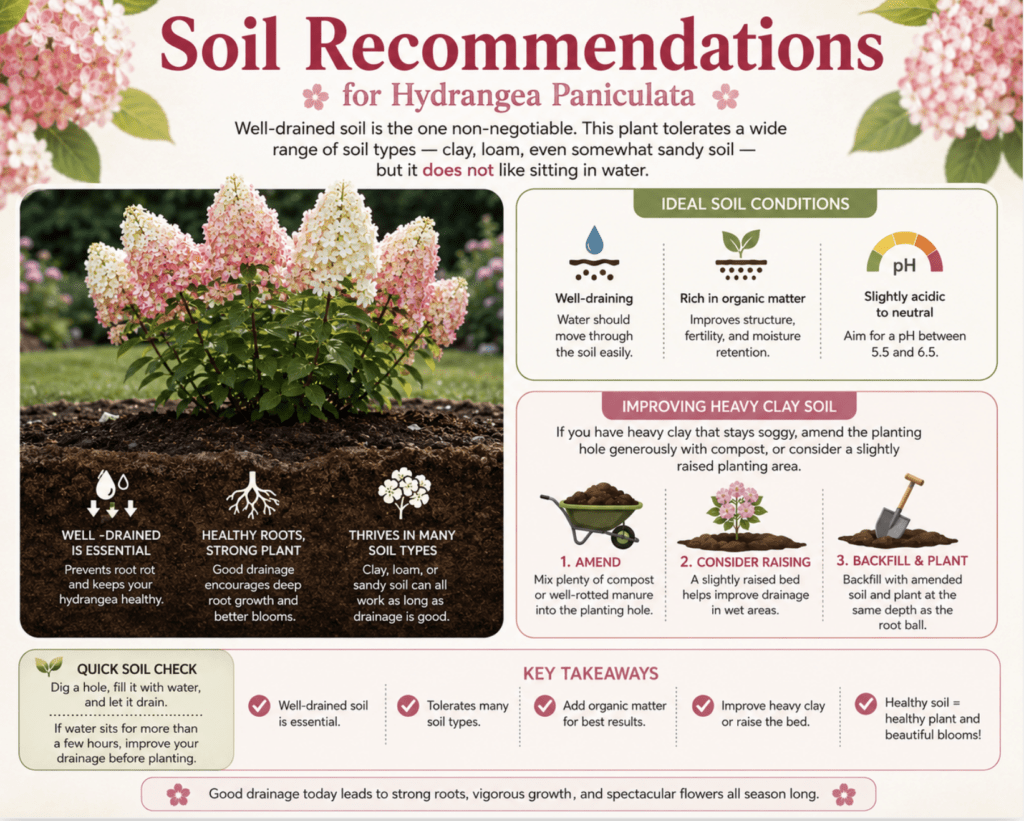
Well-drained soil is the one non-negotiable. This plant tolerates a wide range of soil types — clay, loam, even somewhat sandy soil — but it does not like sitting in water. If you have heavy clay that stays soggy, amend the planting hole generously with compost, or consider a slightly raised planting area.
A quick note that trips a lot of people up: unlike bigleaf hydrangeas, whose flower color shifts between pink and blue based on soil pH and aluminum availability, panicle hydrangea color is not pH-dependent. Vanilla Strawberry will move through its white-to-pink-to-red progression on schedule regardless of how acidic or alkaline your soil is — so there’s no need to test or amend your soil specifically for color. That said, a slightly acidic to neutral pH (somewhere around 6.0–6.5) is generally ideal for overall plant health, so it’s still worth a basic soil test if you’re establishing a new bed.
Watering Guidance for Vanilla Strawberry- Easy Peasy
Aim for about one inch of water per week as a baseline, whether that comes from rainfall or supplemental watering — a bit more for the first full growing season while the root system is establishing itself.
During hot, dry stretches, increase watering. Prolonged drought stress is one of the most common causes of blooms browning early or looking scorched, since the plant will sacrifice flower quality to protect itself. Once established (generally after year two), Vanilla Strawberry is reasonably drought-tolerant, but consistent moisture during bloom season will always give you the showiest flowers.
Temperature and Humidity for Hydrangea Paniculata
Vanilla Strawberry is hardy in USDA zones 3 through 8, which covers nearly the entire continental U.S. — it’s genuinely one of the more cold-tolerant flowering shrubs you can plant, thriving even in northern winters that would kill a bigleaf hydrangea’s flower buds outright.
Humidity is a mixed bag. The plant itself handles humid summers fine, but very humid, poorly ventilated planting sites raise the risk of fungal issues like powdery mildew or leaf spot. Give it decent air circulation — don’t crowd it against a wall or jam it between other shrubs — and avoid overhead watering late in the day, since wet foliage overnight is what invites fungal problems.
Fertilizer and Feeding for Vanilla Strawberry Hydrangea
A yearly top-dressing of compost in early spring is often all this plant needs — it’s not a heavy feeder. If your soil is poor or the plant seems sluggish, a slow-release, balanced fertilizer (something like a 10-10-10) applied in spring can help.
Whatever you use, stop fertilizing by mid-July. Feeding later than that encourages tender new growth that won’t have time to harden off before the plant goes dormant, which leaves it more vulnerable to winter dieback — especially in the colder end of its hardiness range.
Pruning Hydrangea Paniculata
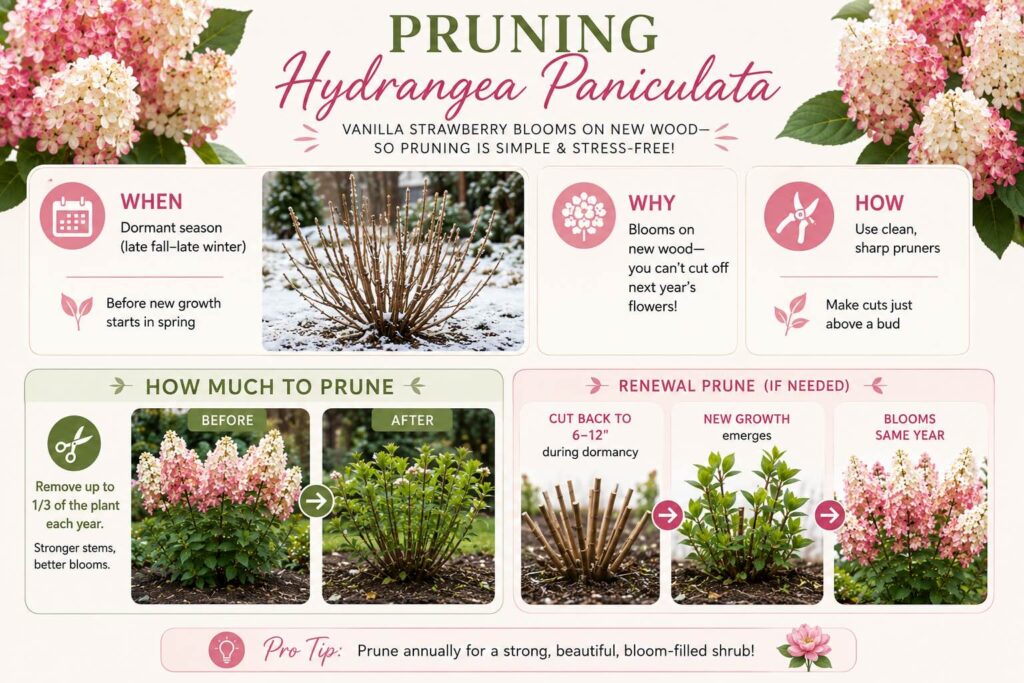
Because Vanilla Strawberry blooms on new wood, the plant is very forgiving about pruning — you genuinely cannot cut off next year’s flowers by pruning at the wrong time, which is the single biggest source of hydrangea anxiety for most gardeners. Prune during the dormant season, anytime from late fall through late winter, ideally before new growth starts to emerge in early spring.
Remove up to about a third of the plant’s overall growth each year to maintain a strong, well-shaped shrub with sturdy stems that can support the flower heads. If your plant has gotten leggy, overgrown, or floppy over a few seasons, you can do a hard renewal prune — cutting it back to 6–12 inches from the ground during dormancy — and it will rebound with vigorous new growth and bloom again that same year, just on a smaller scale for that first season.
Potting, Repotting, and Overwintering
Vanilla Strawberry does fine in containers, which is a great option if you’re short on garden space or want portable color on a patio. Start with at least a 15–20 gallon pot for a young plant, sizing up as it grows — container-grown shrubs will generally stay somewhat more compact than their in-ground counterparts.
Use a frost-proof container (glazed ceramic rated for freezing temps, or a quality resin/fiberglass pot) rather than thin plastic or unglazed terra cotta, which can crack when the soil inside freezes and expands. Container roots are far less insulated than roots in the ground, so even though the plant itself is hardy to zone 3, a potted specimen needs real winter protection — move it to a sheltered spot like against the house, in an unheated garage, or wrapped and grouped against other containers, especially anywhere colder than zone 6 or so.
Propagation and Notes for Hydrangea Paniculata ‘Renhy’
Relative Of The Classic Panicle Hydrangeas
The Strawberry Vanilla shrub is the relative of the classic peegee hydrangea. Panicle hydrangeas – also known as peegee hydrangeas. Peegee hydrangea is a popular type of Hydrangea paniculata, which takes the form of a shrub or a small tree.
It is one of the most popular and widely grown of the panicle hydrangeas, and it is also known as ‘Grandiflora.’ Peegee hydrangea is usually grown as an upright tree with pointy leaves; it can be trained to heights of up to 25 feet tall, but it is most often found growing at heights of 10 to 15 feet tall and 8 feet wide.
The Blooming Cycle Of Panicle Hydrangeas
The bold conical white flowers go through a captivating blooming process. The wonderful white panicles are a dense conical flower cluster. The texture of the blooms are more dense and sturdy than a typical mop head bloom.
The strawberry and cream hydrangea is yummy!The vanilla hydrangea bush flowers begin as a creamy white color and then turn pink. The pink color then turns to a strawberry red (or raspberry pink color) later in the season with the cooler night temperatures.
Since new flower heads continue opening into late summer, plants can exhibit all three color stages at any one time. The blooms are formed on red stems, too, making quite a contrast against the green leaves.
The Cone Shaped Hydrangea Blooms All Summer Long
Because Panicle Hydrangeas bloom on new growth, they typically flower normally even if the twigs have been wiped out by frost. Plant this shrub in a sunny, well-drained spot; some early afternoon shade is beneficial in hot southern regions. Prune in late winter or fresh spring.
The enormous cone-shaped strawberry vanilla hydrangea bush blooms form continuously all summer long, giving this shrub a multi-colored effect with bright-white, beautiful new blooms complementing reddish-pink blooms.
The unique rosy coloring lasts for several weeks; plus, this popular hydrangea variety also features showy stems with a coarse texture. This show-stopping shrub will grow in most areas of the country and is easy to care for.
The Best Time To Plant A Vanilla Strawberry
The two best times to plant ‘Vanilla Strawberry’ is in spring before rapid growth sets in, and in late autumn, just as this panicle hydrangea is going dormant. Choose a spot for strawberry vanilla hydrangea bush with rich, well-drained soil or add thick manure if the soil is insufficient. When planting, dig a hole that’s deep enough and wide enough for the root ball to sit in comfortably. Make sure the stem is at the same depth of soil as it was in its container.
Once planted, make sure you water your ‘Vanilla Strawberry’ hydrangea young plants. This hydrangea has average water needs and the more established the shrub, the less you need to worry about the watering. Depending on the size you’re starting with, expect your plant to begin blooming a year or two after planting. Pests and diseases are not typically a problem.
Fresh Cut Hydrangea Bouquets
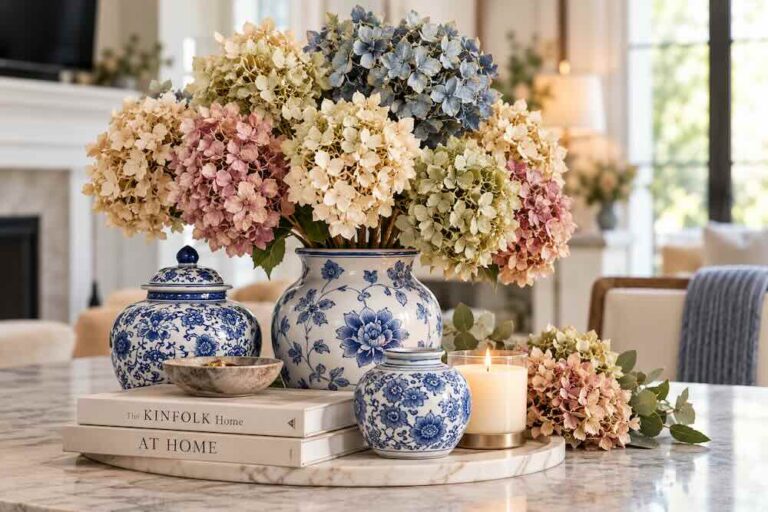
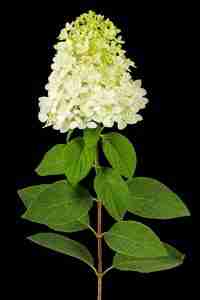
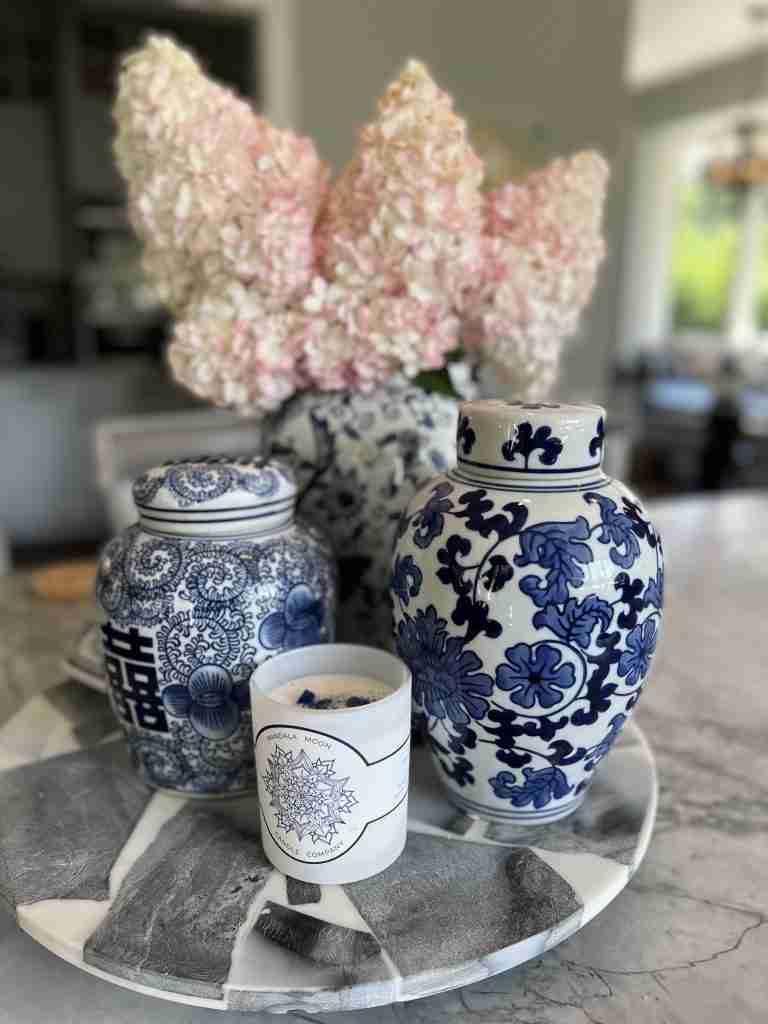
If you need another reason to plant this audacious shrub, the fresh cut pink flowers make for unique flower arrangements. ‘Vanilla Strawberry’ makes an excellent cut-flower. I just snip off blooms and group several together for stunning hydrangea bouquet. Or, add complementary blooms in blues and yellow as well as foliage for more variety in hydrangea bouquets.
Where to Plant with Vanilla Strawberry Hydrangea
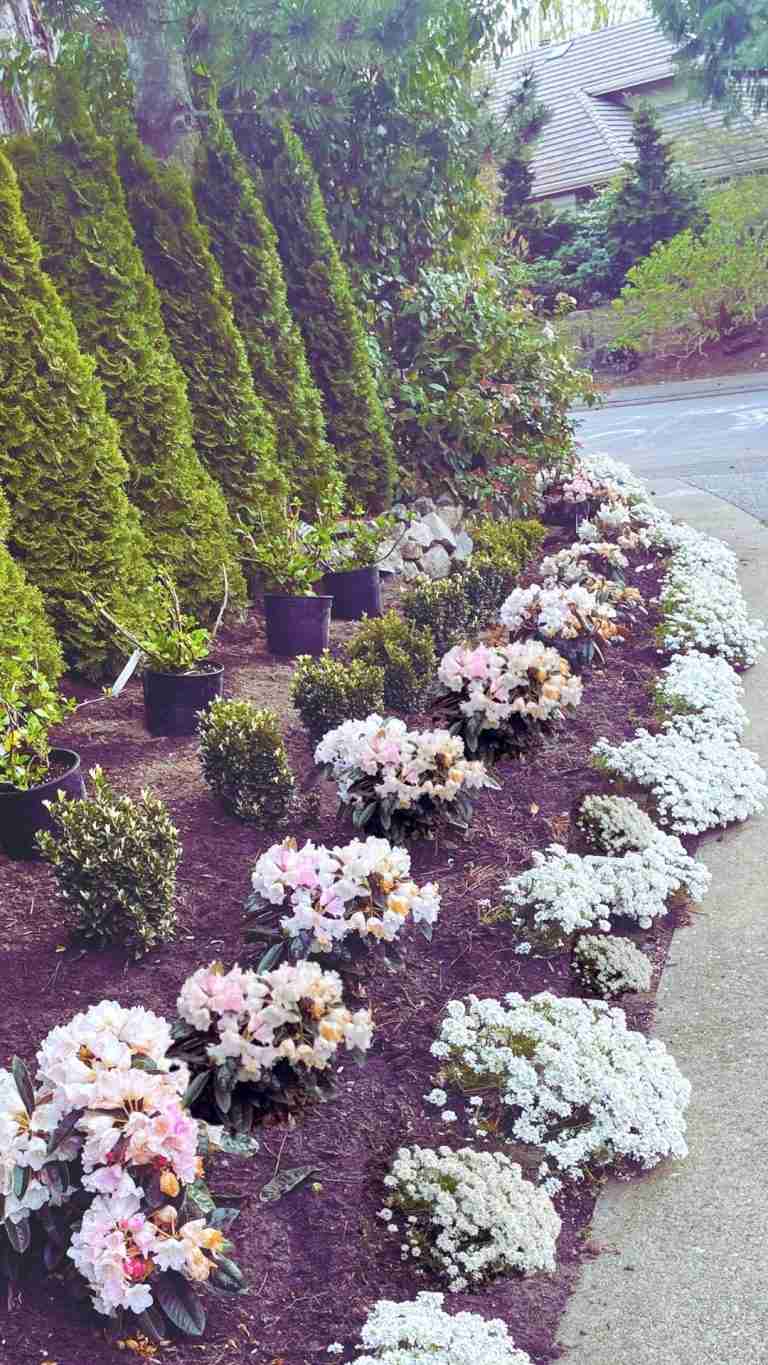
Because of its size, ‘Vanilla Strawberry’ hydrangea is perfect foundation shrub. It also makes an incredible flowering hedge plant. While it can stand alone, the pretty white, pink, and red blooms are well-complemented by smaller shrubs or plants in purples, similar shades of pink.
Whether you’re looking for a new flowering shrub for your garden or a cut flower for your vase, this hydrangea’s huge cone shaped blooms, will provide a splash of long-lasting color you can enjoy all summer long.
For the top 16 shade garden plants, here are my favorites. If you are looking for the ideal evergreen shrub, consider the Teddy Bear Rhododendron.
What is the difference between a Strawberry Sundae and Vanilla Strawberry Hydrangea?
Strawberry Sundae® is a delicious new compact hydrangea from the French breeder of Vanilla Strawberry® Jean Renault. Similar in many ways to Vanilla Strawberry® with one important exception, its smaller stature.