Cozy Fall Decor Ideas for Your Living Room and Front Door
Here in the Pacific Northwest, fall arrives with either rain, wind or crisp mornings. So my fall decor has one job: make the house feel warm when the outside doesn’t. Explore easy cozy fall decor and decorating ideas to enhance your front door and living room for a warm seasonal vibe. Check out an easy fall decorator guide including 2026 fall palette.
I know it’s fall when I am looking for my comfy blanket and considering turning my fireplace on. The two places I focus my fall decorating is the front door and my living room.
Key Takeaways
- Fall decor should create warmth and coziness despite the rain, using simple changes in color and texture.
- Focus on two cozy main areas: the living room and the front door, making small, impactful updates.
- Use warm white bulbs, deep colors, and natural elements to enhance your cozy atmosphere.
- Key Takeaways
- Use a warm neutral base (creamy whites, taupes, soft grays) and layer in rich fall accents.
- Style your living room with textured blankets, plush pillows, candles, and stacks of books to instantly add autumn warmth and a “curl up and read” vibe.
- Dress your front door with a fall wreath to create a welcoming entrance that sets the tone for your home decor.
- Incorporate natural elements like dried stems, branches, and foliage that last from late September through Thanksgiving for budget-friendly, long-lasting fall decor.
Set the Tone: Start With Warm and Cozy Neutral Color Palettes
The first think you want to do is determine your color palette you want to use. Most fall palettes are designed for sunny photos. Under a Northwest sky, bright orange can look loud and flat. What works better is what’s already outside my window: deep evergreen, wet bark brown, rust, moss, and the warm cream of a foggy morning.
In 2026, the design world has fully shifted away from cool gray toward earthy, muted tones. According to FCI London’s designer survey, chocolate and espresso brown (28%) and terracotta/rust (19%) are now the leading neutral replacements for gray.
Build Your Base With A Clean Palette
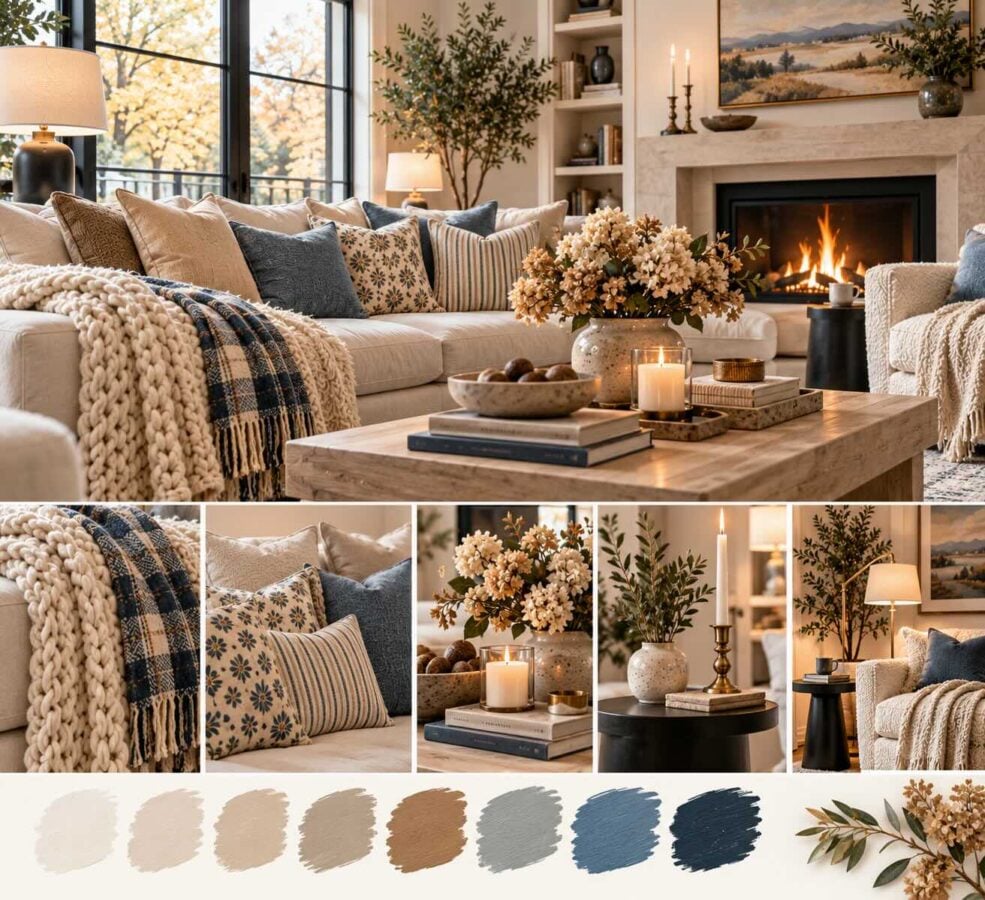
Build your base palette with warm whites, oatmeal, beige, camel, and soft gray on large surfaces – walls, rugs, your main sofa. This keeps the room feeling light while giving fall accents something to land against.
Fall decor may features warm oranges, deep reds, and earthy browns but you can also go with other warm tones, Warm colors like a deep blue, beige and cream also create cozy spaces without overwhelming a room.
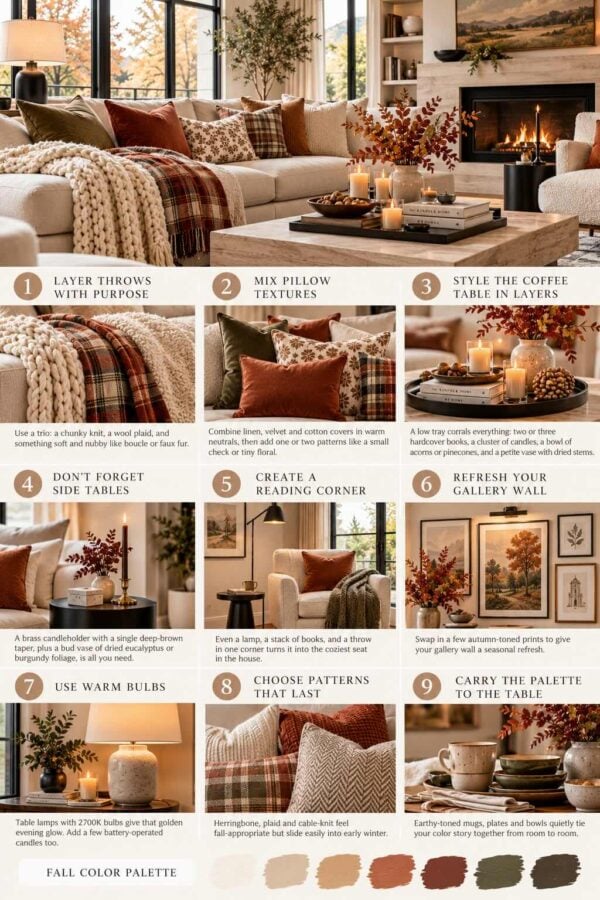
My rule is use two to four colors, used throughout the house:
- A warm base on the big surfaces you already own: cream, oatmeal, camel.
- One deep color for depth: forest green, chocolate brown, deep blue or burgundy.
- One accent in small doses: rust or amber or black
For metals and wood, bronze read warmer than chrome in low light, and oak or walnut adds warmth without adding clutter. I love a flat black for metals it is modern and timeless.
The cheapest way to test it: trade one summer pillow for a velvet one in your deep color and live with it for a week. My palette this year is a beautiful warm off white paired with beige.
Pick two to four colors and repeat them from room to room. It’s the easiest way to avoid a house that looks like five different fall themes got in an argument. A simple swap does a lot here — trade a light blue summer pillow for a deep blue pillow. Or try a burgundy velvet one, or retire the glass vase of shells for a chalky ceramic holding a few dried stems.
For finishes, mixing metals is not only allowed, it’s encouraged. Antique brass, bronze, and matte black look lovely next to warm woods like oak and walnut, and they add depth without adding clutter.
The Living Room: Decorating Guide For a Cozy Space
When it rains for three days straight, the living room becomes the whole house. I decorate it around one question: where would I actually want to sit with a book at 5 p.m. in November?
Start with one chair, not the whole room. Pick the seat by the best lamp. Give it a heavy throw (wool or chunky knit), a pillow that supports your back, and a small surface within reach for a mug.
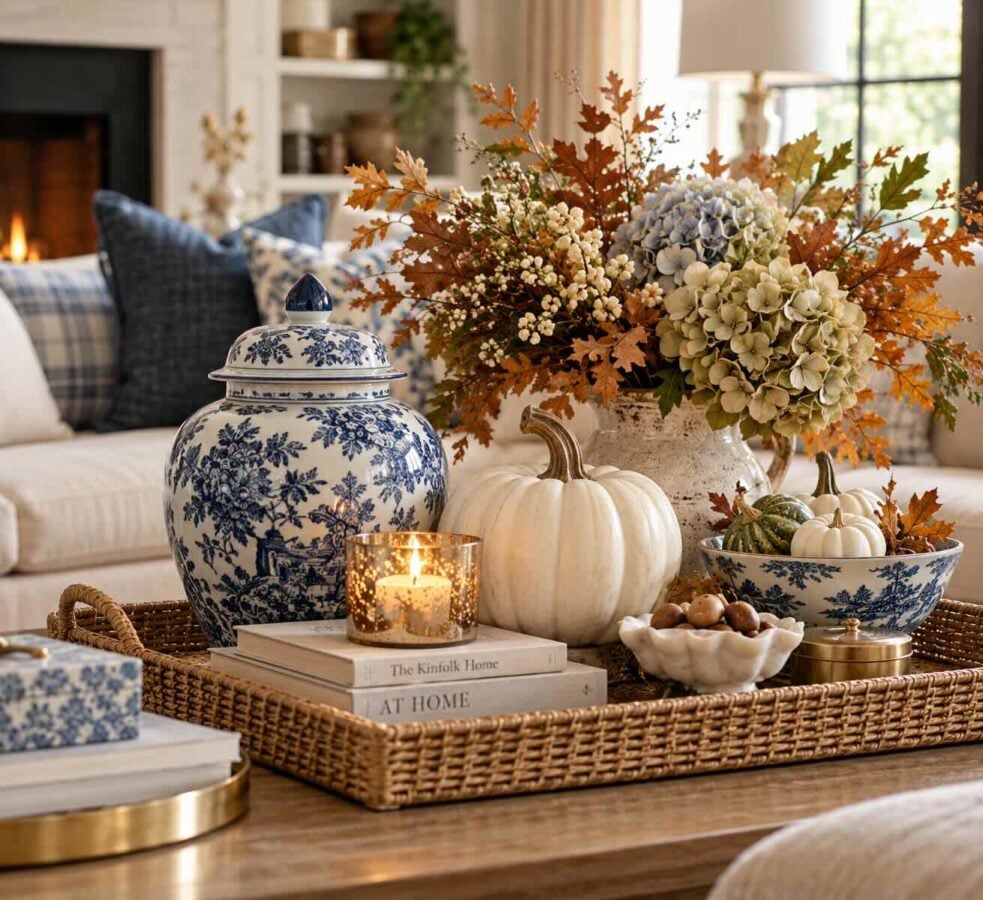
Layer Textures
Layer textures you can feel. Rain makes a room feel damp even when it isn’t, so reach for fabrics that feel dry and warm: wool, velvet, boucle, brushed cotton. Mix one pattern (a plaid or small check) with solids so it reads intentional, not busy.
For pillows, mix linen, velvet, and cotton covers in warm neutrals with a few patterned options – subtle checks or small-scale florals in rust and burgundy. Textural contrast achieved with velvet and woven accents gives depth. Layering textiles this way creates an inviting atmosphere without buying a single piece of furniture.
Use A Coffee Table Tray To Curate Your Decor
A low tray with two or three hardcover books, one candle, and a bowl of something from outside. Cones, acorns, or a few smooth beach stones work. Anything more and it becomes a surface you can’t set a cup on.
On side tables, set a brass or glass candleholder with a single taper candle in deep brown, plus a small bud vase with burgundy foliage or dried eucalyptus.
Don’t forget the dishes. Stoneware mugs and bowls in earthy glazes carry the palette into the kitchen without buying decor at all.
A few more finishing touches that make a big difference:
- Create a reading corner. Even a lamp, a stack of books, and a throw in one corner turns it into the coziest seat in the house.
- Refresh your gallery wall by swapping in a few autumn-toned prints.
- Use warm bulbs. Table lamps with 2700K bulbs give that golden evening glow; a set of battery-operated candles helps too.
- Choose patterns that last past Halloween. Herringbone, plaid, and cable-knit feel fall-appropriate but slide easily into early winter.
- Carry the palette to the table. Earthy-toned mugs, plates, and bowls quietly tie your color story together from room to room.

Gallery walls can be updated with autumn-themed prints for the season.
Add soft lighting with table lamps using warm white bulbs (2700K) and possibly a battery-operated candle set for evening ambiance. Herringbone, plaid, or cable-knit patterns in textiles feel autumnal but still work into early winter. Fall tableware – plates, bowls, and mugs in earthy tones – also helps tie in the selection of colors from room to room.
How to Style a Fall Mantel and Shelves
A mantel is where people over-decorate. I use a simple formula, and it works just as well on a console table or a books.
- Lay down a base. A loose garland of seeded eucalyptus — dried or faux — anchors the whole arrangement.
- Add pumpkins. Ceramic, wood, or neutral-toned faux pumpkins look more grown-up than bright orange ones. Group them in odd numbers.
- Play with height and balance. Put a tall vase of dried burgundy foliage on one end, and a short stack of books topped with a small pumpkin or candle on the other. Asymmetry looks more natural than perfect mirroring.
- Mix your candles. Combine chunky cream and taupe pillars with slim tapers in brass holders. Keep unscented candles near the TV and save scented ones for spots farther from screens.
For open shelves, think in threes: one stack of books, one piece of pottery, one bit of greenery — then repeat. And leave some empty space. Shelves look styled when each piece has room to breathe, and cluttered when they don’t.
Fall Front Door Decor Ideas
Your front door sets the tone for everything behind it, and the good news is you can usually finish it in under an hour.
Most front-door advice assumes dry weather. Here in the Pacific Northwest, anything on an uncovered porch will be soaked for weeks. I’ve learned to judge every piece by one test: will it still look good wet in November?
What to Consider For Front Door Decor
| Holds up in the rain | Skip it (or keep it under cover) |
|---|---|
| Grapevine or twig wreath bases | Burlap and fabric ribbon (it sags and stains) |
| Real pumpkins and gourds, raised off wet boards | Paper, cardboard, and straw bales |
| Metal lanterns with flameless candles | Dried flowers and wheat (they mold) |
| Evergreen cuttings: cedar, fir, salal | Coir mats left on bare concrete (they stay soggy) |
| Potted heather, ornamental kale, or mums | Cheap faux leaves (color fades fast) |
Most front-door advice assumes dry weather. Here, anything on an uncovered porch will be soaked for weeks. I’ve learned to judge every piece by one test: will it still look good wet in November?
a. Start With a Fall Wreath:
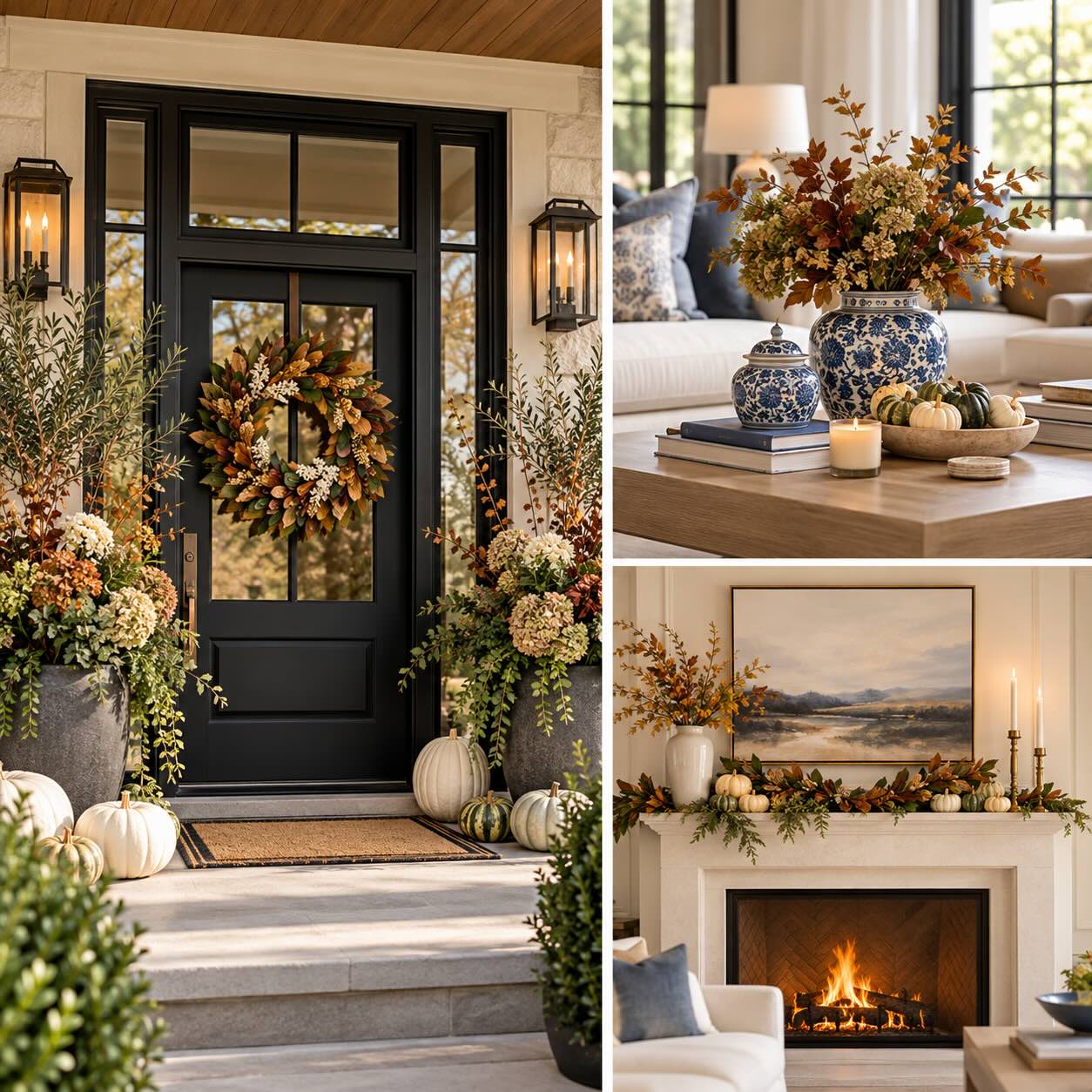
Your front door is the first impression of your fall decor, and you can usually refresh it in under an hour. Fall wreaths are essential for seasonal home decor – artificial wreaths are popular fall decor items because they hold up against weather and can be reused year after year.
How to Choose the Perfect Fall Wreath
A beautiful fall wreath instantly makes your entry feel warm and seasonal. Artificial wreaths are especially practical because they stand up better to changing weather and can be stored and reused year after year.
For a sophisticated, natural look, start with a grapevine wreath base and layer in:
- Burgundy foliage for rich autumn color
- Muted orange and rust leaves for warmth without looking too bright
- Dried seed pods for organic texture
- Mini pinecones for a subtle woodland touch
- Small berry or twig accents to add dimension
Styling tip: Let some of the grapevine base show through instead of covering the entire wreath. An asymmetrical arrangement with foliage concentrated along one side or the lower half feels more modern and elevated.
For a timeless look, skip overly bright orange and yellow tones and stick with burgundy, rust, muted copper, warm brown, and natural grapevine. Using too much bright orange is a decorating don’t.
b. Layer Your Doormats
Put a larger neutral woven or plaid rug down first, then a smaller coir “Welcome” mat on top. It adds texture and makes the entrance feel finished.
c. Frame The Door
Place a pair of lanterns with candles on one side and a grouping of pumpkins in mixed sizes and soft colors — white, pale orange, sage green — on the other.
c. Add Height
A tall basket or urn filled with dried wheat, stems, or branches in rust and burgundy tones echoes your living room palette, so the outside and inside feel connected.
A quick style note: skip the plastic banners and neon planters. Natural materials — wood, burlap, metal, ceramic — make an entrance look elevated rather than seasonal-aisle. If your porch gets strong sun, look for UV-resistant faux foliage; if it gets a lot of rain, choose weatherproof lanterns and store any dried arrangements under a covered spot.
Forage Your Home Decor
The best fall decor in the Northwest is free and falls on your lawn after every windstorm. Fir and cedar branches, big-leaf maple leaves, cones, and bare twigs make better arrangements than anything in a craft store. My favorite is using dried hydrangeas that bloomed all summer long I get right from my own garden.
A few rules I follow:
- Take from your own yard or with permission. Most parks and public lands limit or ban collecting, so check before you clip.
- Pick up what’s fallen rather than cutting live plants.
- Dry it before it comes inside. Wet branches and leaves can mold indoors. A few days in a garage or on a covered porch is enough.
- Shake out cones and branches outdoors to evict the spiders.
How I use it: one big vase of branches on a console, a few small bud vases on a shelf, and a low wooden bowl of cones on the coffee table. When I need more fullness, I mix in a few faux stems. No one can tell once they’re in with the real thing.
Dried and natural materials are the unsung heroes of fall decor on a budget. Buy them once (or forage them for free on a walk) and they’ll look good from late September right through Thanksgiving. Properly dried materials can last a long time indoors — often for several seasons.
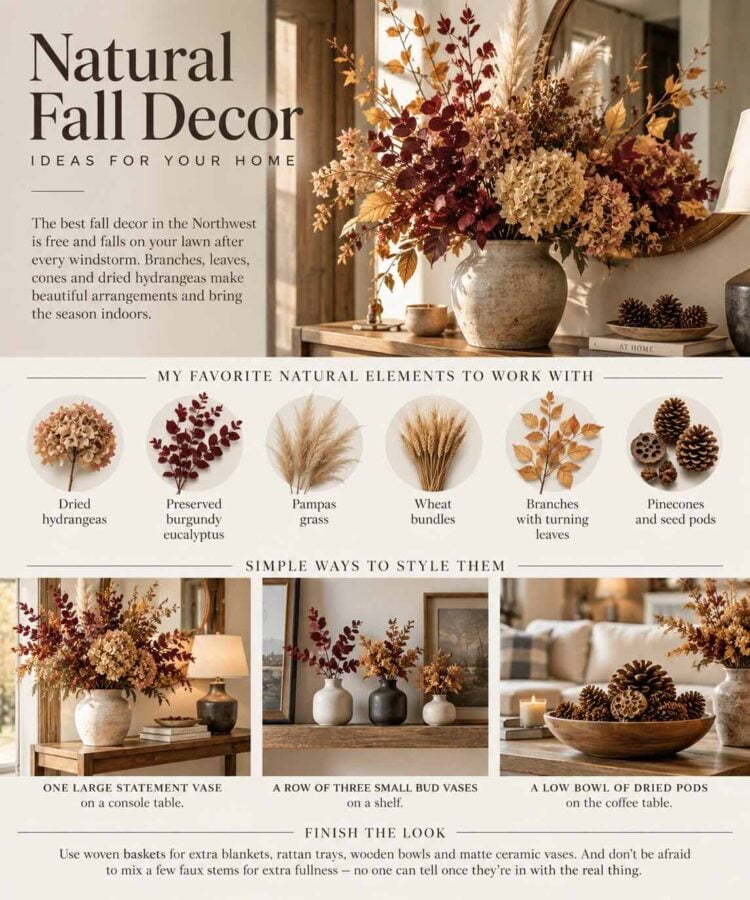
My favorite natural elements to work with:
- Dried hydrangeas
- Preserved burgundy eucalyptus
- Pampas grass
- Wheat bundles
- Branches with turning leaves
- Pinecones and seed pods
Try one large statement vase on a console table, a row of three small bud vases on a shelf, and a low bowl of dried pods on the coffee table. That covers three surfaces with one trip outside.
Extend the natural feel with woven baskets for extra blankets, rattan trays, wooden bowls, and matte ceramic vases. And don’t be afraid to mix a few faux stems in with the real ones — it keeps arrangements full without the price tag of an all-dried bouquet. These pieces work inside and on a covered porch, which helps your indoor and outdoor fall decor feel like one cohesive look.
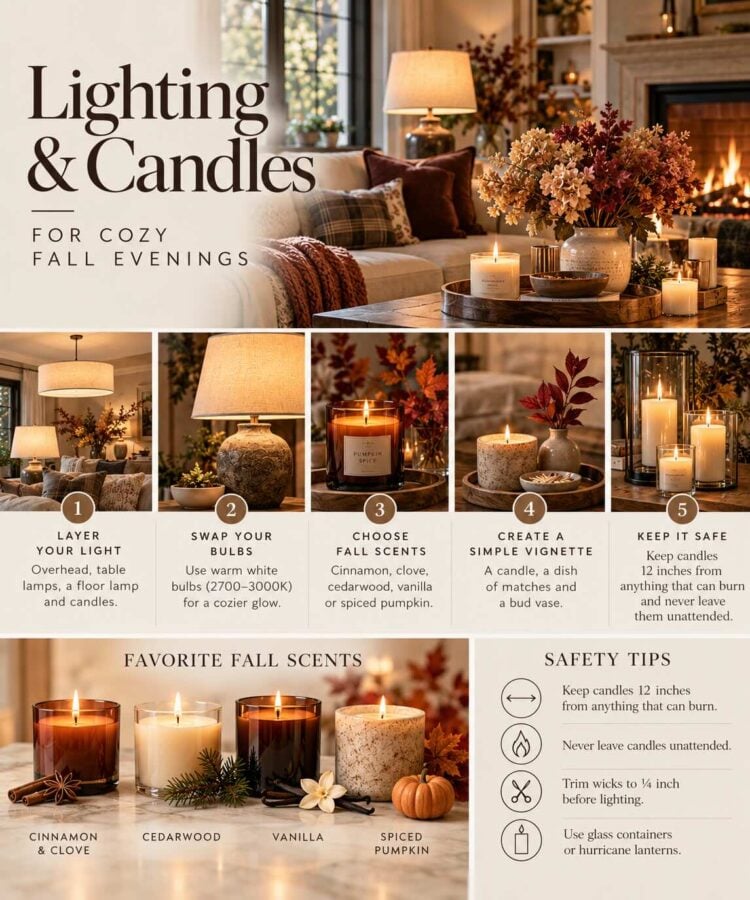
Lighting and Candles for Cozy Fall Evenings
When the sun is setting before dinner, lighting becomes one of the most important parts of fall decor. Warm, layered light is what makes a room feel inviting after dark.
- Layer your light sources. Aim for overhead lights on dimmers, table lamps at sofa height, a floor lamp to brighten a dark corner, and candles as the finishing glow.
- Swap your bulbs. Replacing cool white bulbs with warm white (2700–3000K) in your most-used lamps is the single cheapest way to make the whole house feel cozier.
- Choose deeper scents. Put the bright citrus candles away for the season and bring out cinnamon and clove, cedarwood, vanilla, or spiced pumpkin.
- Build a small candle vignette. A scented candle, a little dish of matches, and a bud vase with one stem on a side table feels intentional and takes thirty seconds.
- Keep it safe. The U.S. Fire Administration recommends keeping candles at least 12 inches from anything that can burn and never leaving them unattended. Trim wicks to about ¼ inch before lighting, and use glass containers or hurricane lanterns. If you have kids or pets in high-traffic areas, today’s flameless candles are honestly convincing.
The goal is a nightly “blanket, book, and candle” ritual that makes fall at home feel like something you look forward to.
The Quick Fall Decor Fix
If you only have an afternoon, here’s where I’d spend it:
- Change the light bulbs first. Warm white (2700K) bulbs in your living room lamps do more than any pumpkin.
- Swap textiles, not furniture. One heavy throw and two pillow covers in a deeper color.
- Bring the outside in. Branches, cones, and dried stems cost little or nothing and last until Thanksgiving.
- Make the front door rain-proof. Choose pieces that look good wet, and skip anything that turns to mush.
FAQ Readers Ask Me:
When should I start decorating for fall?
I start inside around the fall equinox (September 22 or 23), with textiles and lighting. The front door waits until October, because real pumpkins set out in September won’t last to Thanksgiving in our damp weather.
How do I keep fall decor from looking cluttered?
Put something away for every seasonal piece you bring out, and keep surfaces about two-thirds empty. Stick to one look. Fall and Halloween mixed together is where clutter starts.
What works in a small apartment?
Soft goods and light: one throw, two pillow covers, a warm bulb, and a small vase of branches. Use a wall or narrow shelf instead of floor space.
Can I leave it up through Thanksgiving?
Yes, if it’s seasonal rather than holiday. Pull the Halloween pieces on November 1 and everything else carries straight through.
How do I do this on a small budget?
Change bulbs, forage branches, and buy one pillow cover and one good candle. Then shop your own house: turn books with warm-toned spines outward, and bring wood and wicker pieces front and center. [If you sell something relevant in Gal Pal Goods, this is a natural, non-pushy place to link it.]
Final Thoughts
Fall decorating isn’t about filling every surface with pumpkins. It’s about a handful of thoughtful changes — warmer colors, softer textures, and better light — that make you want to stay home a little longer. Start with your living room and front door, and let the rest of the house follow when you’re ready.
What’s the one fall decor piece you bring out first every year? Tell me in the comments — I’m always looking for my next favorite.