
9 Surprising Flaxseed Health Benefits and How to Eat Them
Lately, I’ve been paying closer attention to the small, everyday habits that quietly support my health — not in an all-or-nothing way, but in a gentle, sustainable way. And one of those small shifts has been leaning into flaxseed.Discover 9 surprising science-backed health benefits of flaxseed, from gut and heart health to hormone balance, blood sugar support, and inflammation reduction.
Yes… those tiny seeds.
I kept seeing flaxseed pop up in research studies, nutrition conversations, and recommendations from nutrition experts — especially around heart health, cholesterol levels, insulin sensitivity, and digestive health. And the more I read, the more I realized this wasn’t a trendy ingredient — it was a foundational one.
So I started adding it in. Slowly. Consistently. And thoughtfully.
Key Takeaways
- Flaxseed offers numerous health benefits, from heart health to hormone balance.
- These tiny seeds are rich in omega-3 fatty acids, fiber, and antioxidants, making them nutrient-dense.
- Regular consumption can help lower cholesterol, stabilize blood sugar, and improve digestive health.
- Flaxseed supports women’s health, especially during menopause, and may help reduce cancer risk.
- Incorporating flaxseed into your diet is simple and effective, requiring just one tablespoon a day.
Why Flaxseed Caught My Attention
When I startFlaxseeds come from the flax plant (linum usitatissimum), and they may be small, but they are incredibly powerful. What really drew me in was how simple they are — no fancy powders, no extreme protocols — just whole foods doing what they’re meant to do.
Flaxseed is rich in:
- Alpha-linolenic acid, a plant-based omega-3 fat
- Dietary fiber, including both soluble and insoluble fiber
- Antioxidant properties from lignans
- Healthy fats, essential fatty acids, vitamin E, and protein
That combination alone supports so many systems in the body — from the digestive tract to blood vessels to hormone balance.
Flaxseed Nutrition (Why I’m So Impressed)
One of the things that really made me pause and pay attention to flaxseed is just how nutrient-dense it is. For such tiny seeds, flaxseeds pack a surprising amount of goodness into every tablespoon.
They’re rich in minerals, high in fiber, and full of anti-inflammatory omega-3 fatty acids (plant-based ALA — different from what you’d find in fish like salmon, but still incredibly beneficial). Flaxseeds also contain powerful antioxidants called lignans, which are especially interesting for supporting hormonal balance and overall wellness.
In other words, these little seeds quietly do a lot of heavy lifting.
According to the USDA, one tablespoon of whole flaxseed (about one serving) contains:
- Calories: 55
- Total carbohydrates: 3 g
- Dietary fiber: 2.8 g
- Sugar: 0.2 g
- Total fat: 4.4 g
- Saturated fat: 0.4 g
- Polyunsaturated fat: 3 g
- Monounsaturated fat: 0.8 g
- Protein: 1.9 g
- Cholesterol: 0 mg
- Sodium: 3 mg (about 0.1% DV)
- Manganese: 11% DV
- Thiamin (Vitamin B1): 14% DV
- Copper: 14% DV
- Magnesium: 10% DV
(*Daily Values are based on a 2,000-calorie diet.)
Flaxseed vs. Chia Seeds (I Get Asked This a Lot)
I’m often asked how flaxseeds compare to chia seeds — and honestly, they’re both wonderful. Both are high in fiber and contain omega-3s, and both can absolutely earn a place in a healthy routine.
That said, flaxseed is actually a stronger source of ALA omega-3s. One ounce of flaxseed provides about 6,000 milligrams of ALA, compared to roughly 4,900 milligrams in the same amount of chia seeds.
So while chia seeds bring their own health-promoting benefits, flaxseed really shines when it comes to omega-3 content — which is one more reason I’ve been leaning into it lately.
Small seeds. Big nutrition. And such an easy way to support your body, one tablespoon at a time.
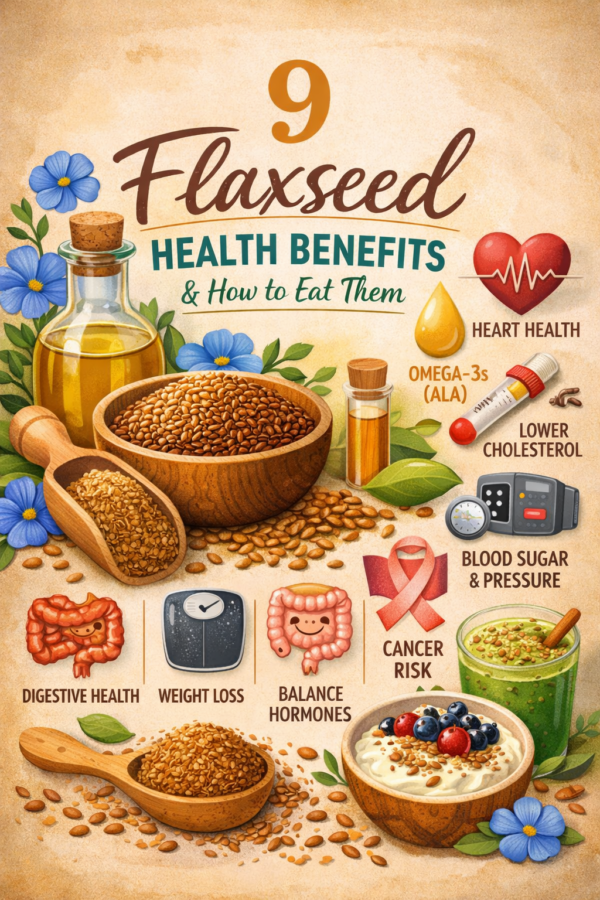
Health Benefits From Eating Flax Seeds
Health Benefits of Flaxseeds (Why I’m Truly Sold on Them)
As I’ve been leaning more intentionally into flaxseed, I’ve spent time really understanding why these tiny seeds are so often recommended by nutrition experts. What keeps standing out to me is how many systems in the body flaxseed supports at once — in a very gentle, food-first way.
Here’s what convinced me.

1. Heart Health, Cholesterol & Blood Pressure Support
One of the biggest reasons I started leaning into regular flaxseed consumption is heart health. Clinical trials and systematic reviews show a significant reduction in:
- Total cholesterol
- Low-density lipoprotein (LDL cholesterol)
- High cholesterol
- Blood pressure, including diastolic blood pressure
Flaxseed consistently appears in research as one of the most effective foods for lowering cholesterol. Studies show flaxseeds can reduce both total cholesterol and LDL cholesterol, which plays a major role in long-term heart health.
The soluble fiber in flaxseed binds to fat and cholesterol in the digestive tract so it can’t be absorbed. It also binds bile, which is made from cholesterol, helping remove it from the body. This forces the body to use cholesterol from the bloodstream to make more bile, naturally lowering circulating cholesterol levels.Lower LDL cholesterol and improved lipid profile matter — especially as we think long-term about reducing the risk of heart disease and heart attack.
What stood out to me is that these results weren’t from extreme interventions — just tablespoons of ground flaxseed added consistently over time.

2. Blood Sugar, Insulin Sensitivity & Weight Balance
Another area where flaxseed shines is blood sugar levels. The high fiber content helps slow digestion, which supports steadier blood glucose and improved insulin sensitivity. For anyone thinking about insulin resistance, metabolic health, or weight loss, this is meaningful.
I also love that flaxseed naturally supports satiety — helping with body weight balance without restriction or stress. It’s a great way to nourish your body rather than fight it.

3. Digestive Health & Gut Health (This One Matters)
I’ve become much more aware of how central gut health is to everything — energy, immunity, inflammation, even mood.
Flaxseed supports:
- Healthy bowel movements
- The gut microbiome
- Digestive health through insoluble fiber
- Reduced inflammation linked to inflammatory diseases
The key? Plenty of water. I’ve learned quickly that increasing fiber works best when you hydrate well — it keeps things moving comfortably and avoids side effects like bloating.

4. Hormones, Menopause & Women’s Health
Flaxseed is especially interesting for women. Research shows benefits for menopausal symptoms and hormone balance, particularly in postmenopausal women. Lignans may gently support estrogen metabolism — which is why flaxseed is often discussed as a natural complement to (or alternative for some) hormone replacement therapy.
There’s also ongoing research around flaxseed and reduced risk of breast cancer, prostate cancer, and colon cancer, with studies exploring effects on tumor growth and cancer cells. While more research is always evolving, the positive effects so far are encouraging.
5. High in Fiber, Surprisingly Low in Carbs
One of the most impressive things about flaxseed is its fiber content, especially when you look at how low it is in sugar and net carbohydrates. One tablespoon of flaxseeds contains about 3 grams of carbohydrates, but roughly 2.8 grams of that comes from fiber, with only 0.2 grams from sugar.
Flaxseed contains mucilage, a gel-forming, water-soluble fiber that moves through the gastrointestinal tract largely undigested. Once eaten, this mucilage slows how quickly food leaves the stomach and enters the small intestine. That helps increase nutrient absorption, promotes fullness, and supports steadier blood sugar levels.
Because this fiber isn’t fully broken down, some of the calories in flaxseed aren’t even absorbed, which is fascinating. Flax is low in carbohydrates yet extremely high in both soluble and insoluble fiber. This combination supports digestive health, helps keep bowel movements regular, may assist with colon detoxification, and can even reduce sugar cravings.
A 2018 study showed that flaxseed cookies helped decrease constipation symptoms, body weight, glycemic levels, and lipid levels — all from a simple dietary addition.
Most adults should aim for 25 to 40 grams of fiber daily. Just two tablespoons of flaxseeds can provide about 20 to 25 percent of daily fiber needs, which makes flaxseed an easy way to close that fiber gap.
6. Rich in Omega-3 Fatty Acids (ALA)
While flaxseeds don’t contain the same omega-3s found in fish like EPA or DHA, they are one of the richest plant sources of alpha-linolenic acid, or ALA. This essential omega-3 fatty acid has been widely studied for its role in reducing inflammation and supporting cardiovascular and gut health.
Studies suggest ALA intake may help lower the incidence of coronary heart disease and hypertension, improve platelet function, promote healthy endothelial cell function, protect arterial health, and reduce heart arrhythmias. For a plant-based food, that’s an impressive range of benefits.

7. Reduces inflammation
The omega-3 fatty acids and antioxidants in flaxseed help reduce chronic inflammation, which is linked to many inflammatory diseases and long-term health issues.
Flaxseed contains high levels of lignans, which are antioxidant compounds. Antioxidants help neutralize free radicals that cause oxidative stress — one of the main triggers of inflammation. By lowering oxidative stress, lignans help calm inflammatory responses throughout the body.
8. May Help Treat Hyperlipidemia
Hyperlipidemia, or elevated fats in the blood, is one of the strongest risk factors for heart disease. What stood out to me is that whole flaxseeds and flaxseed powder, rather than flaxseed oil alone, have shown significant benefits.
Flaxseed supports heart and arterial health through its anti-inflammatory action, cholesterol-lowering effects, antioxidant capacity, and lipid-modulating properties.
In a 2015 study, 70 patients with hyperlipidemia were divided into two groups. The intervention group consumed 30 grams of raw flaxseed powder daily for 40 days. By the end of the study, their serum lipid levels had significantly improved. Researchers concluded that flaxseed could be considered a useful therapeutic food for reducing hyperlipidemia.

9. May Help Reduce Cancer Risk
Flaxseed has also been studied for its potential role in reducing the risk of certain cancers, including breast, prostate, ovarian, and colon cancer.
Flax is a key component of the Budwig diet protocol, which emphasizes flaxseed and flaxseed oil combined with cottage cheese or yogurt to support cellular health. A study published in the Journal of Clinical Cancer Research found that flaxseed consumption may help protect against breast cancer by reducing tumor growth.
Other research suggests diets high in fiber, lignans, and plant-based foods are associated with a lower risk of hormone-related cancers. Lignans in flaxseed are converted by gut bacteria into compounds that help balance estrogen levels, which may help explain flaxseed’s protective role in women’s health.
Similarly, a study published in the Journal of Nutrition found that flaxseed lignans may help protect against endometrial and ovarian cancer.
Ground vs. Whole: What I Actually Use
One thing I learned quickly: whole seeds often pass through the body undigested. So I use ground flaxseed (flaxseed meal or flaxseed powder).
Here’s what works for me:
- I grind whole seeds using a coffee grinder or food processor
- I store them in an airtight container at room temperature or in the fridge
- I aim for 1–2 tablespoons of ground flaxseed per day
That amount delivers grams of fiber, grams of protein, and grams of fat — without feeling overwhelming.
How I Add Flaxseed to My Day
I keep it simple:
- Stirred into yogurt or oatmeal
- Blended into smoothies
- Sprinkled over salads or mixed into salad dressings
- Added to baked goods or grain bowls
It’s such a great way to boost nutrition without changing how you eat.
Health food stores make it easy to find golden flaxseed, brown flaxseeds, flaxseed oil, or flaxseed meal — so it’s accessible and affordable.
Final Thoughts: Small Habits Add Up
What I love most about leaning into flaxseed is that it reminds me how powerful small, consistent choices can be.
One tablespoon of ground flaxseed a day supports:
- Heart health
- Digestive health
- Blood sugar balance
- Hormone support
- Long-term wellness
No extremes. No perfection. Just nourishment.
Sometimes the tiniest seeds really do make the biggest difference.