Why Gel Nail Manicures Are Officially A Health Risk
I recently found out that gel manicures aren’t nearly as safe as I once thought. In fact, gel nail polish and those UV lamps used in nail salons may be riskier than you think. Between the UV exposure, potential DNA damage, and the chemicals in gel polishes (like TPO), gel manicures may be a health risk. In this post, I share what science is saying about gel manicures.
Gel manicures and gel nail polish remain hugely popular. It’s the lasting shine, chip resistance, and the “perfect look” for special occasions make them hard to resist. Recently, we have learned that some nail polishes are toxic. Also, more recent scientific studies increasingly suggest that some of their key ingredients and processes—like curing under UV lamp or UV dryers—come with health risks. From DNA damage to regulatory bans, there’s mounting data that we all should know.
Key Takeaways
- Gel manicures are popular but carry health risks, including UV exposure and harmful chemicals like TPO.
- The EU has banned TPO due to its carcinogenic properties, while the FDA has not taken similar action in the U.S.
- Studies show UV nail dryers may cause DNA damage and mutations, raising concerns about skin cancer risks.
- To minimize risks, limit UV exposure, protect your skin, and ask for TPO-free gel polishes.
- Alternatives like regular nail polish or press-ons may reduce health risks while still providing a stylish look.

What Science Is Saying About Gel Manicures- Health Risks Explained
Who doesn’t love a good mani-pedi? Unfortunately, we have recently learned that that there are harmful ingredients in some nail polishes and gel polishes. See the scientific evidence below.
1. Gel Manicures & Pedicures Contain Chemicals Now Classified as “Carcinogenic”
Starting September 1, 2025, the European Union officially banned trimethylbenzoyl diphenylphosphine oxide (TPO)—a photoinitiator that’s commonly used in gel nail polishes. The chemical has now been classified as “carcinogenic, mutagenic, or toxic for reproduction.”
What’s interesting is that the EU took what’s called a hazard-based approach. That means even without long-term human studies, they acted on the evidence we do have—animal research and in-vitro findings—to put public health first. The FDA does things differently.
Just to be clear, gel nail polishes and manicures aren’t banned in the EU—only a chemical called trimethylbenzoyl diphenylphosphine oxide, or TPO for short. TPO is a photoinitiator, which basically means it helps turn the gel from liquid to solid when exposed to light. Cosmetic chemist Kelly Dobos explains that it’s popular in gel polishes because it cures efficiently and doesn’t yellow over time.

2. UV Nail Dryers & DNA Damage / Mutations
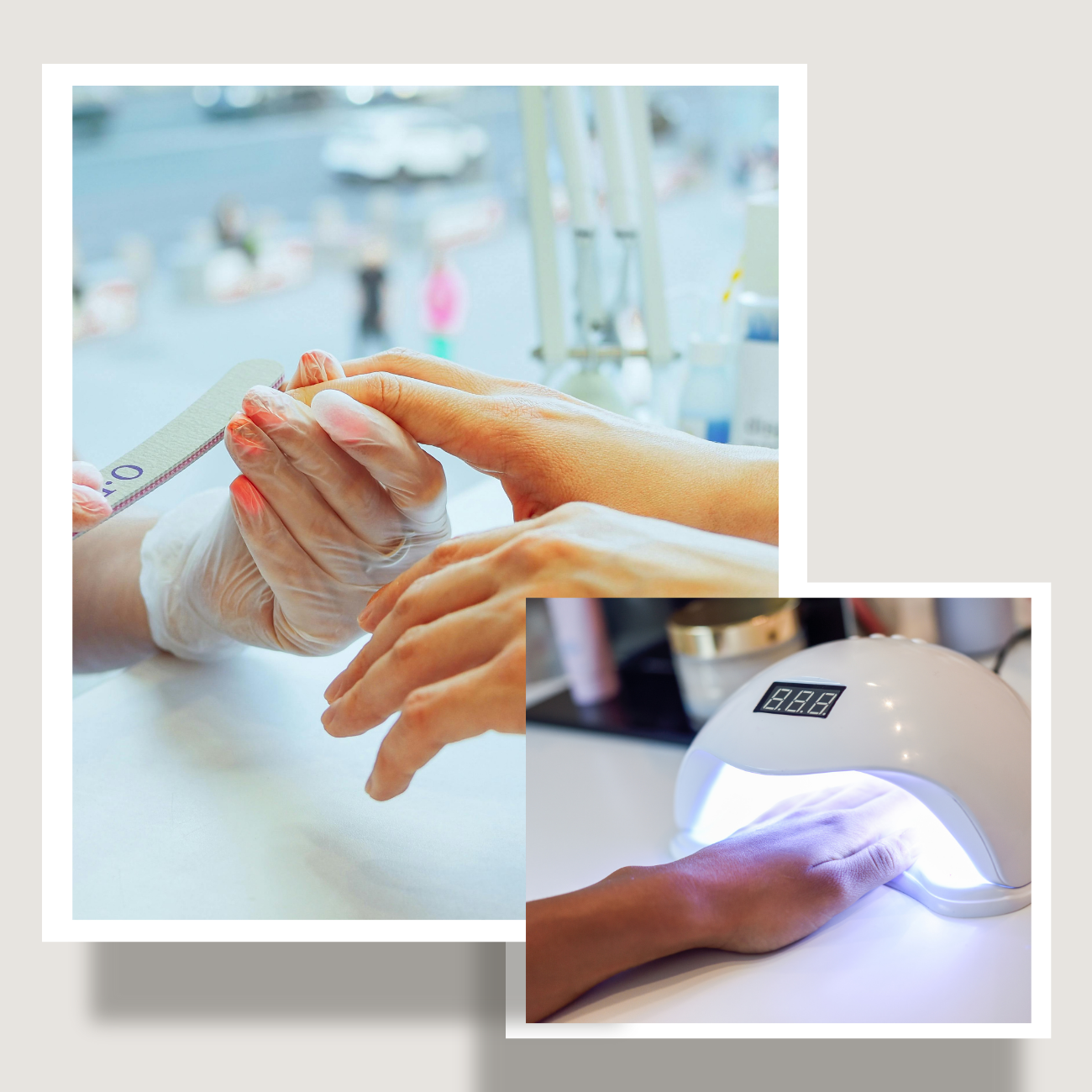
A 2023 study published in Nature Communications (Zhivagui et al.) looked at UV nail polish dryers. These dryers are the same kind used in salons—and the results are pretty alarming. Even just one 20-minute session caused measurable DNA damage, mitochondrial dysfunction, and mutations in human skin cells like keratinocytes and fibroblasts. After three exposures, cell death spiked significantly.
What’s even more concerning is that the types of mutations researchers found look very similar to those seen in skin cancers. While scientists haven’t yet proven a direct link between gel manicures and cancer in people, this study raises serious red flags—especially for nail techs and anyone who gets gel manicures regularly.
3. Systematic Reviews: Possible, but Unclear, Skin Cancer Risk
A systematic review published in early 2025 assessed the risk of cutaneous malignancy (skin cancer) associated with UV nail lamps. It found that prolonged and repeated exposure may pose low but non-zero risk. The evidence is described as “weak”—there’s a lot of experimental/lab work and case reports, but very few long-term epidemiological studies. PubMed+1
4. Keratinocyte Viability and Exposure Time Matter
One lab study exposed human keratinocyte cells to UV lamp exposure typical of gel manicure curing (around 4 minutes). That relatively brief exposure did not significantly reduce viability of those skin cells. But when exposure was increased (e.g. 20 minutes), cell viability dropped substantially. This suggests that for the average person, occasional gel polish use and proper lamp-use may carry lower risk—but that frequent or high-exposure situations are very different.
Safe Alternatives To Gel Manicures

BEAOLATA BEAUTY- Amazon

GALAMNETIC- Amazon
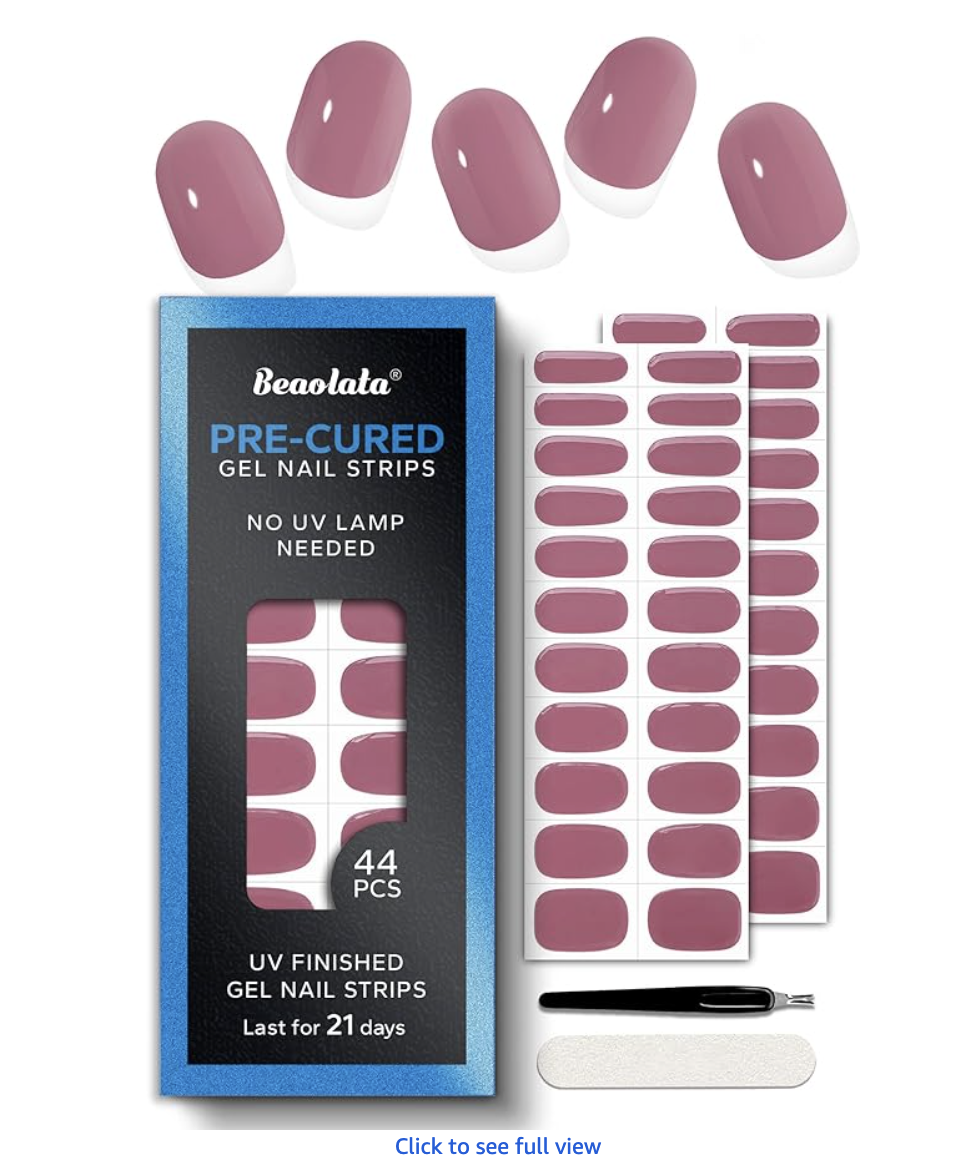
Beaolata Nail Wraps- Amazon
Shop all safe gel nail polish wraps and nails here on Amazon
How These Findings Tie Into the Risks You Already Know
- UV Exposure & Risk of Skin Cancer: The science now shows that the UV light from curing lamps and nail dryers can lead to mutations in human cells—mutations similar to those seen in skin cancers. PubMed+2University of California+2
- Use of TPO in gel polishes adds to the concern. It’s banned in the EU because it’s suspected of being toxic to reproduction, mutagenic, and carcinogenic, even if the exposure through nails is less than through ingestion. Vogue+2People.com+2
- Contact Dermatitis & Allergic Reactions: Not all risks are about cancer. Some studies and media reports note an increase in allergic reactions from repeated gel polish / UV lamp exposure, especially with harsh removal or when surrounding skin is exposed. Allure+1
- Regulatory Gaps in the United States: Although the EU has banned TPO, in the United States it remains legal. The FDA’s newer cosmetics regulations do not currently restrict TPO use in gel polishes. So in U.S. nail salons, exposure continues. Public health experts are calling for updates. Axios
What You Can Do To Be Safe — Safer Practices & Alternatives
- Limit UV Lamp / UV Dryer Exposure: If you go to nail salons, try to reduce time under curing lamps; skip them when possible. Save gel manicures for special occasions rather than making them routine.
- Protect Surrounding Skin: Apply broad spectrum sunscreen (SPF 30 or more) to your hands ~20-30 minutes before exposure. Some suggest using UV protective gloves with fingertips cut out. Ohio State Health+1
- Ask for TPO-free Gel Polishes: Look for brands that avoid using trimethylbenzoyl diphenylphosphine oxide. With the EU ban, some global brands are reformulating—so you might begin to see more options.
- Consider Alternatives: Regular nail polish (which dries without UV or UV-d lamp) or press-on nails avoid many of these risks. Removal is gentler, and no UV exposure is involved.
Top Beauty Posts
Bottom Line
Recent findings strengthen what many already suspected: gel manicures are not risk-free. The combination of UV exposure (from curing lamps or UV dryers), DNA damage and permanent mutations in human cells, along with chemical concerns like the use of TPO, all suggest that regular use could contribute to long-term skin and nail health issues—including elevated skin cancer risk.
I’ve personally have stopped getting gel manicures and now prefer press-ons or regular polish unless I really want that special look. The trade-off in style feels worth it for better peace of mind about what’s going on at the cellular level.