Best Foods for Gut Health and Better Digestion
If there’s one thing I’ve been focusing on lately (especially as I think more about longevity and feeling good from the inside out), it’s gut health. Because here’s the truth, friends: your gut does so much more than just digest food. It plays an important role in your immune system, mental health, and even your heart health. Discover the best foods for gut health and better digestion.
So if you’ve been dealing with digestive issues, low energy, or just want to support your overall health, this is your sign to start paying attention to what’s happening inside your digestive tract from your small intestine to your large intestine.
Let’s get into the best foods for gut health and digestion—and the simplest ways to start supporting a healthy gut microbiome today.
Key Takeaways
- Gut health impacts digestion, immune function, and overall wellness, requiring attention to dietary choices.
- High-fiber foods, prebiotics, and probiotics support a balanced gut microbiome, improving digestion and reducing discomfort.
- Healthy fats and anti-inflammatory foods further enhance gut health and reduce inflammation.
- Limiting artificial sweeteners, processed foods, and excess sugar is crucial for maintaining gut health.
- Simple daily habits like eating more plant foods, staying hydrated, and managing stress can lead to a healthier gut.
Why Gut Health Matters More Than You Think
Your gut is home to trillions of bacteria—both good bacteria and bad bacteria—collectively known as your gut microbiota. When things are balanced, your beneficial gut bacteria help with everything from breaking down food to reducing chronic inflammation.
But when that balance is off (hello, stress, processed foods, and antibiotic use), you may experience:
- Stomach discomfort
- Abdominal pain
- Digestive problems
- Symptoms of irritable bowel syndrome
- Even increased risk of chronic diseases
Over time, your gut microbiome can become less balanced, which impacts more than just digestion.
The takeaway? Taking care of your gut isn’t just about feeling good today (although yes please to that). It’s about supporting your overall health for the long run—one gut-friendly choice at a time.
The good news? The right foods can make a huge difference.
When you’re eating fiber-rich foods—think fruits, veggies, legumes, whole grains, nuts, and seeds—you’re basically feeding your good gut bacteria (and they love you for it). In return, they produce powerful compounds that help protect your gut and keep your digestive system running smoothly.
Translation? Less bloating, more regular digestion, and way less of that “ugh, why do I feel off?” feeling.
And here’s the bigger picture: your gut is closely tied to your immune system, so when your gut is thriving, your overall health is too. It’s one of those small daily habits that makes a real difference over time.
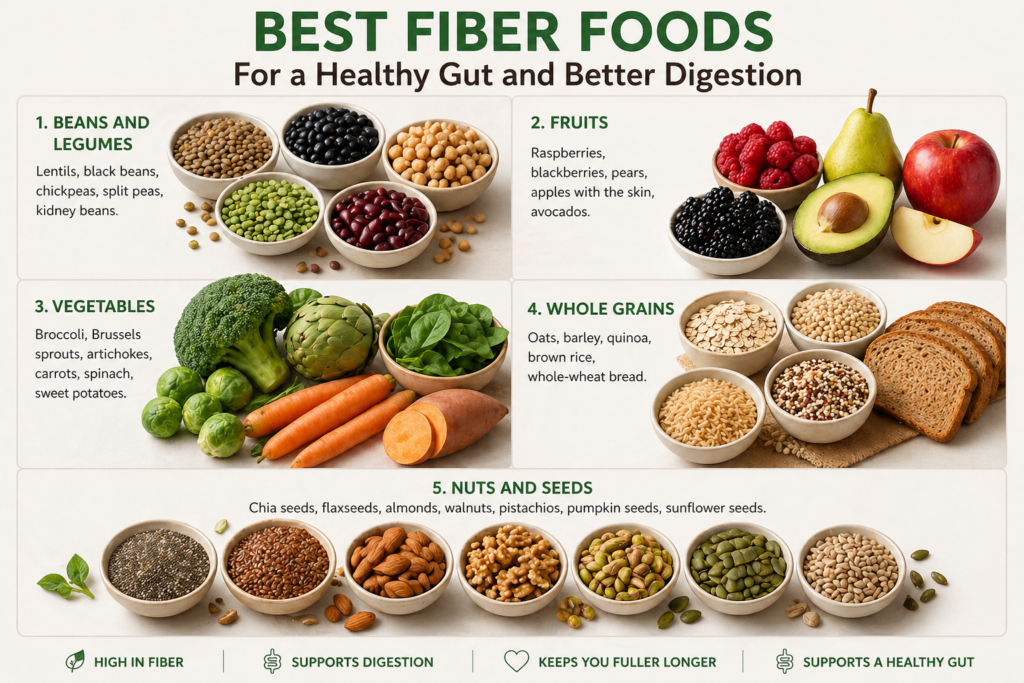
1. High-Fiber Whole Foods (Your Gut’s Best Friend)
Think of dietary fiber as fuel for your healthy gut bacteria. The more fiber you eat, the more you support a thriving healthy digestive system.
Best options:
- Beans and legumes: lentils, black beans, chickpeas, split peas, kidney beans.
- Fruits: raspberries, blackberries, pears, apples with the skin, avocados.
- Vegetables: broccoli, Brussels sprouts, artichokes, carrots, spinach, sweet potatoes.
- Whole grains: oats, barley, quinoa, brown rice, whole-wheat bread.
- Nuts and seeds: chia seeds, flaxseeds, almonds, pistachios, pumpkin seed
These are packed with both soluble fiber and insoluble fiber, which support digestion and help move things along your digestive tract.
✨ Gal Pal Tip: Start your day with chia pudding or add chia seeds to your smoothie—such an easy, gut-loving habit.
2. Prebiotic Foods (Feed the Good Bacteria)
Prebiotic fiber feeds your beneficial bacteria, helping them grow and thrive.
Probiotic foods are full of good bacteria that help your gut do its job better—and when your gut feels good, everything feels better.
Here’s what I’ve found really matters:
- Better digestion – less bloating, less discomfort
- Balanced gut – keeps the “good” bacteria in charge
- Stronger immunity – your gut is your first line of defense
- More energy + better mood – yes, your gut affects both
Why Prebiotics + Probiotics Matter for Gut Health
When it comes to gut health, the real magic is understanding the difference between probiotics and prebiotics—and using them together.
- Probiotics are the good bacteria that support digestion.
- Prebiotics are the fiber-rich foods that feed and strengthen that bacteria.
Think of it this way: probiotics are the guests, and prebiotics are what keeps them happy and thriving.
Good sources of prebiotics:
- Garlic, onions, and leeks
- Asparagus
- Bananas
- Oats
Adding these to your daily meals is one of the best ways to support long-term digestive health.
3. Probiotic-Rich Foods (Add More Good Bacteria)
If prebiotics feed the bacteria, probiotic foods actually add more good bacteria to your gut.
Gut-friendly probiotic foods:
- Yogurt with active cultures
- Kefir
- Sauerkraut
- Kimchi
- Other fermented foods
These probiotic-rich foods are especially helpful if you’ve had recent antibiotic use or are experiencing gut symptoms.
✔️ Good idea: If you’re not getting enough from food, probiotic supplements can be a helpful addition—but food first, always.
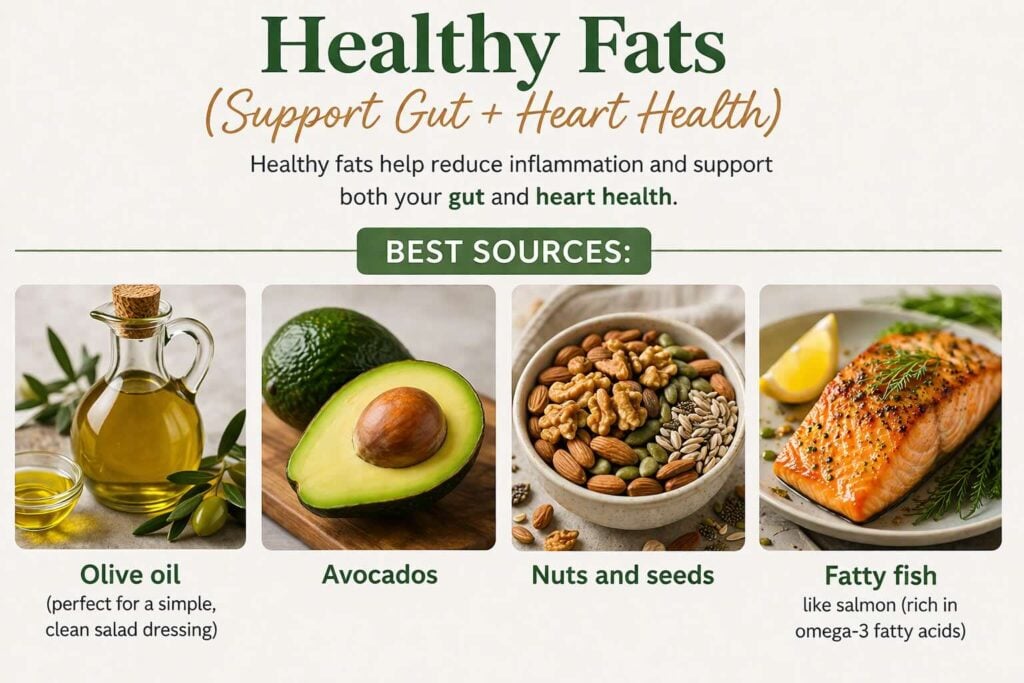
4. Healthy Fats (Support Gut + Heart Health)
Healthy fats help reduce inflammation and support both your gut and heart health.
Best sources:
- Olive oil (perfect for a simple, clean salad dressing)
- Avocados
- Nuts and seeds
- Fatty fish like salmon (rich in omega-3 fatty acids)
These fats are essential for a balanced diet and play a role in reducing gut inflammation.
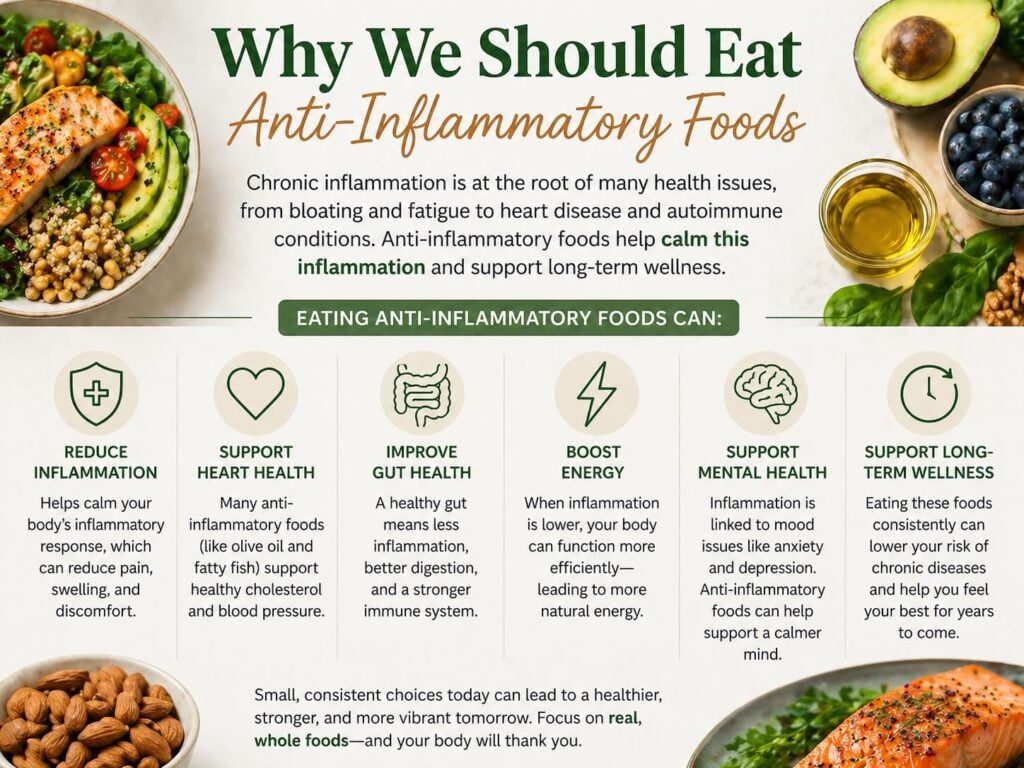
5. Anti-Inflammatory Additions (Small Habits, Big Impact)
Some foods go the extra mile by soothing the gut and supporting digestion. Anti-Inflammatory foods support heart health, boost energy, support mental health and supports overall wellness.
Try adding:
- Fresh ginger or ginger tea for stomach pain and digestion
- Peppermint oil (known to help with irritable bowel syndrome)
- Herbal teas to calm the digestive system
These are simple, everyday ways to reduce stomach discomfort and support the health of your gut. Keep in mind that the best-studied anti-inflammatory supplements are omega-3 fatty acids, curcumin, and vitamin D in certain cases. Evidence is strongest when they’re used for specific conditions rather than as a general fix for “inflammation”
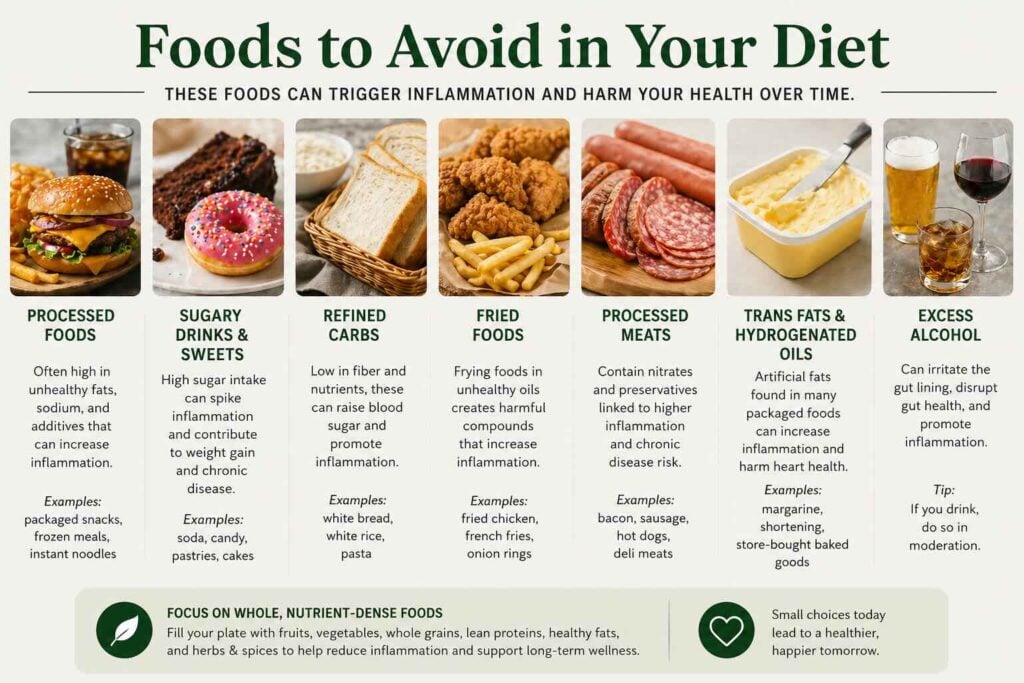
Foods to Limit for Better Gut Health
Just as important as what you eat is what you don’t eat.
Avoid These Foods:
- Artificial sweeteners and sugar alcohols
- Highly processed foods
- White bread and refined carbs
- Excess sugar and unhealthy fats
- Fried foods
- Trans fats and hydrogenated oils
These can feed unhealthy bacteria, leading to poor gut health and more digestive issues.
Simple Daily Habits for a Healthy Gut
Simple Daily Habits for a Healthy Gut
Let’s keep this easy and doable, because that’s how habits actually stick. A healthy gut isn’t about being perfect—it’s about a few consistent, feel-good choices each day.
Think: more fiber, more water, a little movement, and actually getting some good sleep. Simple… but powerful.
Easy Daily Habits That Make a Real Difference
- Eat more plant foods
Load up on fruits, veggies, beans, lentils, whole grains, nuts, and seeds. These are full of fiber, which feeds your good gut bacteria and keeps everything moving (yes, we’re talking digestion 😄). - Add in fermented foods
Yogurt, kefir, kimchi, sauerkraut, miso—these are your gut’s best friends. They help support a healthier, more balanced gut microbiome. - Drink your water, friend
Hydration is key. Water helps break down food and keeps digestion smooth and regular. It’s one of the easiest wins. - Move your body daily
This doesn’t have to be a full workout. Even a quick walk after meals helps support digestion and keeps things steady. - Protect your sleep + manage stress
I know… easier said than done. But your gut and brain are deeply connected. When stress is high or sleep is off, your gut feels it—hello bloating and discomfort. Prioritize rest when you can. - Eat a variety of whole foods
- Aim for plenty of fiber
A Simple Gut-Friendly Day (Real Life Version)
Here’s what this can actually look like in real life:
- Morning: Oatmeal with berries
- Lunch: A hearty salad with beans or lentils
- Snack: Yogurt or kefir
- Dinner: Veggie-forward meal with healthy fats
- After dinner: A short walk to reset
Nothing complicated. Just intentional.
The Bottom Line (From Me to You)
If you want to feel better, have more energy, and truly support your body from the inside out, focusing on gut-healthy foods is one of the best things you can do.
You don’t have to be perfect. Just start adding more gut-friendly foods, pay attention to how you feel, and build from there.
Because when your gut is happy… everything else tends to follow.
Most Frequently Asked Questions About Foods for Gut Health and Digestion
1. What are the best foods for gut health?
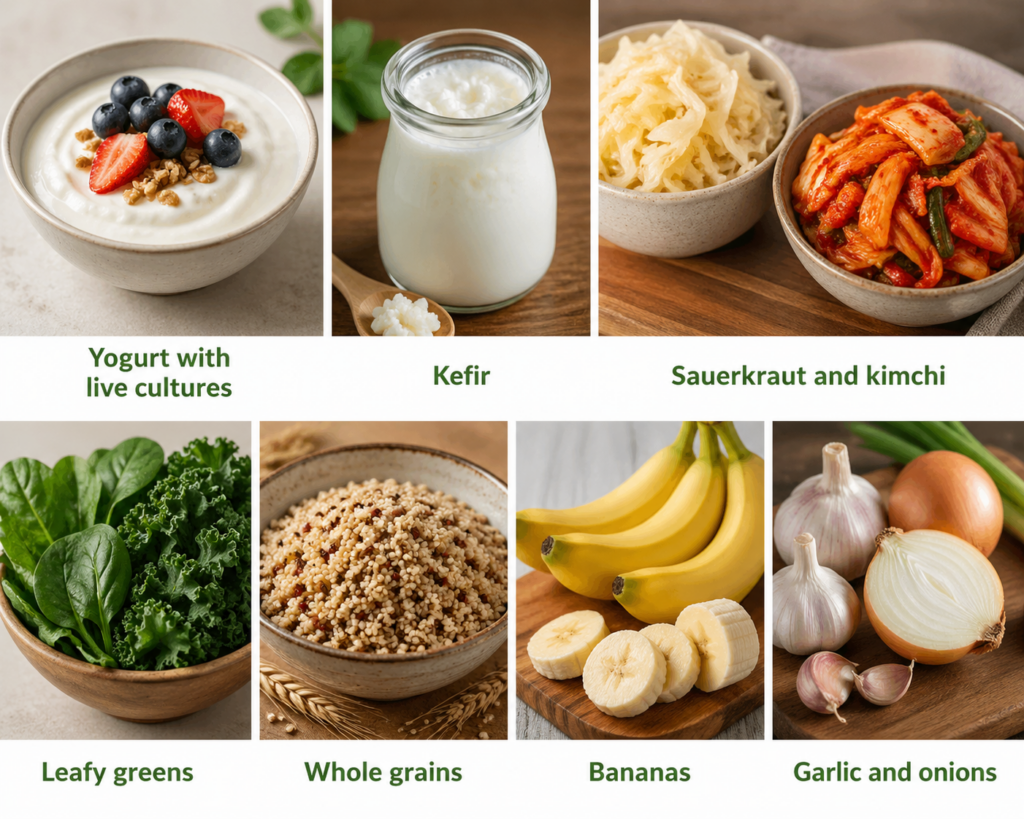
The best foods for gut health are those that support beneficial bacteria in your digestive system. Think:
Yogurt with live cultures
Kefir
Sauerkraut and kimchi/”
Leafy greens
Whole grains
Bananas
Garlic and onions
These foods either contain probiotics (good bacteria) or prebiotics (fiber that feeds that bacteria), helping your gut stay balanced and happy.
2.What is the difference between probiotics and prebiotics?
Probiotics are live beneficial bacteria found in fermented foods like yogurt, kefir, and kimchi.
Prebiotics are types of fiber found in foods like bananas, asparagus, oats, and garlic that feed those good bacteria.
Think of it this way: probiotics are the guests, and prebiotics are the food that keeps them thriving.
3. What foods improve digestion quickly?
If you’re feeling bloated or sluggish, these foods can help support digestion:
- Ginger (helps soothe the stomach)
- Papaya (contains digestive enzymes)
- Pineapple (rich in bromelain)
- Yogurt (adds beneficial bacteria)
- Peppermint tea (relaxes the digestive tract)
These are your go-to “reset” foods when your gut needs a little extra love.
4. What foods should I avoid for better gut health?
Some foods can disrupt your gut balance, especially when eaten in excess:
- Highly processed foods
- Artificial sweeteners
- Excess sugar
- Fried foods
- Alcohol
These can irritate the gut lining or negatively impact your microbiome, leading to bloating, discomfort, and inflammation.
5. How long does it take to improve gut health with diet?
You can start noticing improvements in just a few days to a week when you consistently eat gut-friendly foods. However, long-term gut health is built over weeks to months of consistent habits.
Small daily changes = big long-term results.
6. Is yogurt really good for your gut?
Yes—but not all yogurt is created equal.
Look for:
- “Live and active cultures” on the label
- Low or no added sugar
- Plain or Greek yogurt for higher protein
These versions actually support your gut instead of working against it.
7. Are fermented foods necessary for gut health?
They’re not mandatory, but they are incredibly beneficial.
Fermented foods like kimchi, kombucha, and sauerkraut introduce natural probiotics into your system, helping increase gut diversity—which is key for overall health.
8. Can improving gut health help with bloating?
Absolutely. Bloating is often a sign your gut is out of balance.
Eating more:
- Fiber-rich foods
- Probiotic foods
- Hydrating foods (like cucumbers and watermelon)
…can help reduce bloating and support smoother digestion over time.