Digital Detox : Reset Your Mind, Sleep & Energy in 7 Days
Let’s be honest, If your screen time report makes you cringe a little… you are not alone.Between emails, social media, texts, and endless scrolling, it is no wonder we feel mentally drained. If you are feeling agitated, off, depressed and unfocused, this 7 day digital detox may give you the reset you need. Learn why and how to do a digital detox. Reduce screen time, improve sleep, and build healthy habits for better mental health and focus.
This is about learning how to reduce screen time and reset your relationship with your phone.
he other day, I was sitting with my mom.
Her phone kept lighting up—news alerts, breaking headlines, more notifications than anyone needs in a single hour.
You could feel it.
That subtle shift in energy.
That low-level anxiety that just… sits there.
And I thought—this is what’s happening to all of us, all day long.
Key Takeaways
- A digital detox can help reduce screen time and improve mental health, focus, and sleep.
- Signs you may need a digital detox include anxiety about phone access, trouble concentrating, and irritable moods.
- Research shows blocking mobile internet for just two weeks significantly enhances well-being and attention span.
- The 7-day reset plan encourages awareness, limits notifications, and promotes healthier activities to replace screen time.
- Small daily changes like creating tech-free zones and intentional tech use can lead to meaningful improvements.
Table of contents
How to Know If You Need a Digital Detox
You may need a digital detox if your screen time is impacting your mood, sleep, focus, or relationships.
- You feel anxious when you can’t check your phone.
UCLA Health notes that anxiety when you cannot find your phone may be a sign you could benefit from a digital detox. Brown Health also highlights that losing access to your phone can trigger stress and anxiety. - You check your phone out of habit—even when you are with others
- You stay up late scrolling, affecting your sleep hygiene
- You feel irritable, anxious, or drained after using social media
- You struggle with focus, brain fog, or finishing tasks
- You experience headaches, eye strain, or mental fatigue
- Your screen habits are replacing real-life connection
- You’re having trouble concentrating or remembering things
Doral Health notes that digital overload can lead to difficulty concentrating or remembering information, often referred to as “directed attention fatigue,” where your ability to focus becomes depleted. - You find yourself worrying more than usual or feeling mentally overwhelmed. You are having more bad days than good.
What the Research Says About Digital Detox
We are all aware that you can detox your body with a cleanse. What about a mental cleanse?
A 2025 study published in PNAS Nexus found that temporarily blocking mobile internet on smartphones for just two weeks led to significant improvements in mental health, focus, and overall well-being.
Participants were still able to text and make calls, but removing constant internet access reduced distractions and changed how they spent their time.
Key Research Findings:
- 91% of participants improved in at least one area, including mood, focus, or well-being
- Mental health and happiness increased, with measurable boosts in life satisfaction and positive mood
- Attention span improved significantly—comparable to reversing about 10 years of age-related cognitive decline
- Participants spent more time socializing in person, exercising, and being outdoors
- Sleep improved and overall screen time decreased
Bottom Line:
Even a short break from constant connectivity can reset your brain, improve your mood, and sharpen your focus—without needing to completely disconnect from technology.
Common Health Issues from Too Much Screen Time
Let’s be real for a second—most of us are on our phones way more than we think. And while it feels harmless in the moment, it can start to show up in how we feel day to day.
Here’s what that can look like:
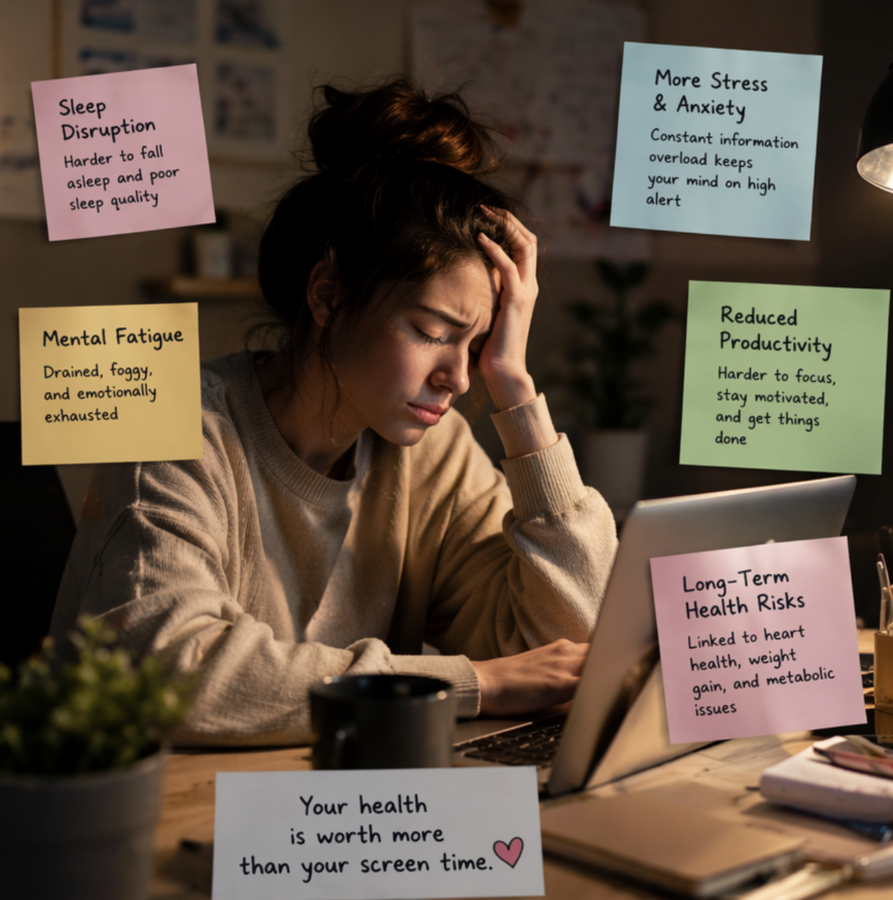
- Eye strain and vision discomfort
If your eyes feel dry, tired, or you’re getting headaches after scrolling, that’s not random. Too much screen time can lead to blurred vision and that all-too-familiar digital eye strain. - Neck, shoulder, and back pain
You know that “looking down at your phone” posture? Over time, it adds up. Sitting still and constantly looking down can lead to tension, stiffness, and ongoing discomfort. - Sleep disruption
Late-night scrolling isn’t doing your sleep any favors. Screens—especially before bed—can make it harder to fall asleep and throw off your natural rhythm. - Anxiety and low mood
There’s a real connection between high screen time and increased anxiety or depressive feelings—especially with constant social media and information overload. - Reduced focus and mental fatigue
If you feel scattered, forgetful, or like you can’t finish a task, your screen habits could be part of it. Too much input can overload your brain and make it harder to focus. - Weight gain and less movement
More screen time usually means more sitting. Less movement throughout the day can impact everything from your energy to your overall health. - Heart and metabolic health risks
Newer research is even linking higher screen time—especially in younger people—to things like increased blood pressure, cholesterol, and insulin resistance.
Digital overload keeps your brain in a constant state of interruption, making it harder to concentrate and easier to feel drained.
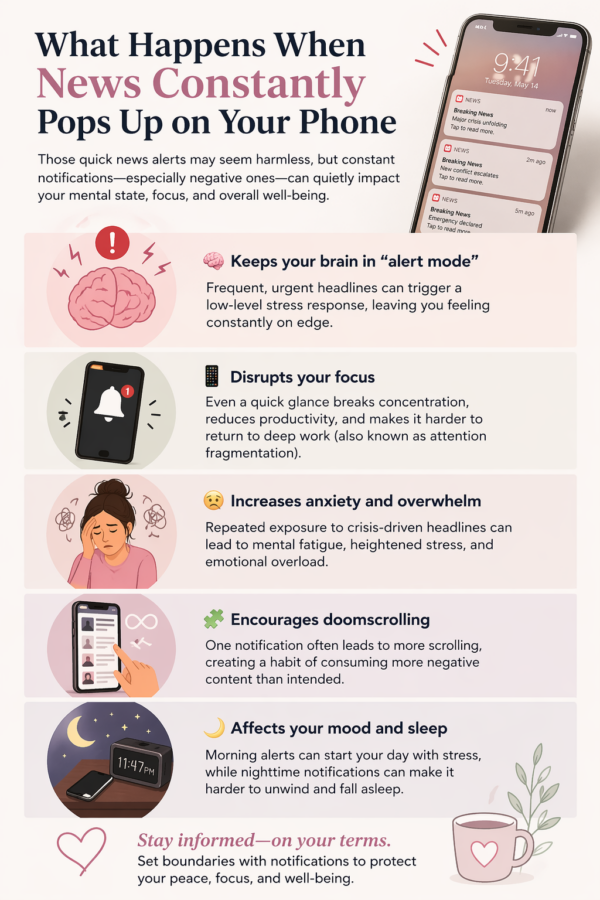
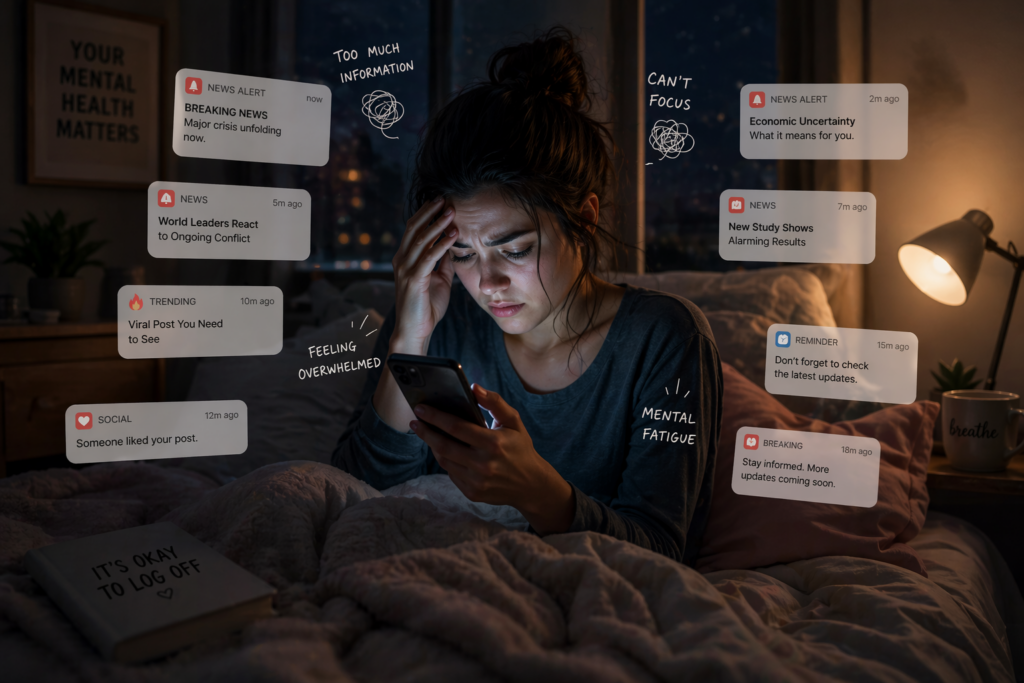
What Happens When News Constantly Pops Up on Your Phone
Those quick news alerts may seem harmless, but constant notifications—especially negative ones—can quietly impact your mental state, focus, and overall well-being.
- 🧠 Keeps your brain in “alert mode”
Frequent, urgent headlines can trigger a low-level stress response, leaving you feeling constantly on edge. - 📱 Disrupts your focus
Even a quick glance breaks concentration, reduces productivity, and makes it harder to return to deep work (also known as attention fragmentation). - 😟 Increases anxiety and overwhelm
Repeated exposure to crisis-driven headlines can lead to mental fatigue, heightened stress, and emotional overload. - 🧩 Encourages doomscrolling
One notification often leads to more scrolling, creating a habit of consuming more negative content than intended. - 🌙 Affects your mood and sleep
Morning alerts can start your day with stress, while nighttime notifications can make it harder to unwind and fall asleep.
What Research Shows:
Reducing screen time can:
- Improve sleep quality and support better sleep habits
- Help regulate your circadian rhythm
- Reduce stress and anxiety
- Improve focus and mental clarity
- Increase overall life satisfaction
How to Do a Digital Detox: Your 7-Day Reset Plan
This is where it all comes together.
These are simple, realistic steps you can actually stick to.
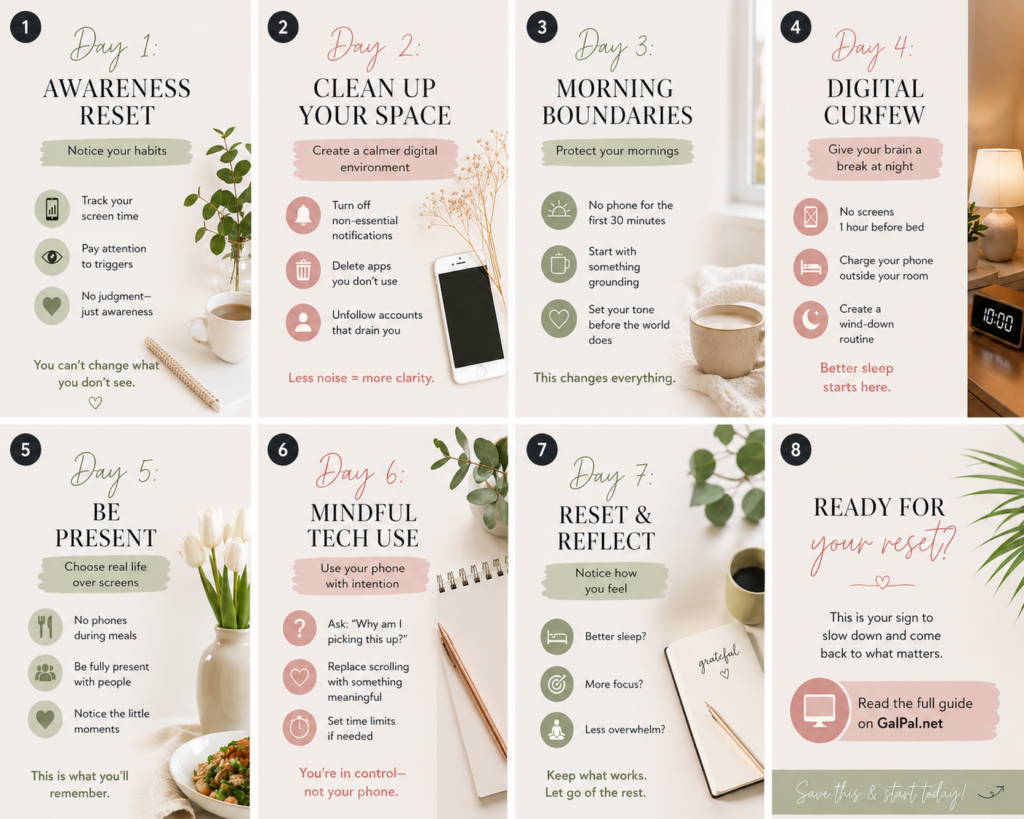
Day 1: Awareness Reset
Start with awareness.
- Check your daily screen time
- Notice when you reach for your phone
- Identify your biggest time-wasters
👉 You cannot change what you are not aware of.
Day 2: Notification Detox
Take back control of your attention.
Turn off:
- Social media notifications
- Email alerts
- App promotions
Keep only:
- Calls
- Important messages
Day 3: Social Media Detox
Create boundaries around social media use.
- Limit use to 20–30 minutes per day
- Remove apps from your home screen
- Unfollow or mute accounts that drain you
👉 This helps reduce comparison, stress, and social media addiction.
Day 4: Reduce Screen Time Before Bed
This is one of the most powerful changes.
➡️ No screens 1 hour before bed
Try instead:
- Reading
- Journaling
- Stretching
- Taking a bath
👉 This improves sleep hygiene and helps your body naturally wind down.
Day 5: Create Tech-Free Zones
Set physical boundaries in your home.
Start with:
- Bedroom (no phones at night)
- Dining table (be present)
- Morning routine (no scrolling first thing)
👉 These habits support intentional living and better daily routines.
Day 6: Replace the Habit
Do not just remove scrolling—replace it.
Try:
- Going for a walk
- Calling a friend
- Reading 10 pages
- Practicing gratitude
- Moving your body
👉 These are the healthy habits that actually improve your life.
Day 7: Intentional Tech Use
Reset how you use your phone.
Before picking it up, ask:
👉 “What am I here to do?”
Use technology for:
- Productivity
- Connection
- Learning
Not just habit.
Bonus Tips to Reduce Screen Time
These small shifts make a big difference:
- Turn your phone to grayscale (reduces dopamine hits)
- Use “Do Not Disturb” during work hours
- Batch check emails instead of constantly checking
- Use a real alarm clock (not your phone)
- Try a “dopamine detox” day each week
- Set app time limits
Apps to Help Reduce Screen Time
- Apple Screen Time
- Digital Wellbeing
- Freedom app
- Opal
- Forest
Family Digital Detox Ideas
I have found in my family that if we have a no phone rule at dinner, it works great. Putting our phones away for family conversations are essential. We all need to learn how to manage our technology for a healthier life.
- No phones at meals
- Family walks
- Game nights
- Shared charging station
Digital Detox FAQs
1. What is a digital detox?
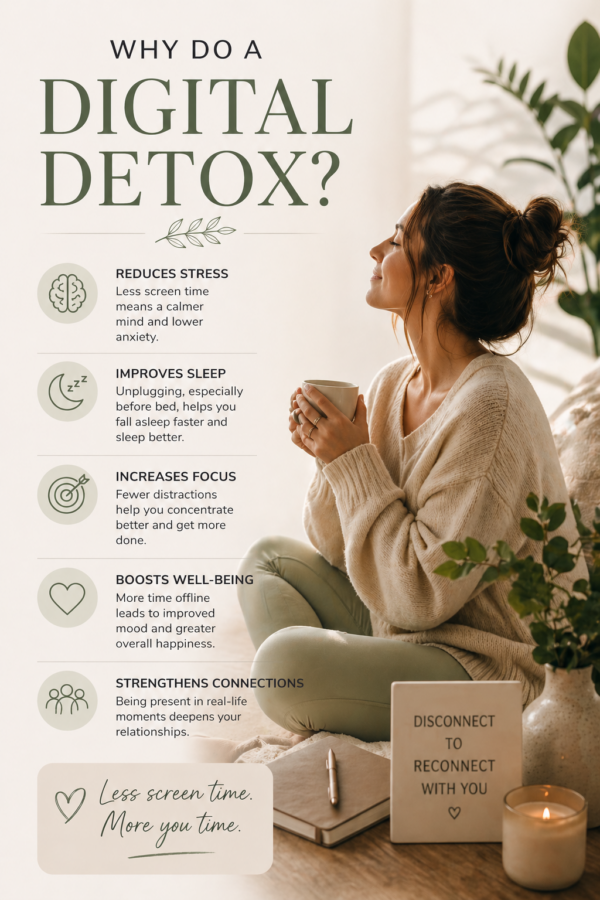
A digital detox is a period of time when you intentionally reduce or stop using devices like your phone, computer, or social media to reset your habits and mental clarity.
2. Why do people do a digital detox?
To reduce stress, improve sleep, increase focus, feel more present, and break constant scrolling habits.
3. How long should a digital detox last?
It can be a few hours, a full day, a weekend, or ongoing daily habits. Consistency matters more than length.
4. Do I have to completely stop using my phone?
No. Focus on limiting non-essential use like social media while keeping necessary use like calls or work.
5. What are the first steps to start a digital detox?
Turn off notifications, set screen-free times, keep your phone out of the bedroom, and replace scrolling with a healthier habit.
6. What should I do instead of being on my phone?
Go for a walk, read, cook, journal, call a friend, or spend time outdoors.
7. Will I feel anxious without my phone?
Yes, at first. This is normal and usually fades as your brain adjusts.
8. How do I stop mindless scrolling?
Move apps off your home screen, set app limits, log out daily, and pause before opening apps.
9. Can a digital detox improve sleep?
Yes. Reducing screen time before bed helps you fall asleep faster and improves sleep quality.
10. What is a realistic daily digital detox routine?
No phone in the morning for 30 minutes, scheduled check-ins, tech-free breaks, and no screens one hour before bed.
11. How often should I do a digital detox?
Daily boundaries, weekly resets, and occasional longer breaks work best.
12. Can I still use social media after a detox?
Yes—just use it intentionally and limit time spent scrolling.
Final Thought
Small changes create real results. Your time and energy are worth protecting.