The Most Beautiful and Easy Indoor Plants For Low-Light
I’ll be honest — I love a beautiful plants in light-filled room, but not every corner of our homes gets that dreamy sunshine we see on Instagram. Discover the most beautiful, easy indoor house plants that thrive in low light. Perfect for beginners, busy homes, and cozy spaces with limited natural sunlight.
The good news? There are so many gorgeous houseplants that are tolerant of low light and can thrive indoors without needing constant attention. While most plants prefer bright, indirect light, many of the most plants for indoor spaces are adaptable and resilient, making them suitable for a variety of low-light conditions.
If you’re a beginner, busy, traveling often, or simply want your home to feel calmer and greener without the stress, this one’s for you. Many tolerant plants, like the ZZ plant, can handle low-light conditions and even thrive in north-facing rooms. You don’t have to rely on realistic indoor trees and plants.
Key Takeaways
- Discover beautiful, easy indoor plants for low light, perfect for beginners and busy lifestyles.
- Indoor plants enhance air quality and bring a sense of calm to your space; they thrive without direct sunlight.
- There are 10 top most beautiful indoor plants that thrive in low light rooms.
- Consider pet-friendly plants and ensure sturdy planters to keep curious pets safe.
- Monitor watering and light conditions to help your indoor plants flourish in any environment.
Why Indoor Plants Are Always a Good Idea
Indoor plants do more than just look pretty—they offer the benefit of softening a space, improving air quality, and instantly making a home feel more peaceful and lived-in.
Research, including NASA’s studies, indicates that certain houseplants can remove indoor toxins like formaldehyde and benzene..
I always say: if a beautiful plant can survive a busy week (or two), it’s welcome in my home.
The Most Beautiful House Plants For Indoor Spaces That Are Easy To Care For
There’s no “one right plant.” Some people love flowering plants, others lean toward lush foliage or architectural shapes. What matters most is choosing plants that fit your lifestyle and light conditions.
Visit a local garden center, ask questions, explore online resources, and don’t be afraid to try something new. Start small and see what thrives — your home will tell you what it loves. The following is a simple guide to the most beautiful and easy indoor houseplants.

1. Snake plants – Tough, Modern & Nearly Impossible To Kill
If there were an award for most forgiving houseplant, the snake plant would win every time. It’s one of the easiest low-light plants to grow and honestly thrives on a little neglect. Those bold, sword-like leaves grow straight up and out, with deep green centers, soft gray striping, and hints of yellow or gold along the edges. Some varieties can grow impressively tall, making them a great statement plant in any room.
Also known as mother-in-law’s tongue, this plant is incredibly adaptable. It prefers partial shade but handles both bright and dim light without complaint. Plant it in well-draining soil, go easy on the water, and let the soil dry out completely between drinks. If you tend to forget about your plants from time to time, this one will still love you back.
- Nearly indestructible
- Tolerates very low-light

2. ZZ Plant
The ZZ plant is one of those set-it-and-forget-it houseplants we all need more of. It’s incredibly tough, with glossy, leathery leaves in rich shades of light and dark green that fan out from thick, sturdy stems. Most ZZ plants grow 2–3 feet tall, but in the right conditions, they can surprise you and grow even taller.
This plant is wonderfully drought-tolerant and actually prefers its soil to dry out completely before watering. It thrives in indirect light and is one of the best options for homes with limited natural sunlight
- Glossy, architectural leaves
- Handles neglect and low light beautifully
- Minimal watering needed

3. Peace Lily
Peace lily – beautiful and great for air quality (Spathiphyllum)The peace lily is one of those plants that feels both elegant and effortless. With its deep green leaves and graceful white blooms, it instantly brightens a room while still being wonderfully low-key.
It’s a favorite for indoor spaces because it looks polished without feeling fussy.Peace lilies do especially well in low to bright indirect light, making them perfect for bedrooms, living rooms, or offices that don’t get a lot of sun.
- Elegant white blooms
- Does well in low light
- Helps improve air quality

4. Pothos (Epipremnum aureum)
With its trailing vines and heart-shaped leaves, it adds instant warmth and softness to a space, whether it’s cascading from a shelf, perched on a bookcase, or styled in a hanging planter.This plant is incredibly adaptable and thrives in low to bright indirect light, making it a go-to for rooms with limited natural sunlight.
- Trailing vine looks gorgeous in any room
- Flourishes in low-medium light
- Very forgiving

5. Japanese Sago Palm
If you love a plant that brings instant structure and a slightly tropical feel to a room, the Japanese Sago Palm is a beautiful choice. With its stiff, glossy, feather-like fronds growing from a sturdy central trunk, it adds a sculptural, almost resort-like vibe to indoor spaces — even in lower light.
Despite its palm-like look, the sago palm is slow-growing and surprisingly low maintenance. It prefers bright, indirect light but can tolerate lower light conditions, making it a great option for living rooms, entryways, or offices.
Use well-draining soil and let it dry out between waterings — this is one plant that does not like wet feet.
- Timeless, Sculptural Evergreen Beauty
- It acts like living décor, adding structure and elegance to entryways, living rooms, and quiet corners without needing flowers or fuss.
- Low Maintenance & drought-tolerant

6. Prayer Plant (Maranta)
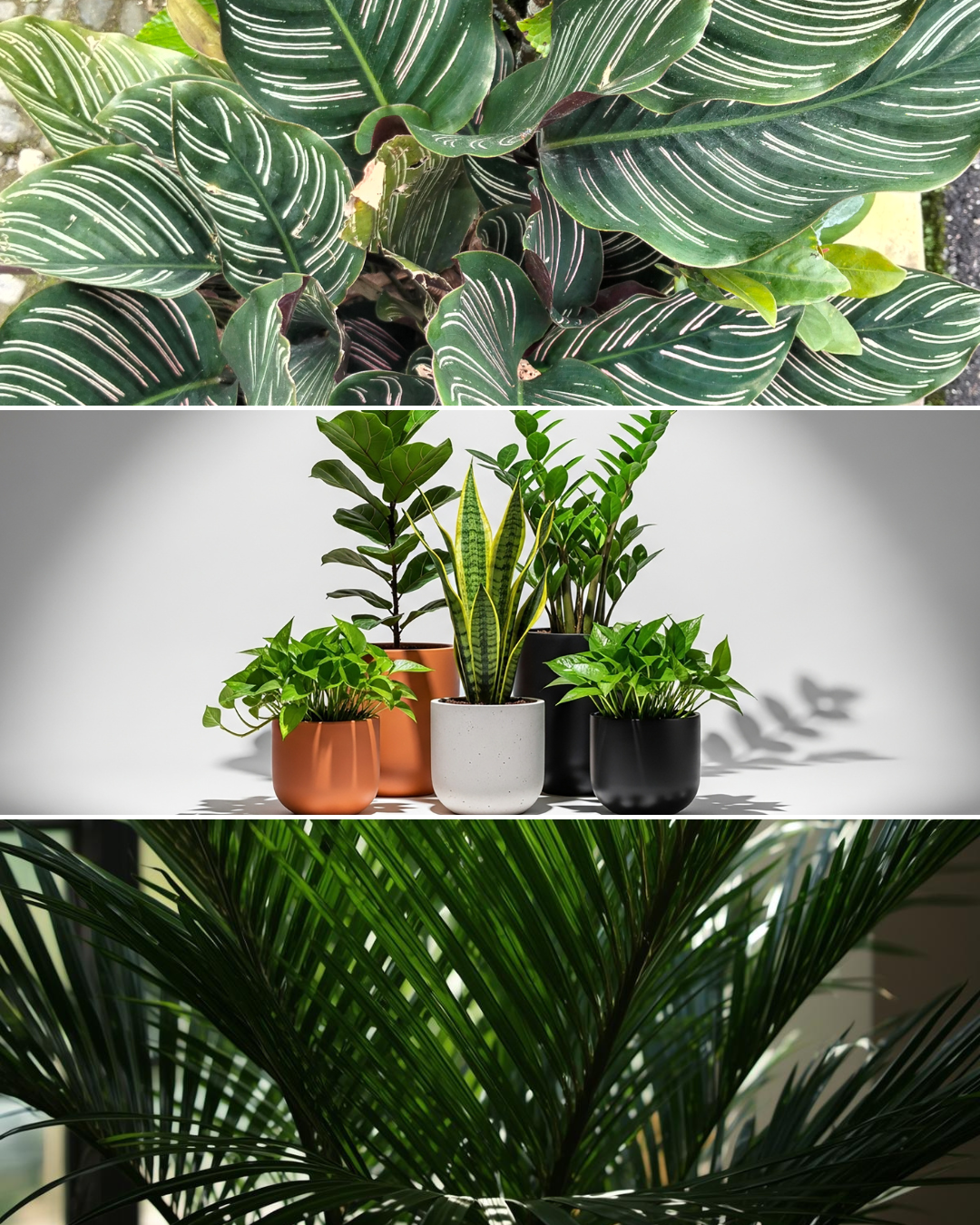
The prayer plant is one of those houseplants that feels a little magical. Its beautifully patterned leaves — with soft greens, deep veining, and touches of red or purple — gently fold upward at night, almost like hands in prayer.
It’s a favorite if you love plants with personality and movement. Prayer plants do best in low to bright indirect light, making them ideal for bedrooms, living rooms, or cozy corners that don’t get direct sun. They love consistent moisture (not soggy soil) and appreciate a bit of humidity, which keeps their leaves looking lush and vibrant. Direct sunlight can fade or scorch the foliage, so softer light is key.
- It visually softens a space
- It creates a peaceful, almost meditative feel
- It’s approachable and forgiving for beginner plant owners

7. Spider Plant (Chlorophytum comosum)
If there were an award for most forgiving houseplant, the snake plant would win every time. It’s one of the easiest low-light plants to grow and honestly thrives on a little neglect. Those bold, sword-like leaves grow straight up and out, with deep green centers, soft gray striping, and hints of yellow or gold along the edges.
Some varieties can grow impressively tall, making them a great statement plant in any room. Snake plants, along with ZZ plants, are highly recommended for beginners due to their low maintenance needs.
Also known as mother-in-law’s tongue, this plant is incredibly adaptable. It prefers partial shade but handles both bright and dim light without complaint. Plant it in well-draining soil, go easy on the watering, and let the soil dry out completely between drinks. If you tend to forget about your plants from time to time, this one will still love you back.
- Nearly indestructible
- Tolerates very low light
- Great air purifier

8. Philodendron
Philodendrons are classic houseplants with heart-shaped leaves and a reputation for being very forgiving, making them perfect for beginners. They adapt well to a variety of indoor conditions and can thrive in low to bright indirect light.
- Grow full and leafy, adding instant warmth to a space
- Require very little maintenance
- Work beautifully in pots, on shelves, or trailing from planters

9. Boston Fern
Boston Fern acts as a natural humidifier and is especially effective against formaldehyde in dry indoor environments. Its feathery fronds add lushness and help purify the air.
- Lush, Timeless Beauty
- Improves Air Quality & Humidity
- Pet-Friendly & Gentle

10. Lucky Bamboo (Dracaena sanderiana)
Lucky bamboo is a clean, modern indoor plant known for its upright, cane-like stems and fresh green leaves. Despite its name, it isn’t true bamboo but a type of dracaena. It’s incredibly adaptable, thrives indoors, and does well in low to bright indirect light. You can grow it in water or soil, which makes it especially versatile for desks, shelves, and minimalist spaces.
- Calming & symbolic: Often associated with good luck, balance, and positive energy
- Low-light friendly: Thrives in low to bright indirect light and avoids direct sun
- Easy care: Grows in water or soil with minimal maintenance
Pet-Friendly Indoor Plants (Because Our Furry Friends Matter)
If you have pets, plant shopping needs one extra step. I always look for low-toxicity or pet-friendly options so everyone stays safe.
Great pet-friendly, low-light choices include:
- Spider plants
- Air plants
- Cat-friendly greens like catnip or wheat grass
Use sturdy planters that won’t tip easily, and keep delicate plants slightly elevated if curious paws are involved.
Low-Maintenance Plants for Busy Lives
A few easy indoor plant care tips:
- Water less, not more. The main cause of plant death for beginners is overwatering—always allow the soil to dry out between waterings.
- Monitor soil moisture levels before watering to avoid excess moisture, which can harm plant roots.
- During summer, adjust your plant care routine by checking watering needs more frequently and ensuring your plants get enough sunlight, as higher temperatures and longer days can affect their growth.
- Choose disease-resistant plants
- Try self-watering pots if you forget (we’ve all been there)
- Experimenting with colors and materials in your planters can help match your interior design scheme, making your plant displays both functional and stylish.
Choosing the Right Plant for Low Light
Before you bring a plant home, pause and really look at your space. Does it get bright indirect light, or is it more of a cozy, shaded corner? Most low-light plants don’t want direct sun — they actually prefer it filtered, thriving best in environments with indirect sunlight.
Creating the right environment—including proper humidity, temperature, light, and airflow—is essential for optimal plant health.
Simple Plant Care That Actually Works
Healthy plants don’t need perfection — just consistency.
- Water when the soil feels dry (not on a rigid calendar)
- Most indoor plants flourish in bright, indirect light and should be positioned a few feet away from south, west, or east-facing windows.
- Use a balanced fertilizer lightly during growing seasons to provide essential nutrients, as indoor plants rely on fertilizer for healthy growth in pots where nutrients are limited
- Pruning occasionally helps encourage new growth, improves plant appearance, removes dead or leggy stems, and can promote bushier, fuller plants
- Choose the right pot with good drainage to prevent overwatering and support healthy roots
- You can also start some plants from seed, but be sure to provide the proper conditions for seed germination, such as warmth and moisture
- Watch for pests or yellowing leaves and adjust early
Indoor plants have unique growing requirements, including specific light, water, humidity, and temperature needs. Plants require fresh air and ventilation to exhale and transpire, which is critical for their health. Humidity is an important component of plant health, and many indoor plants prefer a humid environment. Most indoor plants generally prefer a warm temperature range, ideally between 65-70°F (18-21°C) during the winter months.
Humidity and temperature matter too. A little misting or moving a plant away from drafts can make a big difference.
Creating a Calm, Peaceful Home with Plants
This is my favorite part. 🌿
Plants have a way of slowing everything down. Soft foliage, gentle textures, and even calming scents like lavender or chamomile can completely shift the energy of a room. Pair plants with candles, soft music, or a water feature and suddenly your home feels like a retreat.
Even one or two thoughtfully placed plants can bring a sense of calm and balance into your space.
Making the Most of Your Space with Indoor Plants
Transforming your indoor space into a lush, green retreat is all about working with what you have—and a little plant knowledge goes a long way. Whether you’re dealing with a sun-drenched living room or a cozy nook with low light conditions, there’s a house plant that’s just right for your environment.
Start by assessing the light in each room. If you have a spot that only gets a hint of sunlight, don’t worry—plants like the snake plant and ZZ plant are champions at thriving in indirect light and can tolerate low light conditions with ease. For brighter rooms that bask in direct sunlight, consider adding a swiss cheese plant or a spider plant, both of which love bright indirect light and will reward you with vibrant growth.
Watering needs are another key factor. Overwatering is a common pitfall, especially for indoor plants that prefer well drained soil, like the peace lily or maidenhair fern. Always choose pots with drainage holes to keep roots healthy, and water only when the soil feels dry to the touch. If you’re prone to a little neglect (no judgment here!), opt for low maintenance varieties like the ZZ plant or snake plant, which can handle a missed watering or two.
Humidity can make a big difference, too. Some plants, such as African violets and prayer plants, thrive in a more humid environment and may appreciate a gentle misting or a spot in the bathroom. Others, like air plants and succulents, are more tolerant of dry air and need less frequent watering.
Don’t be afraid to get creative with your plant displays. Hanging baskets are perfect for trailing varieties like the swiss cheese plant or prayer plants, while terracotta planters add a classic touch and help keep soil moisture balanced. Even a small shelf or windowsill can become a mini indoor garden with the right selection of potted plants.
Visit Your Local Garden Center For Inspiration
For inspiration and expert advice, a trip to your local garden center can open up a world of possibilities. You’ll find everything from easy-care air plants to statement-making foliage, and the staff can help match you with plants that suit your space and lifestyle.
Ultimately, making the most of your indoor space with house plants is about finding the right balance of light, water, and care. With a little attention to your plants’ needs—and a willingness to experiment—you’ll create a thriving, beautiful environment that boosts your well being and brings a little more life into every room. Whether you’re a seasoned plant parent or just starting out, there’s no better time to let your indoor garden grow.
Final Thoughts
You don’t need a sun-drenched greenhouse or a green thumb to enjoy indoor plants. With the right low-light options, a little knowledge, and a relaxed approach, you can create a home that feels alive, peaceful, and welcoming.
Start with one plant. Let it grow with you. And before you know it, you’ll be rearranging furniture just to make room for the next one. 🌿✨
If you try any of these or have a favorite low-light plant you swear by, I’d love to hear about it.