The Ultimate Guide to College Dorm Move-In Day (Mom-Tested)
There’s a very specific kind of chaos that happens the week before your kid moves into their dorm. Bins everywhere. A packing list that seems to grow by the hour. And underneath it all, that lump in your throat you’re trying not to think about too hard. Here find the ultimate dorm room move-in guide with a checklist and tips for a smooth transition. Guide includes how to organize a dorm room. This comprehensive guide is mom tested with all emotions considered.
I’ve been there. And after doing my own research, talking to other moms, and living through the actual move-in day, I put together everything I wish someone had handed me beforehand — the practical stuff (what to actually buy) and the emotional stuff (how to actually get through the day). Consider this your one-stop dorm room decorating and move-in guide, keyword-optimized so you can find it again when you’re panic-Googling at 11pm, but written like I’m talking to you over coffee.
Let’s get your young adult’s dorm room decorated, organized, and ready — without losing your mind (or your budget) in the process.
Key Takeaways
- Prepare for chaos during dorm move-in with this comprehensive dorm move-in guide.
- Check room dimensions, confirm bed sizes, and communicate with the roommate before shopping.
- Pack smartly with essentials readily accessible and use labeled containers for organization.
- Focus on vertical storage and creating zones to maximize small dorm spaces effectively.
- Remember to document the room’s condition and let your student lead on decor decisions for a smoother transition.
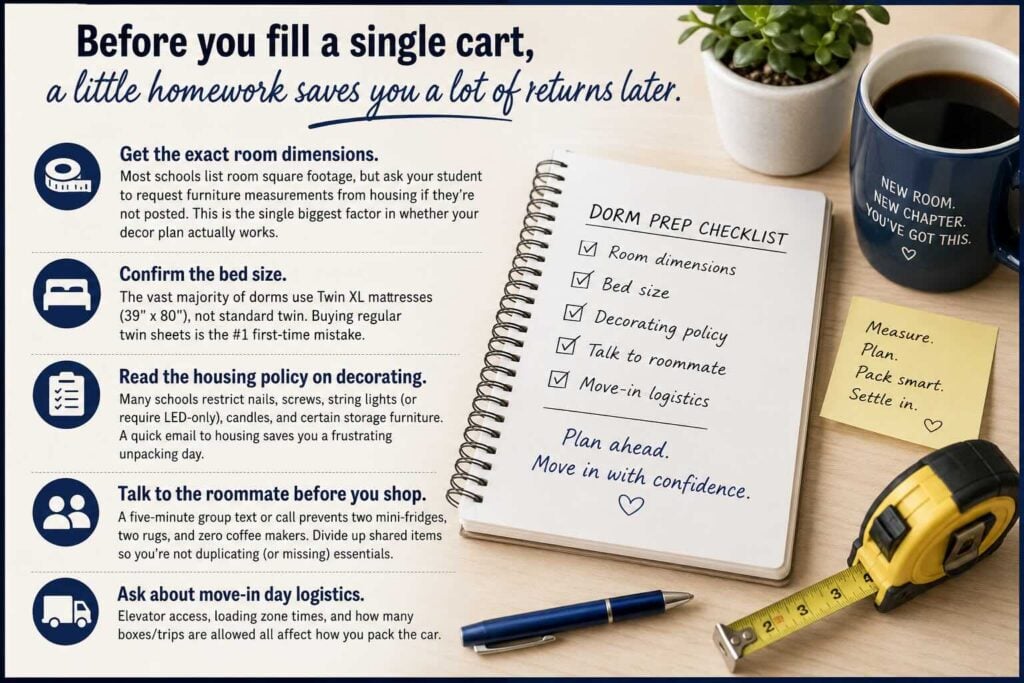
Table of contents
- 5 Things to Check Before Move In Day
- Smart Items Most Overlook: Dorm packing checklist
- Before you Decorate and Set up the Room:
- Helpful Parent Ideas For Extra Comfort
- What Not To Do
- Moving Day: Tips and Tricks From Moms Who’ve Survived It
- The Part No One Prints on a Checklist: Letting Go
- Frequently Asked Questions
- Final Thoughts
5 Things to Check Before Move In Day
Before you fill a single cart, a little homework saves you a lot of returns later.
- Get the exact room dimensions. Most schools list room square footage, but ask your student to request furniture measurements from housing if they’re not posted. This is the single biggest factor in whether your decor plan actually works.
- Confirm the bed size. The vast majority of dorms use Twin XL mattresses (39″ x 80″), not standard twin. Buying regular twin sheets is the #1 first-time mistake.
- Read the housing policy on decorating. Many schools restrict nails, screws, string lights (or require LED-only), candles, and certain storage furniture. A quick email to housing saves you a frustrating unpacking day.
- Talk to the roommate before you shop. A five-minute group text or call prevents two mini-fridges, two rugs, and zero coffee makers. Divide up shared items so you’re not duplicating (or missing) essentials.
- Ask about move-in day logistics. Elevator access, loading zone times, and how many boxes/trips are allowed all affect how you pack the car.
Moving your child into a college dorm is a lot easier when you go in with a plan. Think of it as a quick, organized setup—not moving an entire house. Bring the essentials, stay flexible, and let your student have a say in how their new space comes together.
Plan ahead
- Double-check the move-in time, parking instructions, elevator availability, room measurements, included furniture, and rules on what cannot be brought into the dorm.
- Reach out to the roommate before shopping so you do not both bring the same larger items, such as a mini fridge, microwave, rug, TV, or coffee maker.
- Avoid packing every seasonal item or decorative piece. Dorm rooms fill up quickly, and you can always ship or bring more later.
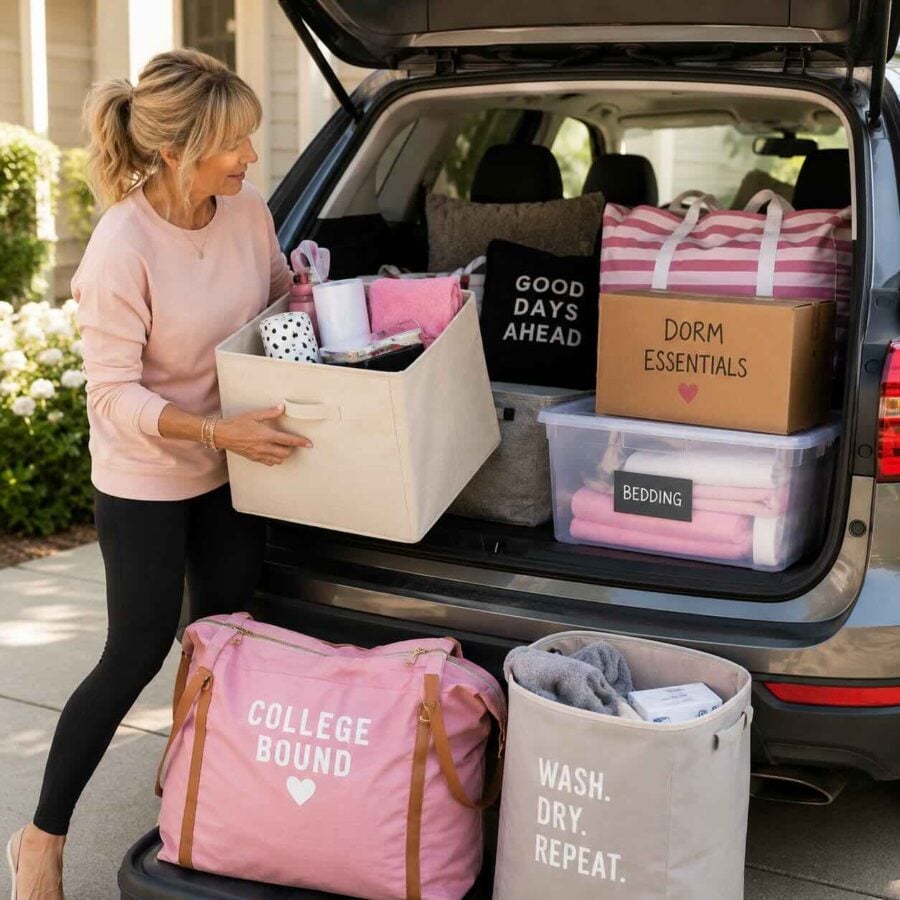
- Use easy-to-carry bags, bins, and collapsible storage instead of a car full of cardboard boxes.
- Label containers with your student’s name, dorm building, room number, and what is inside, such as bedding, bathroom supplies, or desk items.
Pack smarter
- Put cleaning supplies, wipes, paper towels, trash bags, scissors, tape, a measuring tape, and basic tools in one grab-and-go tote.
- Keep important items—student ID, move-in paperwork, wallet, medicine, laptop, chargers, and keys—in a separate bag that stays with you.
- Leave clothing on hangers and cover groups of hanging clothes with a trash bag for an easy move from closet to closet.
- Load the car so the items you need first are easiest to reach. Cleaning supplies, bedding, and a fan should not be buried under everything else.
- Bring water, snacks, and something simple for lunch because move-in day can be hot, crowded, and longer than expected.
Smart Items Most Overlook: Dorm packing checklist
The Ultimate Dorm Packing Checklist
Ten categories, color-coded so you can shop and pack by priority — from the essentials nobody remembers until move-in day, to the small comforts that make a dorm room feel like home.
Charging
- Approved surge protector with a long cord
- Portable power bank
Dorm outlets are often scarce or awkwardly placed, and a power bank is helpful during long campus days.
Sleep
- Mattress encasement
- Mattress topper
- Earplugs
- Eye mask
- Small clip-on fan
Makes an unfamiliar bed and noisy floor much more manageable.
Organization
- Bedside caddy
- Over-the-door hooks
- Hanging closet organizer
- Drawer dividers
- Small lockbox
Keeps daily necessities close without taking up valuable floor or desk space. Under-bed bins and hanging shoe storage are also useful.
Laundry
- Pop-up hamper with shoulder straps
- Stain-remover pen
- Mesh delicates bag
- Laundry card / coins if needed
- Drying rack
Easier trips to the laundry room and fewer ruined clothes.
Shared Bathroom
- Quick-dry shower caddy
- Shower sandals
- Robe
- Waterproof toiletry bag
- Towel wrap / hook
A rigid or quick-draining caddy and shower shoes are especially useful for communal bathrooms.
Room Upkeep
- Handheld vacuum or mini broom
- Lint roller
- Odor absorber
- Disinfecting wipes
- Small trash bags
- Paper towels
Dorm rooms gather dust, crumbs, and laundry odors surprisingly fast.
Quick Repairs
- Compact tool kit
- Scissors
- Tape
- Zip ties
- Extra batteries
- Sewing kit
- Removable hanging strips
Helpful for setup, minor clothing fixes, and last-minute projects. A small tool kit and spare batteries are commonly forgotten.
Health
- Thermometer
- First-aid kit
- Bandages
- Blister pads
- Allergy medicine
- Cold medicine
- Pain reliever
- Electrolyte packets
- Heating pad, if appropriate
It is much easier to have these on hand than to shop when they are sick or exhausted.
Food
- Reusable utensils
- Microwavable bowl
- Mug
- Food-storage containers
- Can opener
- Dish soap
- Sponge
- Water-filter pitcher, if desired
Lets them handle basic meals and late-night snacks without accumulating disposable waste.
Weather
- Compact umbrella
- Rain jacket
- Sunscreen
- Small backpack rain cover
Particularly useful for students walking across campus daily. An umbrella is a frequently overlooked basic.
Before you Decorate and Set up the Room:
- Before unpacking, take photos or videos of the room to document any stains, marks, or damage already there.
- Give surfaces a quick clean, including drawers, the desk, door handles, and the mattress frame.
- Make the bed early. It creates an instant comfortable spot for resting or placing pillows and blankets.
- Put together the main storage and furniture arrangement before opening décor and smaller accessories.
- Check that the lights, outlets, locks, Wi-Fi, and approved appliances all work before leaving campus.
Quick Guide: How to Organize a Dorm Room
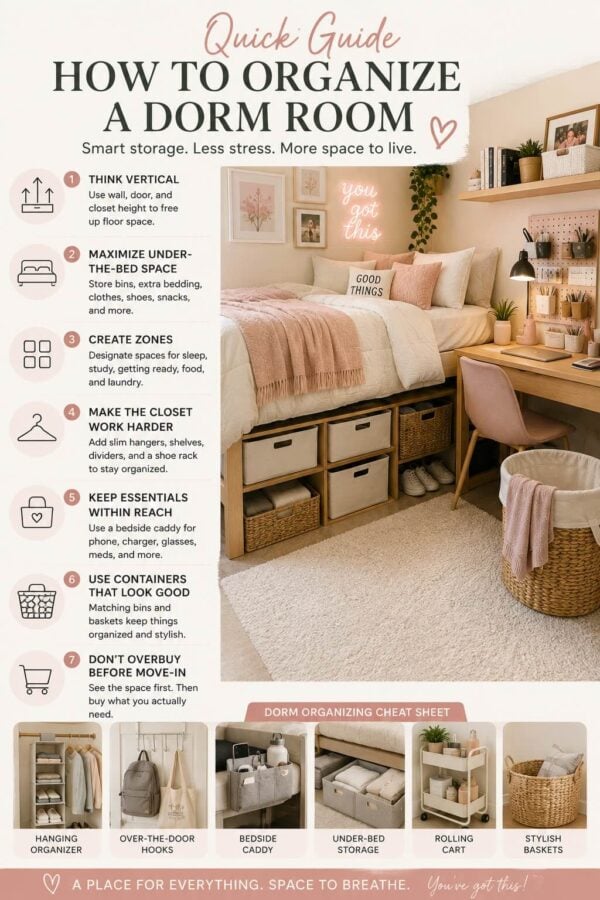
Dorm rooms are small, so the secret is to use every inch wisely without making the room feel cluttered. Before buying more organizers, focus on creating a place for the things your student actually uses. Create a cozy vibe in your students dorm or apartment space.
1. Think Vertical
Take advantage of walls, doors, and closet height. Use hanging closet organizers, over-the-door hooks, stackable shelves, and approved wall storage to free up valuable floor space.
2. Maximize Under-the-Bed Space
This is prime dorm real estate. Use bins or drawers for extra bedding, towels, shoes, seasonal clothes, snacks, and items that aren’t needed every day.
3. Create Zones
Give everything a “home”:
- Sleep: bedside caddy, charger, water bottle
- Study: school supplies, laptop, notebooks
- Getting ready: toiletries, makeup, hair tools
- Food: snacks, dishes, reusable bottles
- Laundry: hamper, detergent, stain remover
4. Make the Closet Work Harder
Add slim hangers, a hanging organizer, shelf dividers, and a shoe rack. Keep frequently worn pieces easy to reach and store less-used items up high. More closet storage ideas here.
5. Keep Everyday Essentials Within Reach
A bedside caddy is especially helpful with a lofted bed. Keep a phone, charger, glasses, medication, earbuds, and other nighttime essentials together.
6. Use Containers That Look Good
In a tiny room, storage becomes part of the décor. Choose baskets, bins, and organizers in a coordinated palette so the room feels intentional rather than cluttered.
7. Don’t Overbuy Before Move-In
This may be the most important tip. See the room first. Once your student knows the actual layout, closet size, bed height, and what their roommate brought, you can order whatever is truly missing.
Dorm organizing rule: If it doesn’t have a home, it probably becomes clutter. Give the everyday stuff a designated spot and leave a little breathing room for everything else.
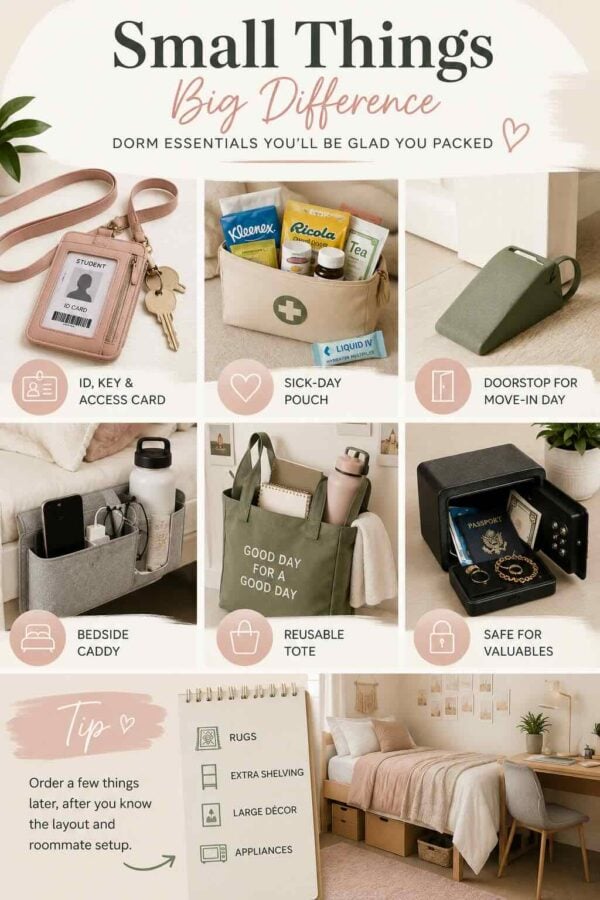
Little tricks and tips that help your student
- Buy a lanyard or wallet-style phone holder for their student ID, key, and room-access card.
- Create a “sick-day pouch” with medicine, tissues, cough drops, tea, instant soup, and a few electrolyte packets.
- Add a doorstop for move-in day only, if permitted; it keeps hands free while carrying loads in and out.
- Use a bedside caddy for a phone, charger, glasses, water bottle, and medication—especially if the bed is lofted.
- Pack a small reusable tote for trips to the dining hall, library, or laundry room.
- Give them a small, inexpensive safe or locking pouch for passports, spare cards, cash, and sentimental jewelry.
- Order a few things later, after they know the layout and roommate setup. Rugs, extra shelving, large décor, and appliances are often better purchased after move-in rather than guessed in advance.
One important reminder
Avoid buying extension cords, unapproved power strips, candles, hot plates, air fryers, or oversized appliances until you have read the dorm’s housing rules. Schools commonly restrict certain electrical and heat-producing items, and roommate coordination can prevent duplicate purchases.
Helpful Parent Ideas For Extra Comfort
- Put together a small comfort kit with basic first-aid supplies, favorite snacks, medications, insurance information, and anything else your child may need right away.
- Take a few photos and plan a relaxed final meal or coffee together before saying goodbye.
- Let your student take the lead on decorating and organizing. Having ownership of the space can help the dorm feel more like home.
- Leave a handwritten note, a small gift, or a favorite treat for them to find after you leave.
What Not To Do
- Avoid buying or moving in large furniture until your student has spent time in the room and knows what they actually need.
- Check dorm rules before bringing items such as extension cords, power strips, candles, lamps, or cooking appliances.
- Do not take over the shared space before talking with the roommate.
- Remember that the room does not need to look perfect on day one. A clean space, a made bed, basic organization, and the essentials are more than enough to get started.
Moving Day: Tips and Tricks From Moms Who’ve Survived It
Move-in day itself is its own event. Here’s how to make it smoother
- Pack the car in reverse order of need. The last thing loaded should be the first thing unloaded — think bedding and toiletries, not the desk lamp buried at the bottom.
- Label every bin by room destination, not by category (e.g., “closet” or “under bed,” not just “clothes”). It speeds up unpacking dramatically.
- Bring a small “day-one” bag separate from everything else with sheets, a phone charger, snacks, water, and toiletries so the first night doesn’t depend on finding the right box.
- Arrive with tools already in hand — a portable caddy with Command strips, scissors, a screwdriver, and tape saves multiple trips back to the car.
- Assemble storage first, decorate second. Get the functional stuff (bed risers, storage bins, closet organization) done before hanging a single photo — it’s much easier to decorate around a room that’s already organized.
- Expect the elevator line. Move-in day traffic is real. If your school offers a choice of time slots, an earlier one usually means less waiting.
- Let your student make some decisions on the spot. It’s tempting to arrange everything yourself, but letting them place a few things (even if you’d do it differently) helps the room feel like theirs from day one.
Budget-Friendly Tips That Don’t Look Cheap
- Set a total budget before you shop, and split it by category (bedding, storage, decor) so one splurge doesn’t blow the whole plan.
- Buy bedding and big items during back-to-school sales, and save decor accents for after move-in once you see the actual room and lighting.
- Shop secondhand or ask upperclassmen for gently used storage bins, mini fridges, and furniture — many campuses have a swap group or resale event at the end of spring semester.
- One statement item, budget everywhere else. A great rug or a favorite piece of art can anchor the whole room; everything else can be simple.
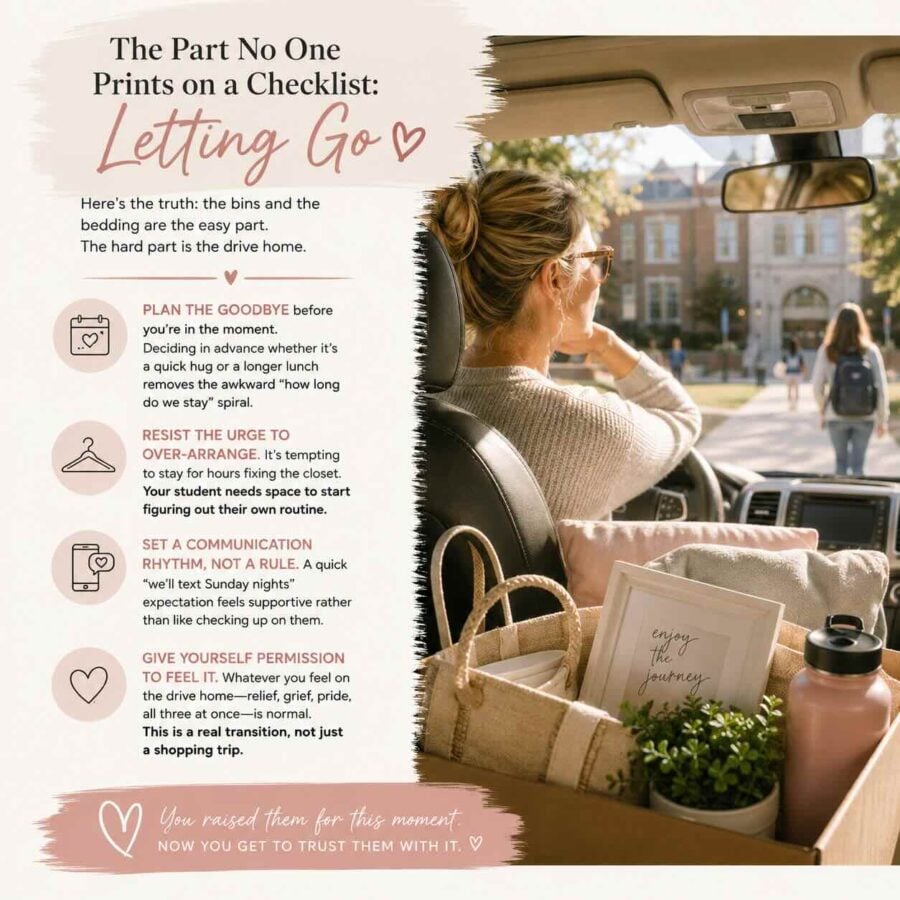
The Part No One Prints on a Checklist: Letting Go
Here’s the truth: the bins and the bedding are the easy part. The hard part is the drive home.
A few things that helped me, and that other moms have shared:
- Plan the goodbye before you’re in the moment. Deciding in advance whether it’s a quick hug or a longer lunch removes the awkward “how long do we stay” spiral.
- Resist the urge to over-arrange. It’s tempting to stay for hours fixing the closet. Your student needs space to start figuring out their own routine.
- Set a communication rhythm, not a rule. A quick “we’ll text Sunday nights” expectation feels supportive rather than like checking up on them.
- Give yourself permission to feel it. Whatever you feel on the drive home — relief, grief, pride, all three at once — is normal. This is a real transition, not just a shopping trip.
Frequently Asked Questions
What size sheets do I need for a dorm bed?
Twin XL (39″ x 80″) fits the vast majority of college dorm mattresses — 5 inches longer than a standard twin.
How early should I start shopping for dorm essentials?
Start with big-ticket items (mattress topper, storage, bedding) 6–8 weeks before move-in, and save decor accents for closer to the date once room details are confirmed.
Can I hang things on dorm walls?
It depends on the school. Most allow Command strips and removable adhesive products but prohibit nails, screws, and tape that can damage paint — always check your school’s specific housing policy first.
Final Thoughts
Move-in day is loud, a little chaotic, and over faster than you expect. The decorating and the checklists matter — they really do make the transition smoother for both of you — but the bigger win is showing up prepared enough that you actually get to be present for the moment itself, instead of stuck untangling extension cords while everyone else says their goodbyes.
If this guide helped, save it, share it with another mom in your circle who’s headed into her own move-in season, and check back for more real-talk guides on the college transition.What’s the one dorm item you couldn’t have survived move