Muscle After 40: Why Strength Training Matters More Than Ever For Women
As we age, it is more important that ever to strengthen your muscles. Your body has more than 600 skeletal muscles, and after age 40, each one begins to decrease. Personally, I work hard to activate my muscles every day. The older I get the more I see why it is so important to to keep a healthy muscle mass. This post breaks down how to prevent muscle loss after 40 with strength training, even on GLP-1 drugs. A women’s health after 40 guide to longevity and lasting strength.
Key Takeaways
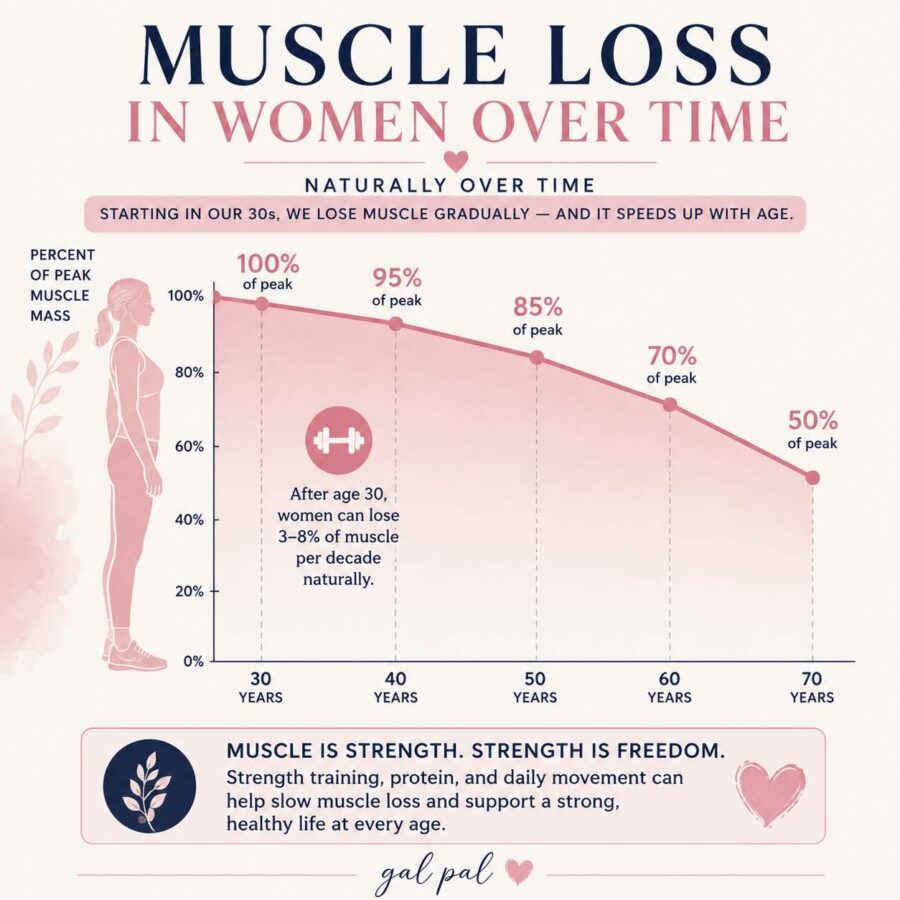
- From about age 40, women lose 3-8% of muscle tissue per decade. After 50, that rate accelerates to 5-10% per decade. Muscle mass is a strong predictor of longevity, and higher muscle mass is linked to lower mortality rates.
- Women on GLP-1 medications (semaglutide, tirzepatide) can lose 1.5-2 kg of lean body mass during treatment. About 25-30% of total weight lost on these drugs is lean tissue unless you actively protect it with resistance training and adequate protein.
- Strength training just two days per week is associated with roughly 46% lower odds of all-cause mortality in older adults. Two to three short weekly sessions, combined with daily “muscle moments,” can produce measurable gains in women in their 50s, 60s, and 70s.
- Muscle acts as a metabolic safety net: it burns more energy at rest than fat, improves insulin sensitivity, stabilizes joints, and reduces your risk of falls, fractures, type 2 diabetes, and heart disease.
- This article covers beginner-friendly workouts, GLP-1-specific nutrition strategies, lifestyle choices that support muscle health, and mindset shifts to help you stay consistent.
Why Muscle Matters More After 40 (Especially For Women)
Picture a woman in her late 40s reaching for a heavy suitcase at baggage claim. Her grip feels weaker than she remembers. The grocery bags feel heavier. Recovery from a weekend hike takes two days instead of one. She hasn’t changed much about her routine; her muscles have. We lose muscle mass faster than you think.
Muscles are specialized soft tissues composed of contractile cells or fibers. They are responsible for generating force during movement in the body, from climbing stairs to keeping your spine upright at your desk. Muscles help maintain posture and stability through continuous adjustments, hold bones in place and protect joints, and protect vital organs from physical impact.
My pal Kristen Dafoe owns a popular barre-based fitness studio (Lighthouse Fitness) in our community and she sees first hand the benefit of developing muscle for women of all ages. I can the same thing. If I didn’t take classes at Lighthouse Fitness and lift weights I know I wouldn’t have the strength and confidence I have.
What good are well-developed major muscle groups if you can’t bend over to touch your toes, reach overhead to place your suitcase, or pick yourself up off the floor unassisted if you fall? Strength isn’t worth much if it can’t be applied to daily life.”
Kristin Dafoe : Barre Eclipse, AFAA, and NASM certified instructor and local owner of Lighthouse, a barre-based fitness studio
Women’s health after 40 is shaped by hormonal shifts that speed up muscle and bone loss. Women typically carry less skeletal muscle mass than men, and the estrogen decline during perimenopause and menopause (average U.S. menopause age is around 51) accelerates this process. The result: less metabolic reserve, weaker joints, and a narrower margin for staying active and independent.
Muscle is not about “toning” or appearance. It is a key, often overlooked, driver of healthy longevity. The ability to travel, play with grandkids, carry luggage, get off the floor easily, and live without assistance in older age depends on the muscle mass you build and maintain right now.
Muscle, Aging, And Life Expectancy
Women generally outlive men due to biological factors. U.S. women born in 2022 have a life expectancy around 79 years. But life expectancy alone misses the point. What matters is how strong and capable you feel in those years; that gap between lifespan (years lived) and healthspan (years lived with good function) is where muscle makes the difference.
Genetics account for about 25% of longevity differences. Environmental factors like air quality impact longevity as well. Social connections can increase lifespan by up to 50%. But among the factors you can control, physical activity stands out. Regular exercise can add three years to your life, and modest leisure time exercise can extend life expectancy by 4.5 years. Regular physical activity contributes to a longer lifespan across every population studied.
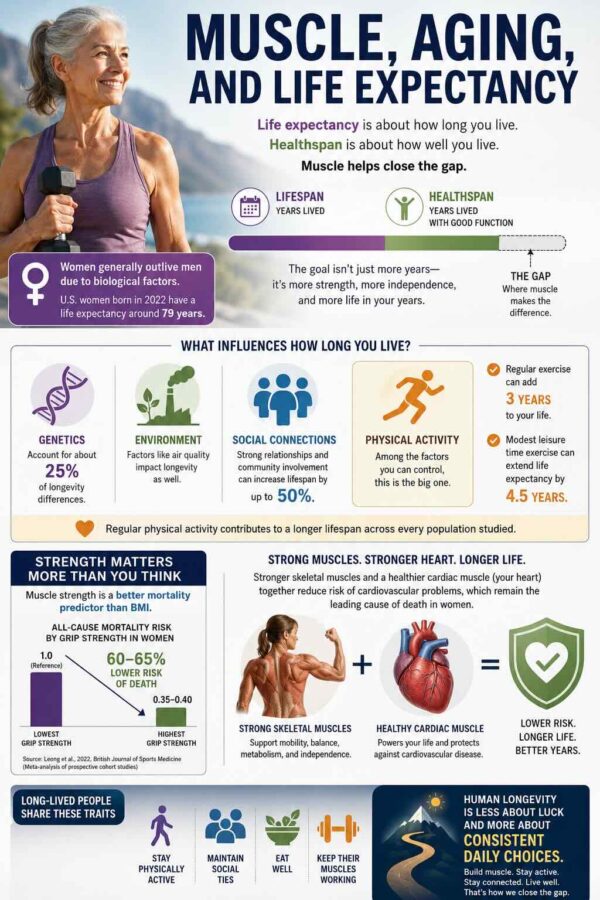
Within the exercise category, strength matters more than most people realize. Muscle strength is a better mortality predictor than BMI. Women in the highest grip-strength group have roughly 60-65% lower all-cause mortality compared to those in the lowest group. Stronger skeletal muscles and a healthier cardiac muscle (your heart) together reduce risk of cardiovascular problems, which remain the leading cause of death in women.
Long lived people share several traits: they stay physically active, maintain social ties, eat well, and keep their muscles working. Human longevity is less about luck and more about consistent daily choices. Muscle loss happens to the best of us.
What Your Muscles Actually Do: Skeletal, Cardiac, And Beyond
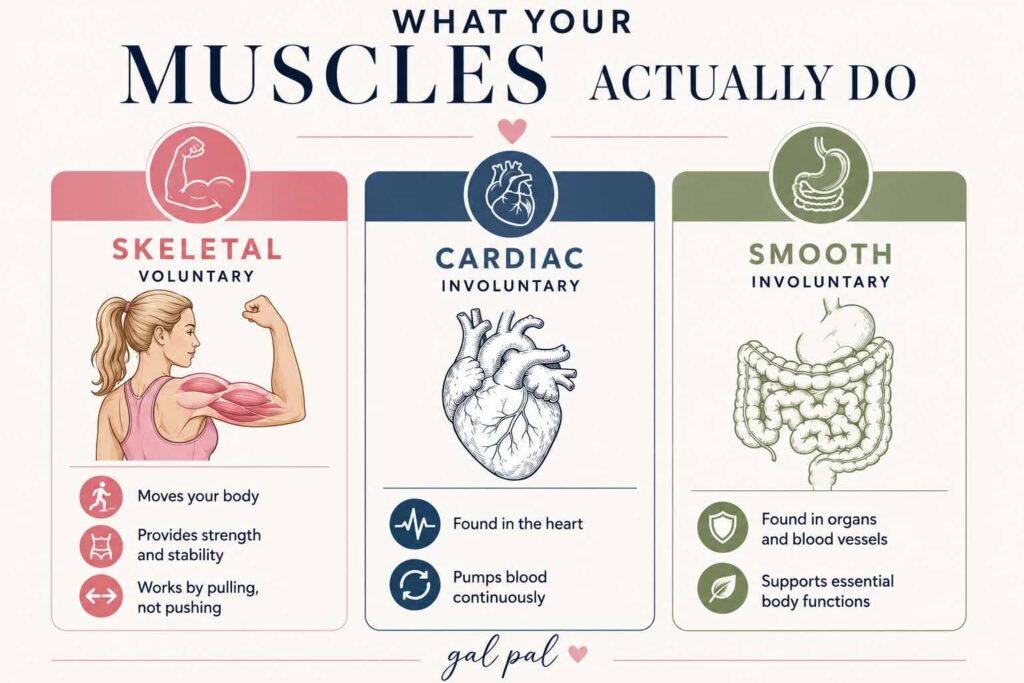
Your body runs on three types of muscle, and understanding them helps clarify why strength training is so important.
Skeletal muscles are striated and voluntary, allowing conscious control of movements. These are the “movement muscles” attached to bones by tendons. Your glutes help you rise from a low couch. Quadriceps power you up stairs. Your core keeps your spine stable when you carry a child. Skeletal muscles operate in antagonistic pairs, such as biceps and triceps: one contracts while the other lengthens. Muscles function by shortening and pulling, allowing movement and supporting organs. Muscles work exclusively by pulling, not pushing.
Cardiac muscle is found in the heart and contracts involuntarily to pump blood. The heart’s cardiac muscle contracts rhythmically to pump blood throughout the body. Both strength training and cardiovascular exercise improve its function. This involuntary muscle never takes a rest.
Smooth muscle is the involuntary muscle located inside hollow internal organs and works involuntarily. It lines blood vessels, the digestive tract, and other structures. You can’t train it directly, but overall metabolic health supports its function.
Here is how muscle contraction works at the cellular level:
- Muscles require an electrical impulse from the nervous system to trigger action.
- Calcium ions are released in muscle cells to trigger contraction.
- Muscle contraction occurs inside segments called sarcomeres, where myosin heads latch onto actin filaments.
- Muscles convert chemical energy from ATP and nutrients into mechanical energy.
- Muscle contractions are powered by energy from food and oxygen.
- Muscles generate roughly 85% of the body’s heat during contraction.
In everyday terms: your nervous system sends a signal, your muscle cells fire, and the result is movement, heat, and stability. That process keeps your body warm, mobile, and upright.
How Muscle Loss Happens After 40 (And Why GLP-1s Can Speed It Up)
Losing some muscle with age is normal. But lifestyle choices and medications can either slow or speed this process.
Sarcopenia, the clinical term for age-related muscle loss, begins around age 30-40. Most adults lose 3-8% of muscle mass per decade until age 50. After 50, rates climb to 5-10% per decade. After 70, loss can reach 0.5-1.0% per year. Prevalence of sarcopenia among women over 60 is about 9-11%; among women over 80, it jumps to 30-40%.
Common symptoms of accelerated muscle loss include weaker grip, trouble rising from a chair, slower walking speed, and increased joint pain. The development of these issues is often gradual enough that women attribute them to “just getting older” rather than recognizing a fixable problem.
Lifestyle drivers that speed muscle loss:
- Sitting for long hours without movement breaks
- Low-protein diets (common after menopause)
- Poor quality sleep and fragmented rest
- Chronic stress and elevated cortisol
- Relying only on walking or cardio while skipping strength training
GLP-1 receptor agonists (semaglutide, tirzepatide, liraglutide) help with obesity by reducing appetite and slowing gastric emptying. They produce real fat loss. But a recent meta-analysis shows that GLP-1 therapy results in an average absolute lean mass decrease of about 1.5-2.0 kg, with lean mass constituting roughly 25-30% of total weight lost. Semaglutide at higher obesity doses showed lean mass losses up to 5.44 kg in some studies.
Resistance training helps preserve muscle mass in older adults. Maintaining muscle mass reduces the risk of chronic diseases. Women on GLP-1s should view strength training as required equipment, not optional, to protect muscle, bone density, and metabolic rate during treatment.
Muscle, Metabolism, And Weight Management After 40
Muscle tissue is metabolically active at rest. Each additional pound of muscle burns more calories than a pound of fat, which means more muscle gives you a higher resting metabolic rate. Lose that muscle, and your body needs fewer calories to maintain weight, making regain easier after dieting or discontinuing a GLP-1 medication.
Strength training improves insulin sensitivity and blood sugar control, which together lower risk of type 2 diabetes and support appetite regulation. Physical activity improves heart and lung function for longevity. Exercise reduces the risk of heart attack and stroke.
Consider two 55-year-old women who both weigh 155 pounds. One has 45 pounds of muscle; the other has 35 pounds. The woman with more muscle can eat roughly 200-300 more calories per day and maintain her weight. She has more energy throughout the day, better balance, and stronger bones. The woman with less muscle finds weight management harder with the same calorie intake and tires more quickly during physical activity.
Building muscle after 40 creates a metabolic safety net that supports stable weight, sustained energy, and better hormone balance through perimenopause, menopause, and beyond.
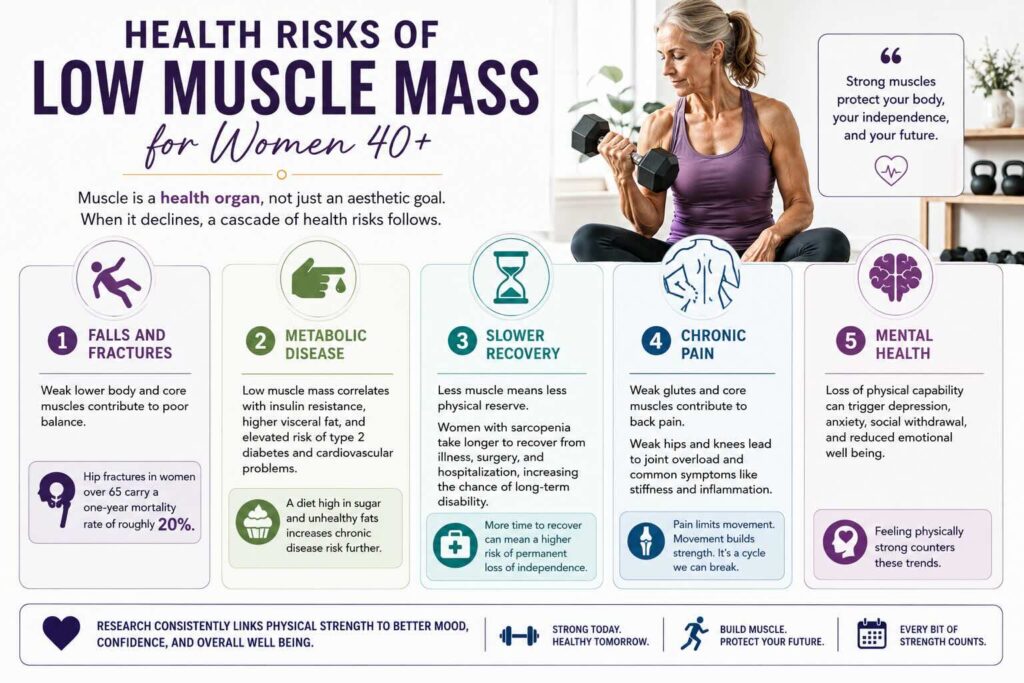
Health Risks Of Low Muscle Mass For Women 40+
Muscle is a health organ, not just an aesthetic goal. When it declines, a cascade of health risks follows.
- Falls and fractures: Weak lower body and core muscles contribute to poor balance. Hip fractures in women over 65 carry a one-year mortality rate of roughly 20%.
- Metabolic disease: Low muscle mass correlates with insulin resistance, higher visceral fat, and elevated risk of type 2 diabetes and cardiovascular problems. A diet high in sugar and unhealthy fats increases chronic disease risk further.
- Slower recovery: Less muscle means less physical reserve. Women with sarcopenia take longer to recover from illness, surgery, and hospitalization, increasing the chance of long-term disability.
- Chronic pain: Weak glutes and core muscles contribute to back pain. Weak hips and knees lead to joint overload and common symptoms like stiffness and inflammation.
- Mental health: Loss of physical capability can trigger depression, anxiety, social withdrawal, and reduced emotional well being. Feeling physically strong counters these trends. Research consistently links physical strength to better mood, confidence, and overall well being.
Preventing chronic disease through muscle preservation is one of the highest-return investments a woman over 40 can make. Cancer risk, heart disease risk, and diabetes risk all decrease with higher muscle mass and regular physical activity.
Strength Training Basics For Women On GLP-1s And Beyond
You do not need to become a “gym person” or load a barbell with heavy plates. Consistency beats intensity, especially at the start. GLP-1 muscle loss for women is a big question these days.
Core principles:
- Progressive overload is necessary for muscle growth. Gradually increase weight, reps, or sets over weeks and months.
- Frequency: Train major muscle groups 2-3 times per week on non-consecutive days. Two 30-minute sessions or three 20-minute sessions per week produce measurable results.
- Compound exercises: Effective muscle building relies on compound exercises that target multiple muscle groups. Squats, rows, presses, and hip hinges recruit more muscle cells per rep than isolation moves.
- Recovery: Allow 48 hours between sessions for the same muscle group. Prioritize quality sleep, as this is when muscle repair occurs.
Accessible tools: bodyweight, resistance bands, dumbbells, and machines all work. Women on GLP-1s experiencing rapid weight loss may find machines safer and more joint-friendly initially, since body proportions change and balance can shift during fast weight loss.
“As a woman in my mid-forties approaching perimenopause, I take a holistic approach to building muscle: three weight-bearing classes, two barre classes, and one cardio activity a week.” Kristen Dafoe Barre Eclipse, AFAA & NASM-certified instructor and owner of Lighthouse
Track strength progress (reps, sets, weights lifted) rather than scale weight alone. This is especially important for women on GLP-1 treatment, where body weight drops but muscle maintenance or gains may be hidden by fat loss on the scale.
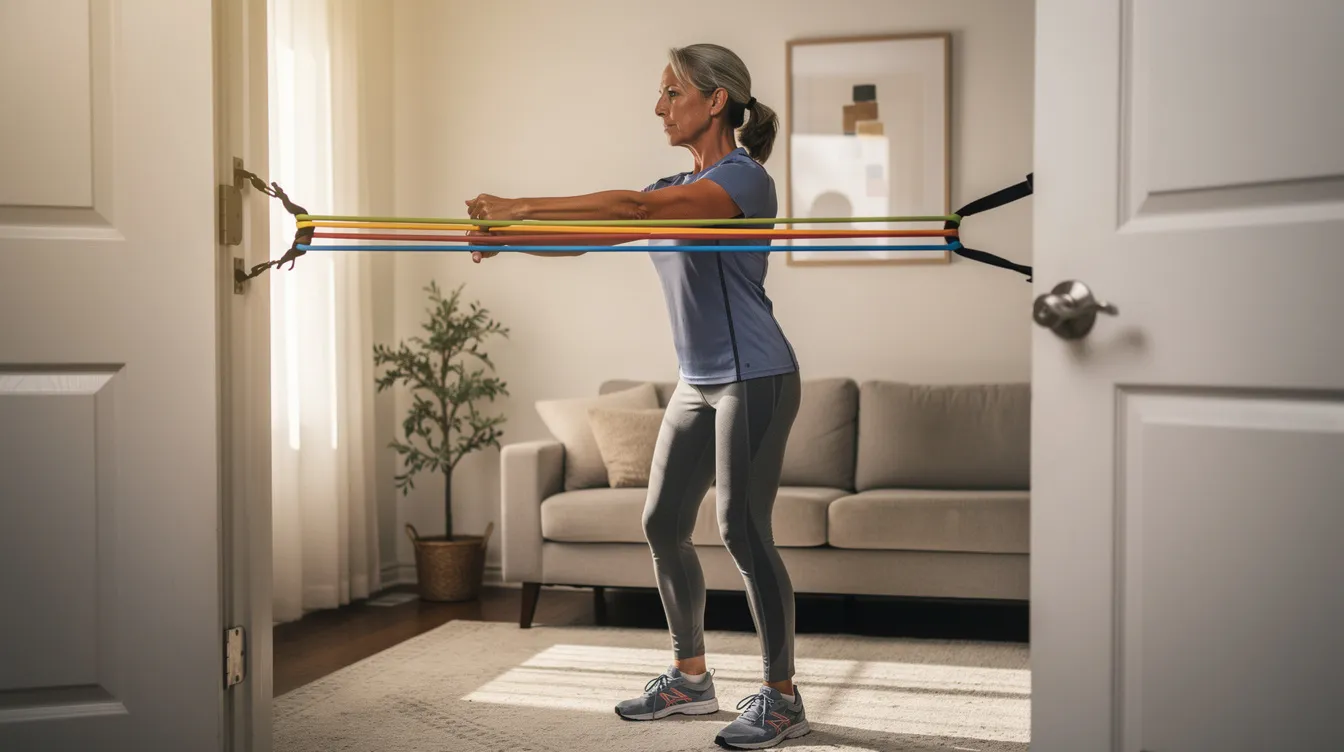
Sample “Muscle Minutes” Workouts You Can Start This Week
These routines are designed for women 40+ and take 10-20 minutes. Start with the no-equipment version if you’re new to strength training.
No-Equipment Circuit (15 minutes)
| Exercise | Reps | Rest |
|---|---|---|
| Squats to a chair | 10-12 | 30 sec |
| Wall push-ups | 8-10 | 30 sec |
| Glute bridges | 12-15 | 30 sec |
| Supported lunges (hand on counter) | 8 per leg | 30 sec |
| Dead bug (core) | 8 per side | 30 sec |
Repeat circuit 2 times. If you’re on a GLP-1 and energy is low, start with 1 round and add a second when you feel ready.
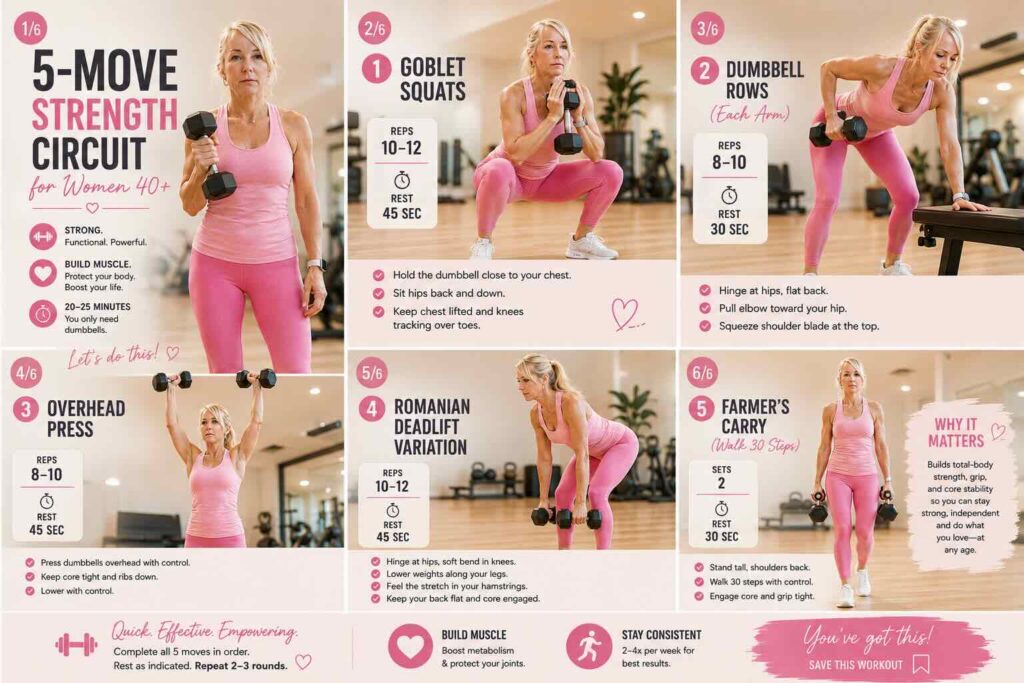
Dumbbell or Band Routine (20 minutes)
| Exercise | Reps | Rest |
|---|---|---|
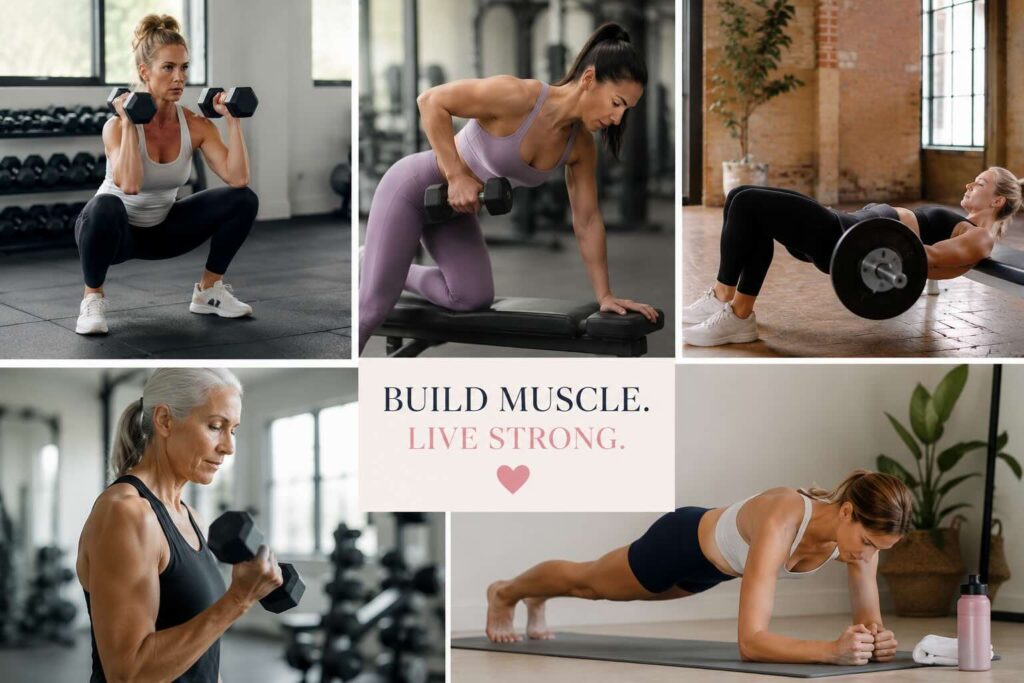
| Goblet squats | 10-12 | 45 sec |
| Dumbbell rows (each arm) | 8-10 | 30 sec |
| Overhead press | 8-10 | 45 sec |
| Romanian deadlift variation | 10-12 | 45 sec |
| Farmer’s carry (walk 30 steps) | 2 sets | 30 sec |
Repeat circuit 2 times. Focus on form over speed. If a medicine or condition affects your blood pressure or blood sugar during exercise, reduce intensity and rest longer between sets.
Get medical clearance before starting if you have osteoporosis, heart disease, uncontrolled diabetes, or other conditions that affect your body during exertion.
On barre’s role in functional strength:
“It’s not about how heavy a load you carry, but how you carry it. Barre holds lighter weight for longer to access the smaller muscles and connective tissue that let your larger muscle groups move smoothly and freely through a full range of motion.” – Kristin Dafoe, Barre Eclipse, AFAA & NASM-certified instructor and owner of Lighthouse
“
Building Muscle Through Everyday Lifestyle Choices
Dedicated workouts are powerful. Daily lifestyle choices between sessions add up.
Practical “muscle moments” you can weave into your day:
- Carry reusable shopping bags instead of using a cart
- Take stairs when available
- Stand up and sit down from a chair without using your hands (5 times, twice a day)
- Do 10 heel raises while brushing your teeth
- Carry a gallon of water from the car to the kitchen in each hand
Walking supports circulation, recovery, and heart health. But walking alone is not enough to build muscle or prevent sarcopenia. Think of it as the base layer; strength training is the structure.
Sleep quality, stress management, and limiting excessive alcohol all affect hormone balance and muscle recovery. These matter more during perimenopause and menopause, when cortisol and estrogen shifts already challenge the body’s repair systems. Quality sleep is when growth hormone peaks and muscle tissue rebuilds. Even small improvements in rest patterns and stress management produce positive effects on recovery.
Set one small, specific goal: an additional set of squats every other day, or a 10-minute “strength snack” after lunch. That’s enough to build the habit before expanding.
Nutrition Essentials For Muscle: Protein, Fuel, And GLP-1 Considerations
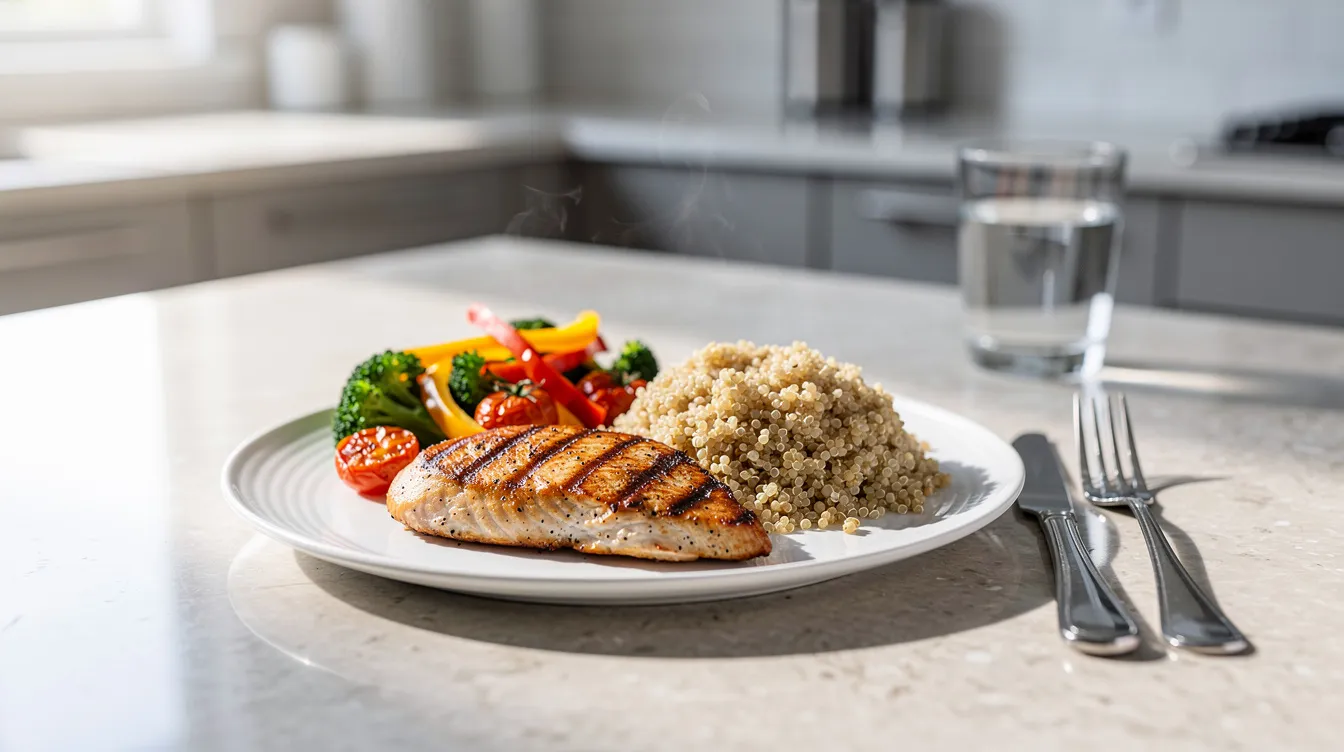
Muscles are built in the kitchen as well as the gym. Without adequate protein and calories, especially during weight loss, the body breaks down lean tissue for energy.
Protein needs increase with age due to “anabolic resistance,” where muscle cells become less responsive to protein intake. Most guidelines for older adults suggest 1.0-1.2 g of protein per kg of body weight per day. For women losing weight or on GLP-1 therapy, 1.2-1.5 g/kg is a more protective target. Confirm your individual target with your healthcare provider as part of your preventive care plan.
Strong protein sources:
- Eggs, Greek yogurt, cottage cheese
- Chicken, fish, lean beef
- Tofu, tempeh, lentils, edamame
- Higher-protein grains (quinoa, amaranth)
Aim for 25-30 g of high-quality protein at each meal, spaced evenly across the day. Leucine-rich proteins (dairy, whey, soy) help trigger muscle protein synthesis. A healthy diet that pairs protein with fiber-rich foods supports fullness and blood sugar control.
Healthy diets support immune cells and cell repair. A plant-based diet reduces mortality risk by 23%. Diet influences 70-80% of longevity according to some science. A diet high in sugar and unhealthy fats increases chronic disease risk and accelerates the development of diseases like type 2 diabetes. Caloric restriction may extend lifespan in some animal studies, but extreme restriction during GLP-1 treatment risks accelerating lean mass loss.
GLP-1-specific nutrition tips:
- Prioritize protein first at each meal before filling up on lower-priority foods
- Use smoothies or Greek yogurt when nausea or early fullness makes solid food difficult
- Don’t skip meals on workout days; your immune system and muscle recovery both depend on fuel
- Stay hydrated; include electrolytes if GLP-1 side effects cause fluid loss
Mindset Shifts: Redefining Strength And Aging For Women
Many women were conditioned to chase thinness rather than strength. Midlife is the right time to rewrite that story.
Measure success by energy, quality sleep, mood, and strength numbers, not just the scale. This is especially important for women on GLP-1s whose weight changes rapidly; the scale can mask real gains in muscle function and body composition.
Common fears, debunked:
- “I’ll get bulky.” Due to hormone levels after 40, most women struggle to preserve muscle, let alone gain large amounts. Strength training leads to a firmer, more defined look. “Bulk” usually comes from body fat layered over muscle, not muscle alone.
- “I’m too old.” Women in their 70s and 80s build measurable strength with progressive resistance. The journal of applied physiology has published multiple studies confirming this.
- “I’ll get injured.” Proper form and gradual progression reduce injury risk. Weakness and inactivity cause more injuries than controlled strength training.
Track your wins: how many squats you can do, how easily you carry luggage, whether your back pain has decreased. Celebrate those non-scale victories. Every rep is a deposit in the account of your future self; the 70- or 80-year-old version of you who still wants to move freely and live independently.
Muscle is not vanity. It is the foundation of independence, and building it is one of the most important acts of self-care a woman over 40 can commit to.
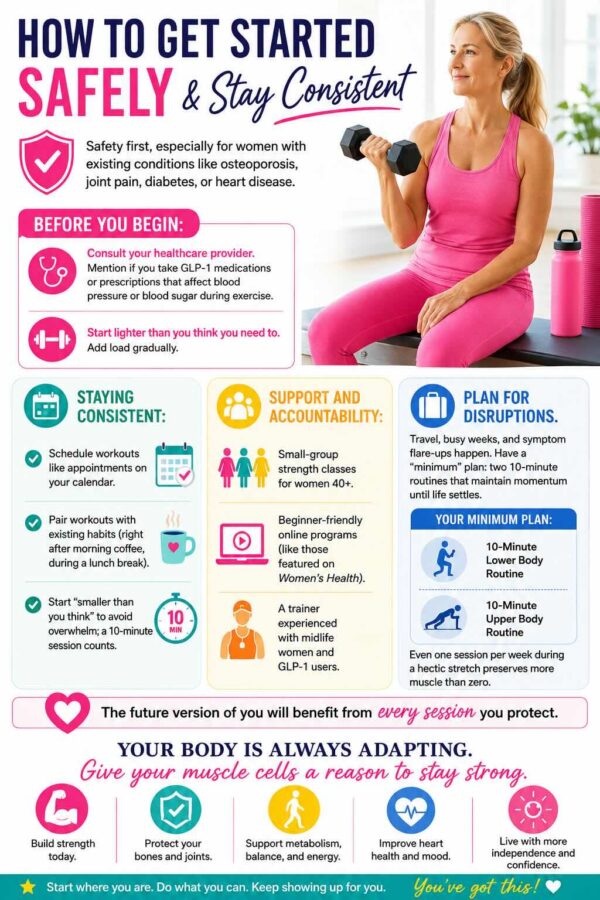
How To Get Started Safely And Stay Consistent
Safety first, especially for women with existing conditions like osteoporosis, joint pain, diabetes, or heart disease.
Before you begin:
- Consult your healthcare provider. Mention if you take GLP-1 medications or prescriptions that affect blood pressure or blood sugar during exercise.
- Start lighter than you think you need to. Add load gradually.
Staying consistent:
- Schedule workouts like appointments on your calendar
- Pair workouts with existing habits (right after morning coffee, during a lunch break)
- Start “smaller than you think” to avoid overwhelm; a 10-minute session counts
Support and accountability:
- Small-group strength classes for women 40+
- Beginner-friendly online programs (like those featured on Women’s Health)
- A trainer experienced with midlife women and GLP-1 users
Plan for disruptions. Travel, busy weeks, and symptom flare-ups happen. Have a “minimum” plan: two 10-minute routines that maintain momentum until life settles. Even one session per week during a hectic stretch preserves more muscle than zero. The future version of you will benefit from every session you protect.
Your body is always adapting. Give your muscle cells a reason to stay.
Frequently Asked Questions About Muscle And Aging For Women
Can I really build muscle if I’m starting strength training in my 50s or 60s?
Yes. Research published in the American Journal of medicine and related journals confirms that women should build strength and muscle at any age! This includes women in thier 70s and 80s, when they use progressive resistance and recover well.
Gains are slower than in younger years, but improvements in strength, balance, and function can be substantial. Beginning with bodyweight or light loads is fine. The key is gradual, consistent challenge over time. People born decades ago are proving this in labs and gyms around the world.
How much strength training do I need each week to see results?
Most women 40+ see benefits with 2-3 non-consecutive days of strength work per week, targeting all major muscle groups. Sessions of 20-30 focused minutes are enough if exercises are chosen well. The key is to perform the exercises with good form.
On weeks when life gets hectic, even one full-body session plus a few short “muscle minutes” maintains progress. The NIH has reported that women may realize health benefits from regular exercise even more than men, with roughly 30% reduced cardiovascular mortality risk from strength training. These many positive effects make every session worthwhile.
Should I prioritize cardio or weights if I have limited time?
Both matter, but for women 40+ who have long focused on walking or cardio classes, adding strength training brings the biggest new benefits for your body.
A balanced approach works well: combine short strength circuits with brisk walking on alternate days, or do 10 minutes of strength plus 10 minutes of walking in the same session. Strong muscles make cardio easier and safer by supporting joints, improving posture, and enhancing lung function. To stay healthy and live longer, your exercise routine needs both, but if forced to choose, pick the weights.
Will lifting weights make me look bulky?
No. Hormone levels after 40 make preserving muscle harder, not easier. Strength training produces a firmer, more defined look rather than bulk. Women who appear “bulky” typically carry additional body fat over muscle; reducing that fat through a combination of strength training and a healthy diet reveals leaner contours over time.
Focus on how you feel: stronger, more stable, more energetic. Let your body composition shift gradually. The lower risk of chronic diseases, improved balance, and greater independence are the real payoffs.
What if I have joint pain, arthritis, or osteoporosis?
Many women with joint issues or low bone density can safely do strength training with modifications. Work with a healthcare provider or qualified trainer to adapt exercises.
Lower-impact movements like chair squats, wall push-ups, and resistance band work at controlled tempo are effective options. Avoid high-impact jumps or deep unsupported flexion if contraindicated. Appropriately prescribed strength work can reduce pain, improve joint stability, and support bone health over time.
The crucial role of muscle in protecting joints means that avoiding exercise often worsens the problem rather than solving it.