Vibration Plate Health Benefits: How and Why To Use One
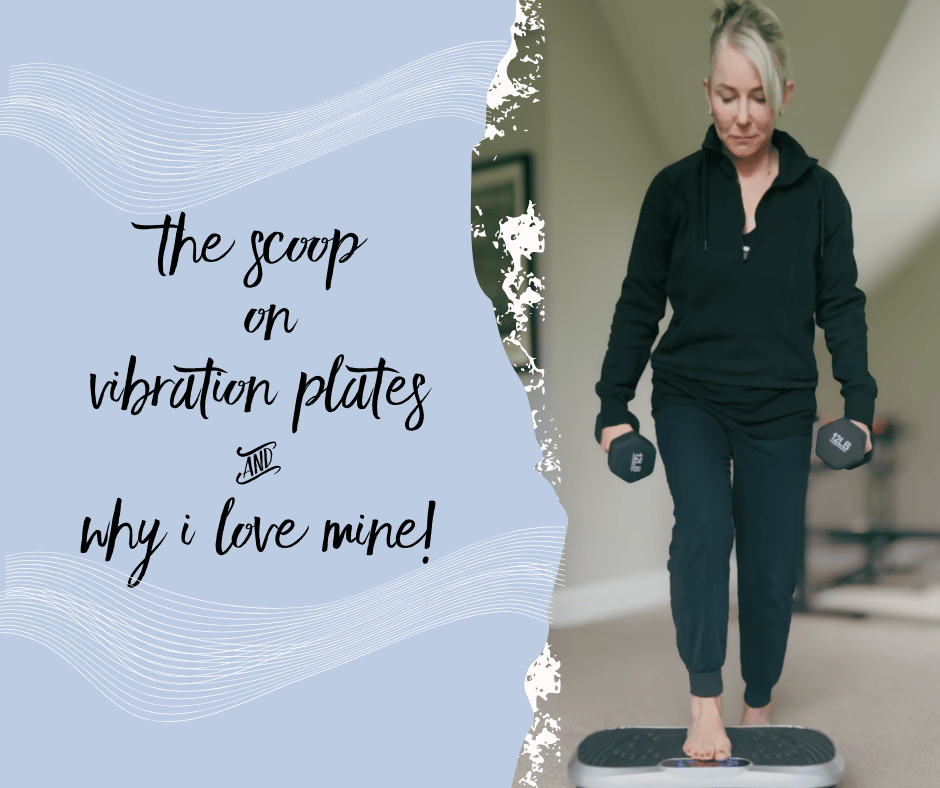
If you’ve scrolled through Instagram or TikTok lately, you’ve probably seen them: those sleek vibrating platforms promising everything from toned legs to melted cellulite to stronger bones in just minutes a day. I bought one myself and wanted to share my experience. Discover the truth about vibration plate, health benefits, including weight loss, muscle strength, circulation, and whether vibration therapy really works.
What I discovered surprised me. The real story behind vibration plates is more nuanced than the marketing suggests—and honestly, more interesting too.
Key Takeaways
- I bought a vibration plate after seeing endless social media claims, then spent weeks diving into peer-reviewed studies to separate fact from fiction. Here’s what the science actually supports.
- Vibration plates can offer modest benefits for bone density, balance, circulation, and muscle recovery—but they’re not magic solutions for weight loss or cellulite. Most positive studies are small, short-term, and use medical-grade devices that may differ from budget home models.
- The best results come when whole body vibration training is combined with a healthy diet and regular exercise, not used as a replacement for movement.
- Some people should avoid vibration plates entirely or get medical clearance first: pregnant women, those with pacemakers or implanted devices, anyone with recent surgery, and individuals with certain cardiovascular or neurological conditions.
- Think of a vibration plate as one tool in your wellness toolbox—helpful for specific goals, but not a shortcut to fitness.
What Is a Vibration Plate (and Why I Bought One)?
Let’s be honest—I was skeptical at first. But after reading claims about everything from bone health to lymphatic drainage, my curiosity got the better of me. I ordered one for my home in 2025, partly to test it out and partly because the idea of a quick, low-impact addition to my workout routine sounded appealing.
So what exactly is this device? A vibration plate is simply a platform that vibrates at set frequencies and amplitudes, causing rapid muscle contractions while you stand, sit, or exercise on it. The vibration forces your body to work to maintain balance, which activates muscles throughout your entire system. There are two types of vibration therapy.

There two types of motion (vibration therapy) you’ll encounter:
- Vertical (lineal) vibration: The platform moves straight up and down, aligned with gravity. This tends to feel more stable and is often considered more comfortable for beginners.
- Oscillating (rotational) vibration: The platform rocks side-to-side, like a see-saw. This creates higher amplitudes and can feel more intense.
For most women using these at home, sessions typically look something like this: 10–15 minutes, 3–4 times per week, sometimes just standing with slightly bent knees, sometimes adding squats, lunges, or planks on the plate for extra activation.
In this article, I’m focusing on what peer-reviewed studies and medical centers like the Mayo Clinic actually say—because I believe you deserve realistic expectations, not marketing hype.
How Do Vibration Plates Work? The Science in Plain English
Think of whole body vibration exercise as a kind of “micro-workout.” The instability of the vibrating surface forces your muscles to work harder just to keep you upright—it’s like your body’s ability to balance is being constantly challenged in tiny ways, triggering reflexive responses throughout your system.
Here’s the basic science: vibration plates operate at specific frequencies (typically 20–50 Hz) and amplitudes (how far the plate actually moves). When you stand on one, these vibrations trigger reflex-like muscle contractions throughout your body. Research shows that the acceleration of the vibration—not just the frequency—is the best predictor of effectiveness for improving flexibility and muscle stiffness.
This increased muscle activation can:
- Slightly boost energy expenditure during sessions
- Enhance blood flow and lymphatic circulation
- Stimulate bone remodeling signals (more on this later)
- Cause blood vessels to widen, improving overall circulation
Imagine This….
Here’s a simple example to visualize: imagine standing in a half-squat on solid ground versus standing in that same half-squat on a vibrating platform. On the plate, your muscles must constantly adjust to maintain stability, activating more muscle fibers than they would on a static surface.
One important note: research-grade devices used in scientific studies are often precisely calibrated to specific frequencies and forces. The plates sold on Amazon or at your local gym may not match these exact specifications—which is something to keep in mind when evaluating whether the research translates to your at-home experience.
Can Vibration Plates Help With Weight Loss and Body Composition?
Let me give you a direct answer: research shows that vibration plates can modestly support weight loss and body composition when combined with calorie control and exercise—but on their own, they’re not a dramatic fat-burning tool.
Several small studies conducted between 2000 and 2023 found slightly greater fat loss and waist reduction when vibration training was added to diet or exercise programs compared to a control group. One study found that a 20-minute whole body vibration session produced measurable increases in metabolic demand. However, the overall calorie burn during a typical 10–15 minute session is relatively modest—similar to gentle walking, not an intense cardio workout.
Here’s what the data doesn’t support: those marketing claims about “melting cellulite” or “10 minutes equals an hour in the gym.” High-quality research simply hasn’t backed these up.
A realistic approach looks like this:
| Weekly Activity | Time Commitment |
|---|---|
| Moderate cardio (walking, cycling, dancing) | 150 minutes total |
| Strength training sessions | 2 sessions |
| Optional vibration sessions | 2–3 sessions, 10–15 min each |
The essential takeaway? Nutrition and consistent physical activity remain the main drivers of weight loss. Vibration plates can complement these efforts, but they won’t replace them if your goal is to lose weight or change body weight significantly.
Bone Density, Aging, and Hormones: Are Vibration Plates Worth It for Women?
This part really caught my attention — especially for those of us in midlife or post-menopause (which I know includes many of you reading along with me). As we get older, bone loss becomes a very real concern, so naturally I wanted to know: can vibration plates actually help, or is this just another wellness trend?
Interestingly, the research is pretty compelling. Several clinical studies looking at postmenopausal women found that whole-body vibration may help improve bone density while also reducing discomfort associated with osteoporosis. Some studies even showed improvements in lumbar spine bone density and support for hip strength — both areas that become increasingly important as we age.
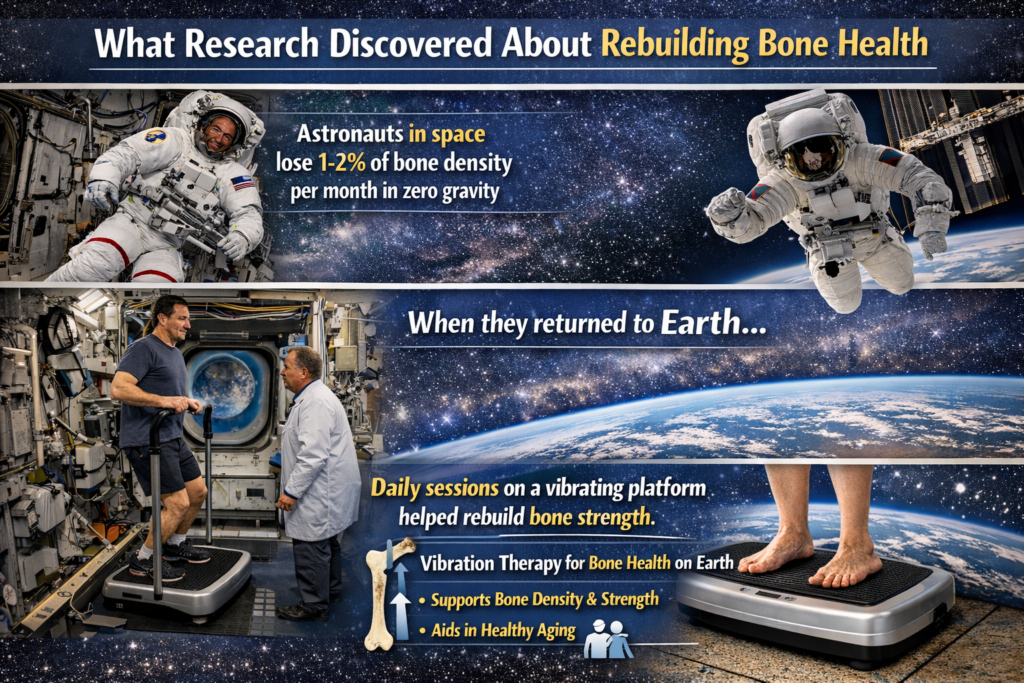
What Research Discovered About Rebuilding Bone Health
And here’s the part I found fascinating. Research originally came out of space medicine. Astronauts living in space lose about 1–2% of their bone density every month due to zero gravity. When they returned to Earth, scientists discovered they could help rebuild bone strength simply by standing on a gently vibrating platform for short daily sessions. That finding helped researchers realize vibration therapy might play a meaningful role in protecting bone health for people here on Earth too — especially those of us wanting to stay strong, active, and independent as we age.
However, I want to be honest about the limitations:
- Results are mixed—some studies show small gains or slowed loss, others show no significant change
- The most promising results come when vibration is used alongside standard osteoporosis treatments and weight-bearing exercise, not as a stand-alone cure
- Some research suggests the increases in bone density, while present, aren’t always statistically significant
Beyond bone health, there’s promising data for older adults regarding:
- Age-related muscle loss (sarcopenia)
- Improved balance and stability
- Reduced fall risk—especially important for women in their 70s and beyond who struggle with traditional high-impact workouts
An eight-week study with middle-aged and older adults showed significantly better sit-to-stand performance, with researchers attributing the improvement to enhanced muscle function and proprioception—your body’s sense of its position in space.
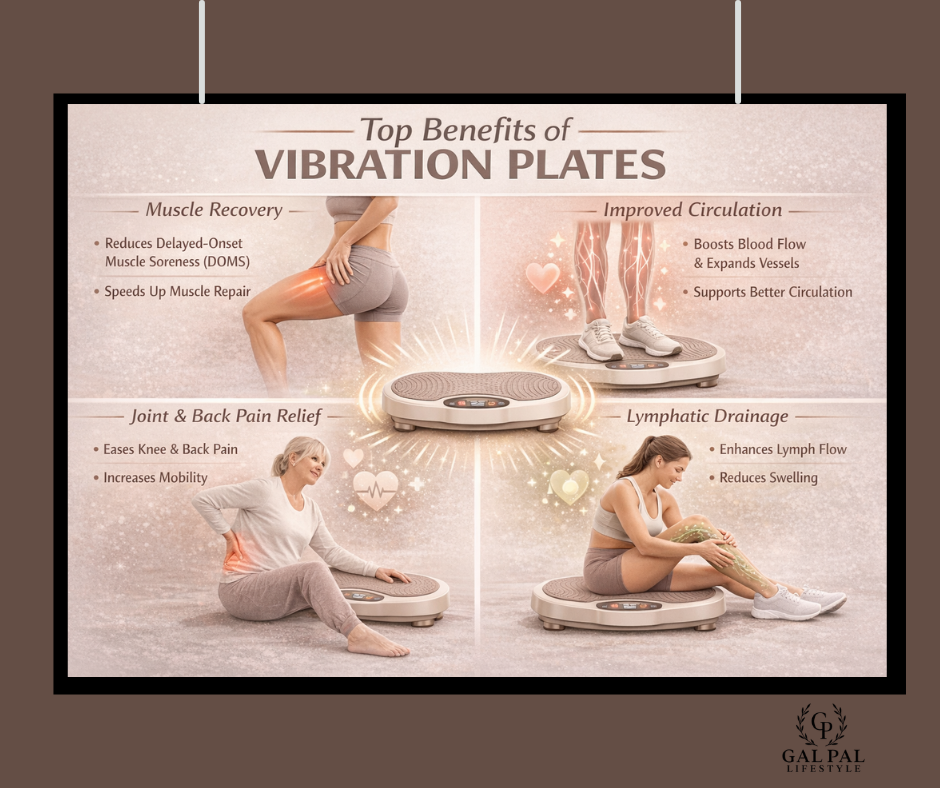
Recovery, Circulation, and Pain Relief: Where Vibration Plates Shine
Here’s where I’ve personally noticed the biggest difference. I started using my vibration plate after long walks, hot yoga sessions, or desk-heavy workdays to ease stiffness and “wake up” my legs. That tingly, warm feeling in my feet and hands? It’s not just in my head—it’s backed by science. My passion behind my vibration plate!
Research-supported benefits include:
- Muscle recovery: Studies suggest reduced delayed-onset muscle soreness (DOMS) when vibration is used after intense exercise. The rapid muscle contractions help increase blood flow to tired muscles, supporting faster recovery and reducing that next-day muscle pain we all know too well.
- Circulation: Vibration boosts blood flow through two mechanisms—it causes muscles to contract rapidly, and it widens blood vessels. One study examining patients with diabetes found that WBV increased skin blood flow compared to control conditions, suggesting potential for addressing poor circulation.
- Joint and back pain: Research shows reduced pain and better function in people with knee osteoarthritis or chronic low back pain after structured vibration programs. For diabetic peripheral neuropathy, multiple controlled studies showed WBV is effective for reducing pain over two- and four-week intervals.
- Lymphatic benefits: Some emerging research suggests improved physical function and decreased pain in conditions like lipedema or lymphedema, likely due to enhanced lymphatic drainage. While the exact mechanisms need more study, the movement of lymphatic fluid may be supported by the gentle, repetitive muscle activation.

My personal recovery routine:
- Quiet, 10–15 minute low-to-moderate intensity sessions after workouts
- Gentle standing or hip mobility on non-workout days
- Sometimes just standing with bent knees while reading or listening to a podcast
What I’ve noticed: less morning stiffness, easier recovery after leg day, and a general sense of “lighter” legs. These anecdotal observations align with what the research suggests about improved circulation and musculoskeletal benefits.
Who Should Use Vibration Plates—And Who Should Skip Them?
Not everyone is a good candidate for vibration training, and safety matters more than chasing trends. Let me break this down clearly.

Groups who may benefit most:
- Midlife and older women focused on preserving bone and muscle health
- People dealing with mild joint discomfort or back stiffness who have medical clearance
- Busy women who want a quick, at-home tool to complement walking, strength training, or yoga
- Those returning to movement after a sedentary period (starting with very low intensity)
- Healthy individuals looking for a recovery or circulation boost
Who should avoid vibration plates or consult a doctor first:
- Pregnant women
- Anyone with implanted medical devices (pacemakers, defibrillators)
- People with metal hardware near the vibration area
- Those with severe cardiovascular disease or risk of heart attack
- Anyone with recent surgery, acute herniated discs, or uncontrolled neurological conditions
- Children and teens, unless supervised by a healthcare professional
Simple safety tips:
| Guideline | Recommendation |
|---|---|
| Starting intensity | Lowest setting available |
| Initial session length | 5–10 minutes |
| Foot positioning | Barefoot or grippy shoes |
| Knee position | Slight bend, never locked |
| Balance support | Hands near wall or handles if needed |
| Warning signs | Stop if dizzy, nauseated, or unwell |
If you have medical conditions or concerns, please consult with a physical therapist or your healthcare provider before starting. This isn’t about being overly cautious—it’s about making sure this tool works for your unique situation.
How to Choose and Use a Vibration Plate at Home
When I started shopping for my own plate in 2024, I was overwhelmed by the options—everything from multi-motor “premium” models costing over $1,000 to basic under-$300 plates marketed to home users. Here’s what I learned matters most.
Key criteria for choosing a plate:
- Frequency range: Look for approximately 20–50 Hz, which aligns with frequencies used in research
- Motion type: Oscillating tends to feel more intense; vertical may be gentler on sensitive joints
- Size and weight capacity: Make sure it fits your space and supports your body comfortably
- Noise level: Some plates are surprisingly loud—check reviews if this matters to you
- Ease of storage: Many fold or have wheels for tucking away
- Controls: A simple remote or control panel makes adjusting settings easier during sessions
A realistic starter routine for most healthy adults:
Week 1–2:
- 2 sessions per week
- 10 minutes each
- Basic standing with slightly bent knees
Week 3–4:
- 3 sessions per week
- 12–15 minutes each
- Add light squats, calf raises, or marching in place
Ongoing:
- Progress to planks, lunges, or other exercises if comfortable
- Always warm up and cool down with gentle movement and stretching off the plate
How I integrate mine into everyday life:
- As a recovery tool after workouts
- For a circulation boost during work breaks (I work from home, so this is essential for me)
- As a supportive add-on to my strength training—not my main workout
I may share curated product recommendations or affiliate links to thoughtfully chosen plates in the future, and I’ll always be transparent about any partnerships. That’s just how we do things here at Gal Pal.
Honest Bottom Line: Are Vibration Plates Worth It?
After weeks of research and months of personal use, here’s my honest take: vibration plates can be a useful wellness tool for certain goals—recovery, bone support, circulation, light muscle activation—but they will not replace consistent movement, strength training, or a nourishing diet.
The biggest scientifically grounded pros:
- Modest support for bone health in older or post-menopausal women
- Improved muscle recovery and reduced muscle soreness after exercise
- Better balance and stability with regular use over time
- Enhanced circulation and potential lymphatic benefits
- Gentle option for those who struggle with high-impact physical activity
- Greater improvements in function for specific populations (those with spinal cord injuries, diabetes-related neuropathy)
The key limitations to keep in mind:
- Limited and mixed evidence for major weight loss or cellulite reduction
- Research often uses medical-grade devices and supervised protocols that may not match at-home use
- Not appropriate for everyone; safety screening matters
- Cheaper consumer plates may not deliver the same frequency and amplitude as research-grade equipment
- Results require consistency over months—this isn’t a quick fix
My perspective after living with one:
I think of my vibration plate as one tool in my wellness toolbox—alongside walking, yoga, strength training, sleep, stress management, and the food I put on my plate. It’s not the star of the show, but it’s earned its place in my rotation.
Try one at a fitness studio or your local gym first if you can. See how your body responds. Talk to your healthcare provider if you have any concerns. And remember: the best wellness routine is one you’ll actually stick with.
Here’s to gathering more information, growing in our understanding, and glowing with the confidence that comes from making informed choices.
FAQ- More Frequently Asked Questions About Vibration Plates
How often should I use a vibration plate to see results?
Most studies showing benefits used 2–5 sessions per week, typically 10–20 minutes each, over at least 8–12 weeks to measure changes in strength, balance, or bone markers.
Is standing on a vibration plate enough, or do I need to exercise on it?
Standing in a gentle knee-bent position can absolutely activate muscles and improve circulation, especially for beginners, older adults, or those with limited mobility. That said, doing simple exercises like squats, lunges, planks, or calf raises on the plate generally increases muscle activation and may enhance benefits. Research suggests muscles work harder when you add movement to the instability challenge. My advice: start with just standing if you feel unsteady or are new to the device, then progress to adding exercises as you build confidence. There’s no shame in keeping it simple—standing with intention still counts.
Can vibration plates really help with lymphatic drainage and bloating?
Some small studies and clinical observations suggest vibration may enhance lymphatic flow and reduce swelling in specific medical conditions, but high-quality evidence is still limited. Many users—myself included—report feeling less puffy and more “light” after sessions, likely due to improved circulation and the gentle shake of movement.
Do I need a very expensive, multi-motor vibration plate to get benefits?
Honestly, most research doesn’t directly compare high-end versus budget consumer plates, so there’s no clear evidence that spending $1,500 gets you dramatically better results than a well-reviewed $300 model for typical home use. Focus on safety features, stability, an appropriate frequency range (20–50 Hz), and comfort rather than chasing the highest price point. Read reviews about durability and noise levels.
Can I use a vibration plate if I have osteoporosis or osteopenia?
Some studies in women with low bone density show potential benefits from low-intensity whole body vibration, particularly for maintaining or modestly improving bone mineral density in the hip and spine. However, the protocols in these studies are typically supervised by researchers and tailored to individual needs. If you have osteoporosis, a history of fractures, or significant spinal issues, I strongly advise consulting with your healthcare provider and ideally a physical therapist before starting.
Can vibration plates help with belly fat?
Many people wonder if vibration plates specifically target belly fat. While spot reduction isn’t possible, vibration training may help increase muscle activation and support overall fat loss when combined with movement and healthy nutrition.
Are vibration plates good for circulation
Yes, vibration causes rapid muscle contractions that may help stimulate blood flow. Many users report reduced stiffness and improved circulation after short daily sessions.
Do vibration plates help with cellulite?
Some users notice smoother-looking skin over time due to improved circulation and lymphatic movement. While results vary, vibration plates may temporarily improve skin appearance.
Can vibration plates improve balance and stability?
Yes. Because your body constantly adjusts to the vibration, stabilizing muscles are activated, which may help improve coordination and balance — especially helpful as we age.
Are vibration plates good for joint pain or arthritis?
Vibration plates are considered low-impact, making them appealing for people who want gentle movement without excessive stress on joints. Always start slowly and consult a healthcare provider if you have chronic pain.
Can seniors safely use vibration plates?
Many older adults use vibration plates to support mobility, muscle strength, and balance. Safety depends on individual health conditions and proper usage.
Should you wear shoes on a vibration plate?
Most manufacturers recommend barefoot or supportive athletic shoes depending on comfort and stability. Barefoot use may increase muscle engagement for some users.
Can vibration plates replace exercise?
No — vibration plates work best as a supplement to movement, not a replacement for strength training, walking, or regular physical activity.
How quickly will you see results from a vibration plate?
Some people notice improved circulation or muscle activation within weeks, while strength and balance improvements typically develop with consistent use over time.