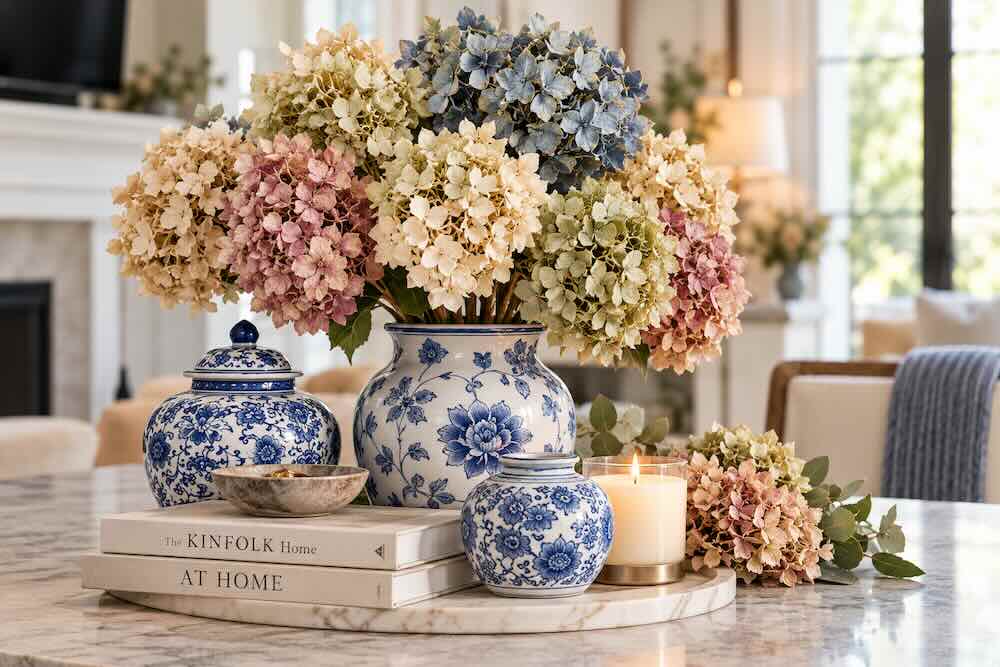
How To Dry Hydrangeas and Enjoy Them as Home Decor All Year
In and September and October, I watch my hydrangeas shift from vibrant colors to dusty greens and antique mauves and I refuse to let that beauty end up in the compost bin. Drying hydrangeas is my plan for keeping that garden magic alive on the mantel, the dining table, and every shelf in my house through winter and beyond. I am sharing how to dry your hydrangeas and use and enjoy them year around. Here’s exactly how I do it, step by step.
Key Takeaways
- The right time to cut hydrangeas (and maximize the blooms) for drying is late summer to fall, when bracts feel papery but haven’t turned brown yet.
- Water drying often preserves deeper color and fuller shape than air drying, though both methods work well at home.
- Cutting strong, mature stems and stripping leaves helps flowers dry faster and reduces mold risk.
- Dried hydrangeas can last 6–12 months-and often up to 2 years-if kept out of direct sunlight and away from humidity.
- Use dried hydrangea blooms in vases, wreaths, mantel displays, and seasonal centerpieces for effortless year-round decor.

Why Dry Hydrangeas for Home Decor?
I love dried flowers because they bridge seasons. Fresh hydrangea blooms fill the garden in June and July; by October, dried arrangements sit on my table, and they’re still there in January when nothing else is blooming.
Dried hydrangeas bring soft vintage hue, big statement volume, and a sustainable alternative to buying a fresh bouquet every couple of weeks. They work with cottage, farmhouse, boho, and modern neutral styles-and they pair beautifully with eucalyptus, grasses, and seed heads. Drying hydrangeas preserves their beauty for months or years, and dried hydrangeas can add color to any room without a bit of ongoing care.
Choosing the Right Time to Cut Hydrangeas
The right time to start cutting hydrangeas for drying falls between late August and early October. Mature blooms should feel papery and be cut in late summer or early fall-avoid cutting fresh, soft hydrangea blooms, as they will not dry well. Flowers are ready to dry when they feel crispy to the touch.
Visual cues by variety of stunning types:
| Variety | Fresh Color | Ready-to-Cut Color |
|---|---|---|
| Mophead (bigleaf) | Bright blue/pink | Dusty green, antique mauve |
| Annabelle (smooth) | Pure white | Soft green or parchment |
| Limelight (panicle) | Lime green | Blush, champagne, rose |
Cut hydrangeas in mid to late morning on a dry, sunny day, after dew has evaporated. Never cut right after heavy rain-water sitting in petals invites mold. Too early harvesting results in wilted and droopy flowers that wilt and collapse. Too late harvesting leads to brown and crispy flowers that shed everywhere. The University of Washington’s hydrangea color guide explains how soil chemistry and aging create these natural color shifts.
How to Cut and Prepare Hydrangeas for Drying
Good cutting technique directly affects how long your dried hydrangeas last. Use clean, sharp garden pruners or floral shears, and follow these steps:
- Cut stems 12–18 inches long for flexibility in tall vase arrangements, trimming, or wreath-making.
- Cut stems at an angle for better water absorption if you plan on water drying.
- Cut just above a set of healthy buds to keep your bush or shrub healthy and encourage strong growth the following year.
- Remove all leaves from the stems before drying to prevent moisture retention-leave only the flower head and maybe one small decorative leaf.
- Gather stems loosely in a clean container or bucket so blooms aren’t crushed while you choose your drying method.
Drying Methods: Air Drying vs. Water Drying
Both air drying and water drying are simple, at-home methods. Here’s how each works and what to expect.
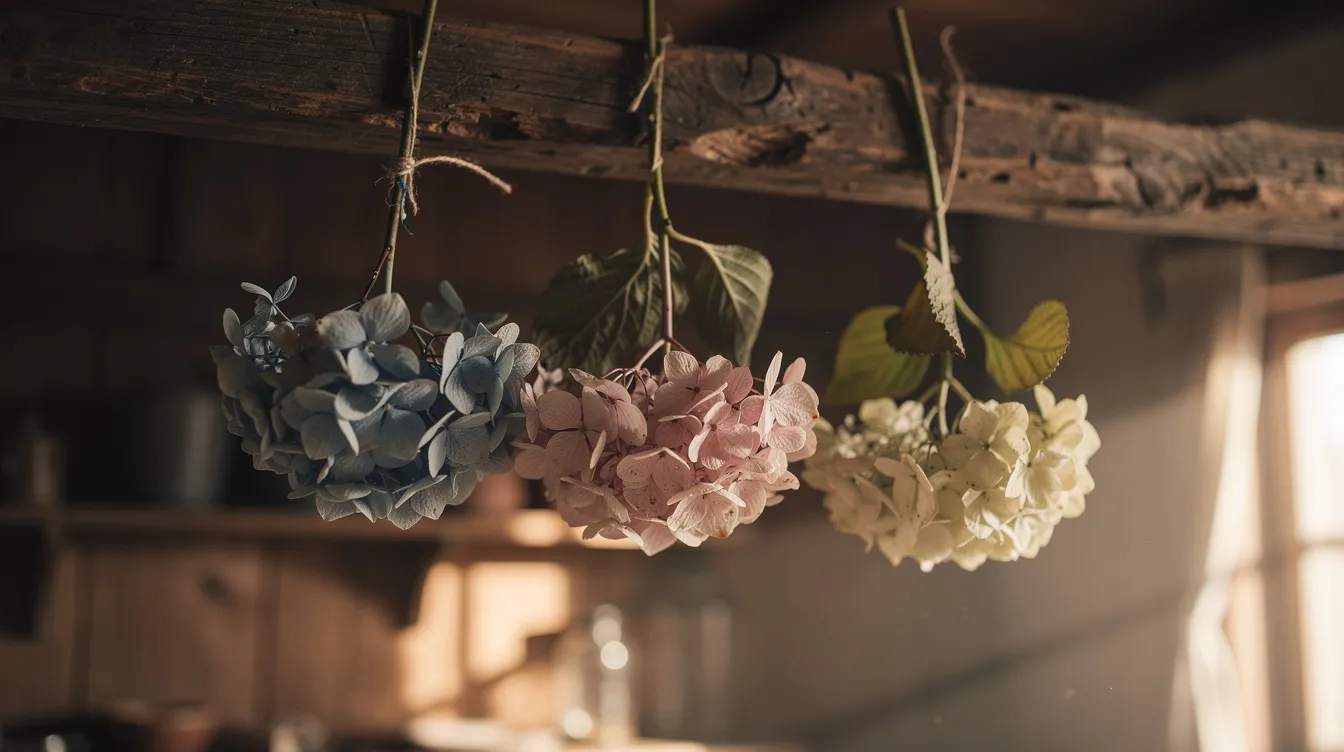
Air drying involves hanging flowers upside down. Tie 3–5 stems together with twine and hang them in a dark, dry, well-ventilated space like a garage, closet, or unused room. Leave space between bundles so air circulates. Expect 1–3 weeks to fully dry. Air-drying is another effective method but can result in brittle petals and more muted, antique tones.
Water drying requires placing stems in a vase with water-about 2–3 inches of clean water. Keep the vase in a cool place away from direct sunlight during drying. The water slowly evaporates over 1–2 weeks as the blooms dry in place. This method often preserves deeper blues, pinks, and greens with less shriveling. Martha Stewart’s drying guide walks through this process in helpful detail.
Monitor drying for signs of mold or mildew. Check stems every few days, ensure no stale water is sitting around, and improve ventilation if petals feel damp instead of steadily more papery.
Alternative Methods and Extra Tips
Silica gel drying buries flowers in silica gel for quick drying-typically 3–5 days. Silica gel can retain maximum color in dried hydrangeas but is labor-intensive, so save it for individual special blooms rather than big batches.
A few extra tips that have saved me a lot of frustration:
- Avoid basements or bathrooms-too much moisture.
- Avoid windows with strong midday sun that can bleach color while petals are still fragile.
- Try putting small test batches in different rooms to see which spots in your home produce the best result.
- Note your dates: I start a batch in mid-September most years and check progress over 1–3 weeks depending on humidity and method.
- A light mist of floral preservative or hair spray can help reduce shedding-test on one stem first.
Using Dried Hydrangeas in Year-Round Home Decor
This is the fun part. Once your hydrangeas are dry, you can create displays that last from October well into spring.
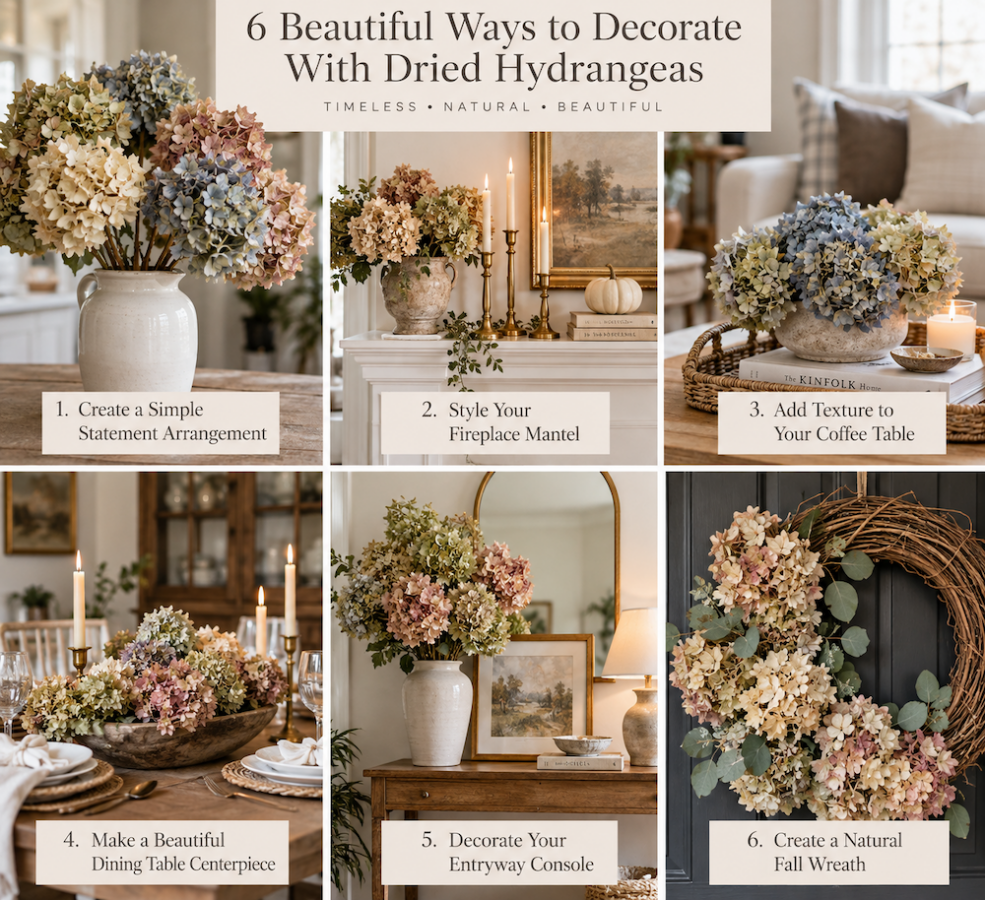
- Vase arrangements: Group several stems in neutral ceramic or glass vases. Vary stem heights and add dried grasses or seed pods. Display dried hydrangeas in a vase or arrangement on dining tables, entryways, or mantels. Dried Vanilla Strawberry blooms are gorgeous all year aound.
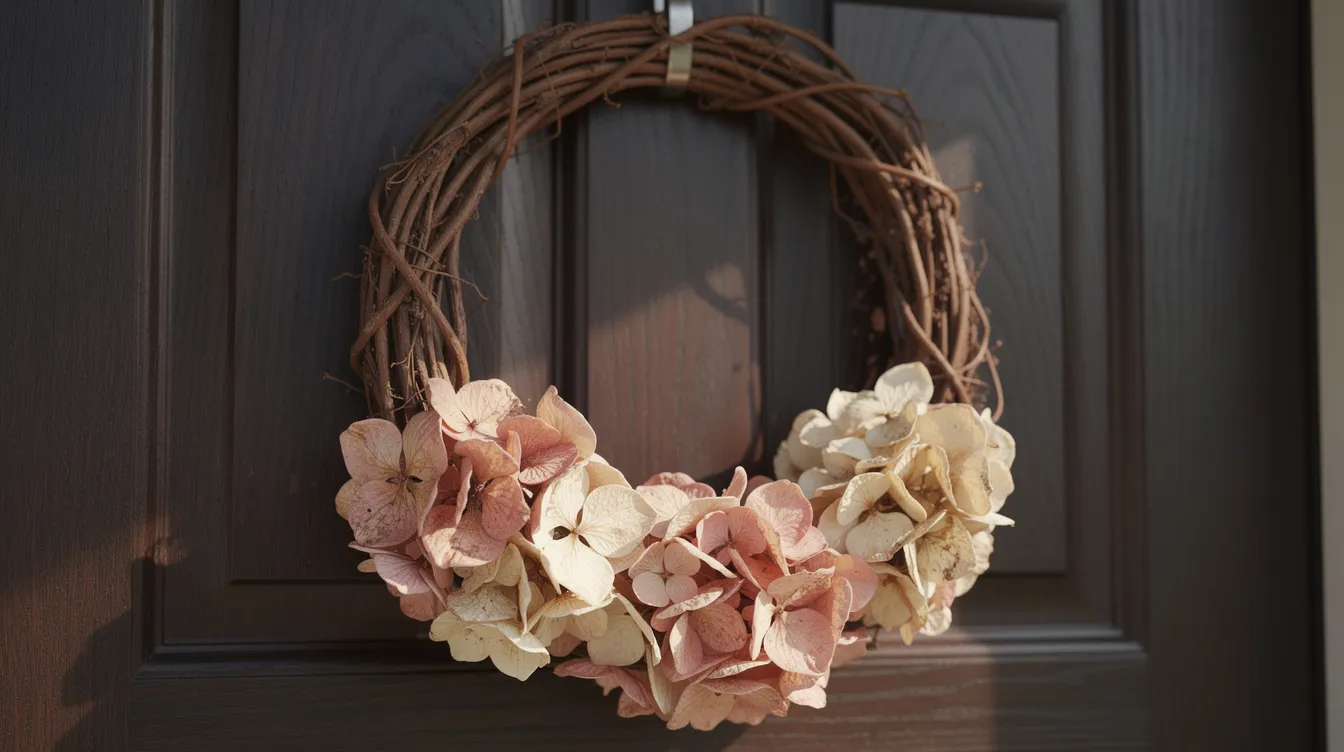
- Wreaths: Trim stems short, tuck heads into a grapevine wreath form, and secure with floral wire. Hang it on the front door or above the mantel from October through January.
- Small touches: Place a single stem in a bud vase by the bedside, or cluster a couple on bookshelves to soften stacked books and frames.
Keep dried hydrangeas out of direct sunlight to prevent fading. Avoid humidity to maintain vibrant color of dried hydrangeas. Handle them gently-occasionally use a soft brush or a gentle blast of cool air to remove dust without breaking petals.
FAQ
How long do dried hydrangeas typically last?
Well-dried hydrangeas can look good for 6–12 months, and often up to 2 years, if you keep them out of direct sun, away from high humidity, and don’t handle them too frequently. Panicle and oakleaf types tend to hold up longest. Enjoy them through the year and plan to refresh your batch each fall.
Can I dry hydrangeas that I bought from a florist?
You can try the same water drying or air drying methods, but florist stems are often harvested early and heavily hydrated for shipping. They may wilt or turn brown more easily. Experiment with a few stems first-if they’ve lost that peak freshness, save your energy for garden-cut blooms next time.
Why did my hydrangeas turn brown instead of drying nicely?
Common causes: flowers were cut too early when petals were very soft, high humidity or poor airflow during drying, or direct hot sun on the blooms. Try adjusting your timing, improving ventilation, and switching to water drying for better color results. Don’t lose hope-a change in method can make a dramatic difference.
Do different hydrangea varieties dry differently?
Yes. Panicle hydrangeas like Limelight and oakleaf types dry reliably with strong color. Mophead varieties from your plant can work well but are trickier-timing and soil pH affect the outcome. Smooth varieties like Annabelle tend toward pale cream or brown. Test a few stems from each bush in your garden to check what gives you the best look.
Should I use hairspray or sealant on my dried hydrangeas?
A very light mist of hair spray or clear floral sealant can reduce shedding and help petals hold together a bit longer. Over-spraying makes petals look stiff and shiny, which defeats the natural, vintage appeal. Always test on one stem first. If you have access to unscented hair spray, that tends to leave a more natural finish. Drop a comment or send me an email if you’ve found a brand you love-I’d enjoy hearing what works in your home.