Reinventing Yourself as an Empty Nester: Empowering Tips
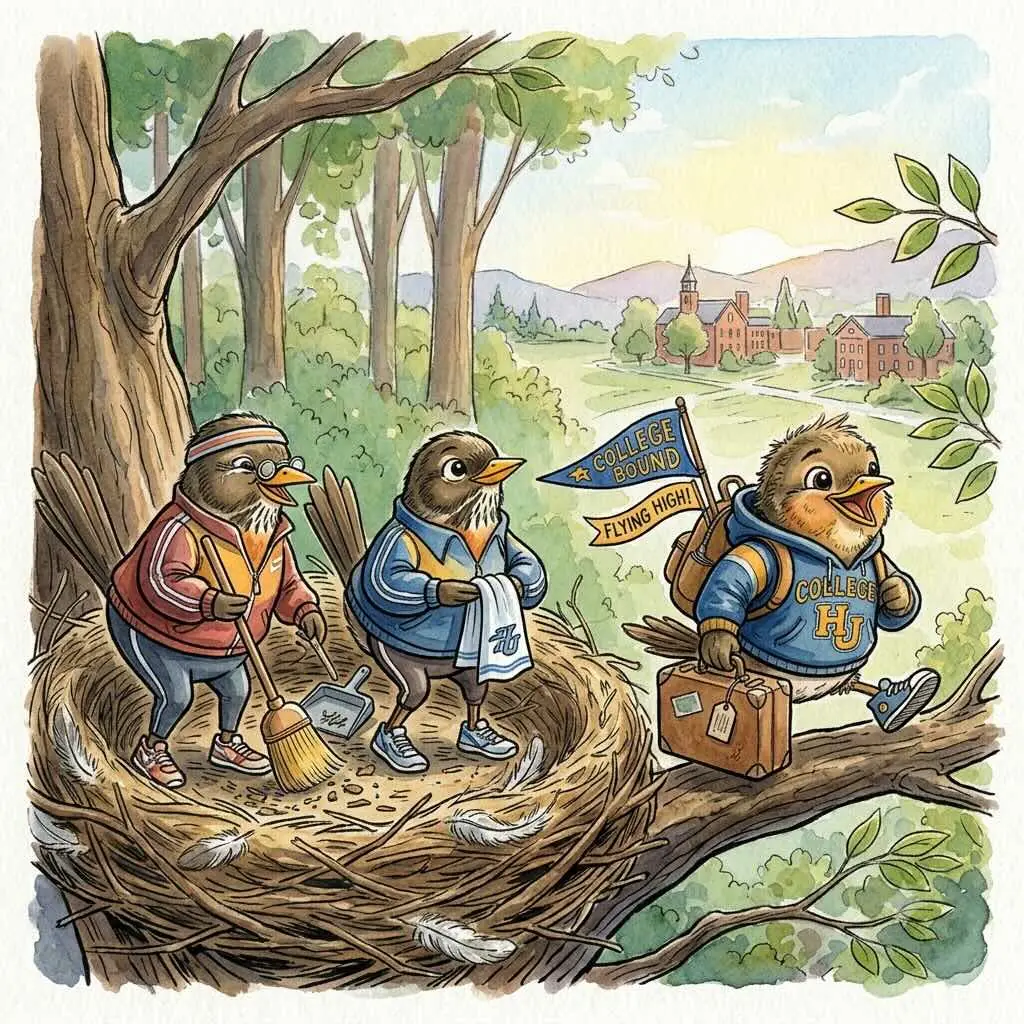
My youngest son just graduated high school. And just like that, a chapter of my life is coming to an end. For 29 years, I have had a child living in our home because there is a eleven years difference between my two boys. Explore the journey of becoming an empty nester with empowering tips to navigate this new chapter of life.
I’ve done this before. When Jake left for college, I was surprised by how much it hurt. Some nights I would crawl into his bed and hold his pillow because I missed him so much.
But this time feels different.
This time, my baby is leaving.
When Alex heads off to college in two months, Steve and I will officially become empty nesters. Even writing those words feels strange.
The house already feels a little quieter. A little emptier. For nearly three decades, so much of our purpose revolved around raising our boys—driving them to practices, cheering from the sidelines, helping them navigate challenges, and simply being there every day.
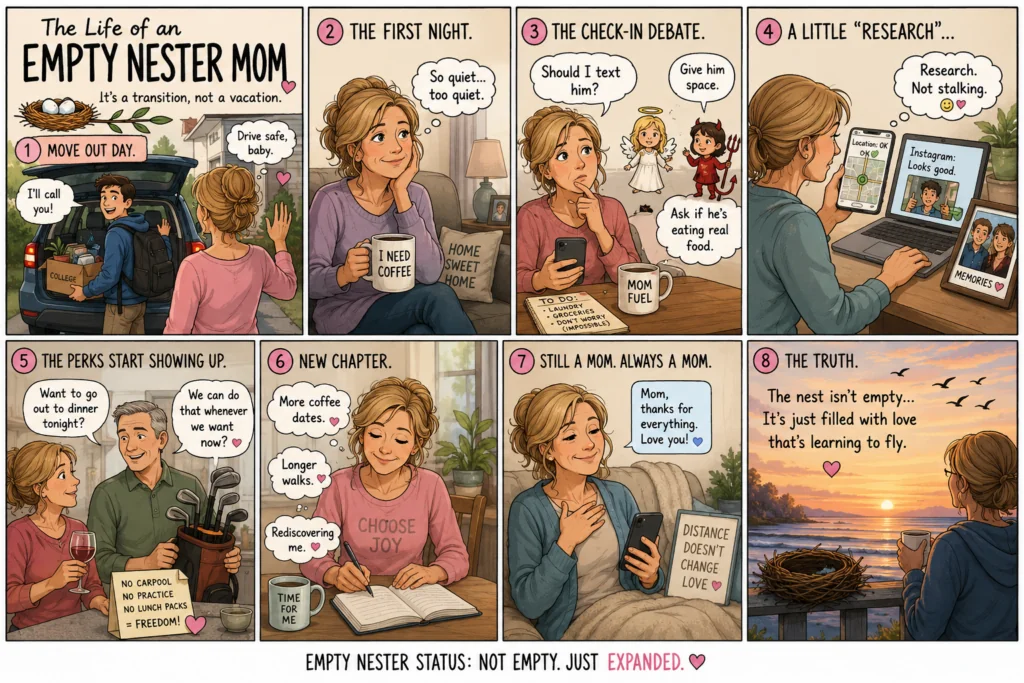
Now our roles are changing.
Instead of focusing on them, we’ll have to focus more on ourselves. And if I’m being honest, that’s not something that comes naturally to either of us. For so many years, our family was the center of everything.
It’s a transition filled with mixed emotions—gratitude, pride, excitement, and yes, a some sadness.
Key Takeaways
- Becoming an empty nester brings mixed emotions, including sadness and reflection on past roles.
- Give yourself permission to feel sad during this transition; honor your emotions rather than rush to find a silver lining.
- Reconnect with yourself by remembering your interests and invest time in friendships as your family dynamics shift.
- Focus on your marriage, prioritize self-care, and find others experiencing similar changes to navigate this new phase together.
- Ultimately, an empty nest does not equate to an empty life; new adventures and redefined purpose await.
Who Am I Now?
That question is sitting heavy in my chest these days. I know who I was. The mom who showed up. Who drove the carpool and showed up to every game and stayed up late with worry like it
was a second job. I was good at that. It gave me purpose and structure and identity in a way I didn’t fully appreciate until it shifted.

Now I’m standing at what feels like the edge of something — and I genuinely don’t know what’s on the other side.
I want to tell you I have it figured out. I want to write you a tidy list of the ten things I’m doing to thrive in my new chapter. But that would be a lie, and if this blog has ever been anything, it’s been honest. The truth is: I’m in the messy middle.
There’s a word I came across recently — selfaissance. A personal renaissance. The idea that there are moments in life — divorce, loss, an empty nest, a big birthday — that crack you open just enough for a
new version of yourself to start breathing.
I’m trying to hold onto that. I’m trying to reframe this not as losing something, but as being handed back something I set down a long time ago. My time. My attention. The question of what I actually want. Some days that feels like freedom.
Some days it just feels like a really quiet house.
I’m not going to pretend those two things don’t exist at the same time.
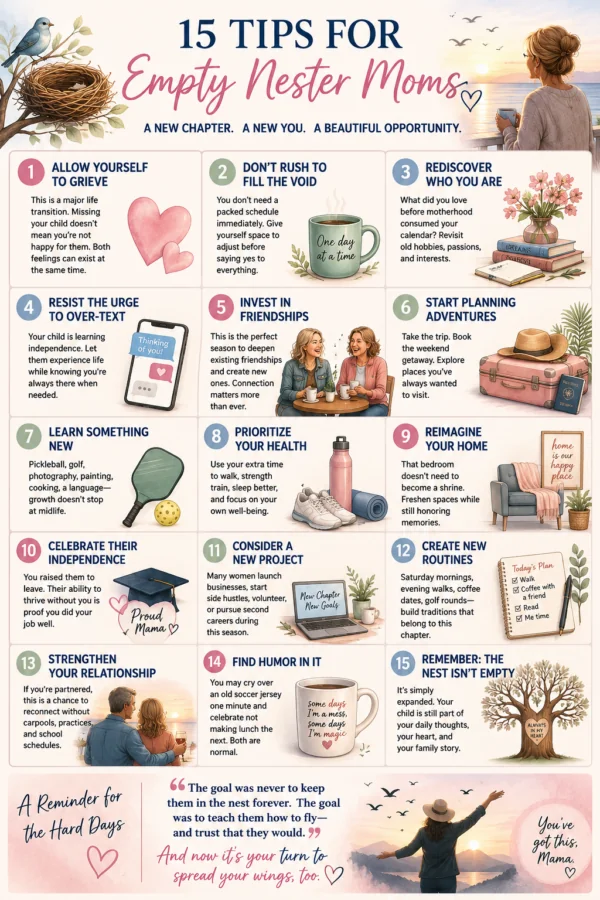
Navigating the Empty Nest: What I have Learned So Far
As my youngest son prepares to leave for college, Steve and I are officially becoming empty nesters. After 29 years of having a child at home, this is unfamiliar territory. If you’re entering this season too, here are a few things I’m reminding myself:
1. Give Yourself Permission to Feel Sad
You don’t have to rush to find the silver lining. This is a major life transition. If you’re emotional, that’s because you loved this season deeply. Missing your kids isn’t something to fix—it’s something to honor.
2. Remember Who You Were Before Motherhood
For years, being “Mom” has been my most important role. Now I’m asking myself: What did I enjoy before life revolved around schedules, sports, and raising children? This is a chance to reconnect with parts of yourself that may have been sitting quietly in the background.
3. Don’t Rush to Reinvent Yourself
You don’t need a five-year plan or a dramatic transformation. Give yourself time. Sometimes the next chapter reveals itself one small step at a time.
4. Be Intentional With Your Newfound Time
For the first time in decades, your calendar may have open spaces. Instead of filling every minute, ask yourself what you truly want to do with this gift of time.
5. Invest in Your Friendships
Friendships become even more important during this stage of life. Make the lunch date. Join the walking group. Pick up the phone. The women who walk beside us during life’s transitions are invaluable.
6. Focus on Your Marriage Again
For many couples, raising children becomes the center of family life. Empty nesting offers an opportunity to reconnect, rediscover shared interests, and create new memories together.
7. Take Care of Yourself
Midlife often brings other changes too—stress, shifting hormones, and new health concerns. Prioritize sleep, movement, healthy habits, and regular checkups. Feeling your best physically can help you navigate the emotional side of this transition.
8. Find Other Women in the Same Season
There is something comforting about talking to another woman who understands exactly what you’re feeling. You are not the only one standing in a quieter house wondering, “What’s next?”
9. Let Go of the Timeline
Some women adjust quickly. Others take months or even years. There is no right way to navigate an empty nest. Give yourself grace and trust your own timeline.
10. Remember: An Empty Nest Doesn’t Mean an Empty Life
The house may feel quieter, but your life is far from over. There are still adventures to take, friendships to deepen, passions to pursue, and dreams to chase. This chapter isn’t about losing your purpose—it’s about discovering a new one.
Gal Pal Reminder: The house may feel emptier, but the years you poured into your children don’t disappear when they leave. They become part of the foundation that supports them—and you—as you both step into what’s next.