Tested Non-Toxic Laundry Detergents That Work
I never gave much thought to laundry detergent — fresh scent, clean clothes, done. But once I started reading ingredient labels, I realized “fresh” can be misleading. I tested a handful of non-toxic laundry detergents and I’m sharing which ones actually work and the ones I do and don’t recommend. Learn what toxic ingredients to look out for.
That’s what sent me down the non-toxic laundry soap rabbit hole. Not because I’m trying to be perfect (I’m not), but because this is one of those small swaps that touches everything — from food (dyes, seed oils etc) to clothes, nail polishes, fragrances, sheets, towels, sunscreens, beauty products. I have been throwing out toxic personal products because there are some amazing non-toxic options these days.
The good news? “Non-toxic” doesn’t mean weak or crunchy anymore. Today’s formulas can handle sweaty workouts, sandy beach towels, and kid-level messes — without the unnecessary stuff we’ve all been rinsing through our homes for years. Learn why to consider non-toxic laundry detergent.
Key Takeaways
- Non-toxic laundry detergent means avoiding specific chemicals like 1,4-dioxane, synthetic fragrance, optical brighteners, and formaldehyde while still getting powerful cleaning results—even for families dealing with hard water and heavily soiled loads.
- “Non toxic” doesn’t mean weak. Modern options in powder, liquid, sheet, and tablet formats can handle sweat, food stains, and kids’ clothes just as effectively as conventional brands.
- The fastest way to choose a safer detergent is to avoid a short list of red-flag ingredients and look for independent certifications like MADE SAFE, EWG Verified, and USDA Certified Biobased.
- This article covers both ingredient education and specific brand examples (Meliora, Puracy, Blueland, Dirty Labs, Molly’s Suds, and more) so you can take action immediately.
- A brief FAQ at the end addresses common concerns about cost, hard water, baby laundry, septic safety, and DIY detergent recipes.
Why Use Non-Toxic Laundry Detergent?
The average American household runs somewhere between 300 and 400 loads of laundry per year. That’s a lot of detergent cycling through your washer and onto your clothes. What many people don’t realize is that detergent residue doesn’t just rinse away completely—it stays on fabrics you wear against your skin, lingers in your laundry room air, and contributes to continuous low-level chemical exposure day after day this is why non-toxic laundry detergent is so important.
The health impacts are backed by research. Increased risk of contact dermatitis, eczema flare-ups, asthma symptoms, and hormonal disruption have all been linked to certain fragrance components and preservatives commonly found in toxic laundry detergent formulas.
Environmental concerns add another layer. Phosphates and harsh surfactants contribute to waterway eutrophication and aquatic toxicity. The endless parade of plastic jugs and pod packaging creates microplastic pollution that persists for decades.
The good news? Safer detergents now match or outperform big-name formulas in real-world testing. The trade-off between health and cleaning power that existed 10-15 years ago has largely disappeared. You can have clean laundry without the chemical baggage.
Avoid These Toxic Laundry Detergent Ingredients!
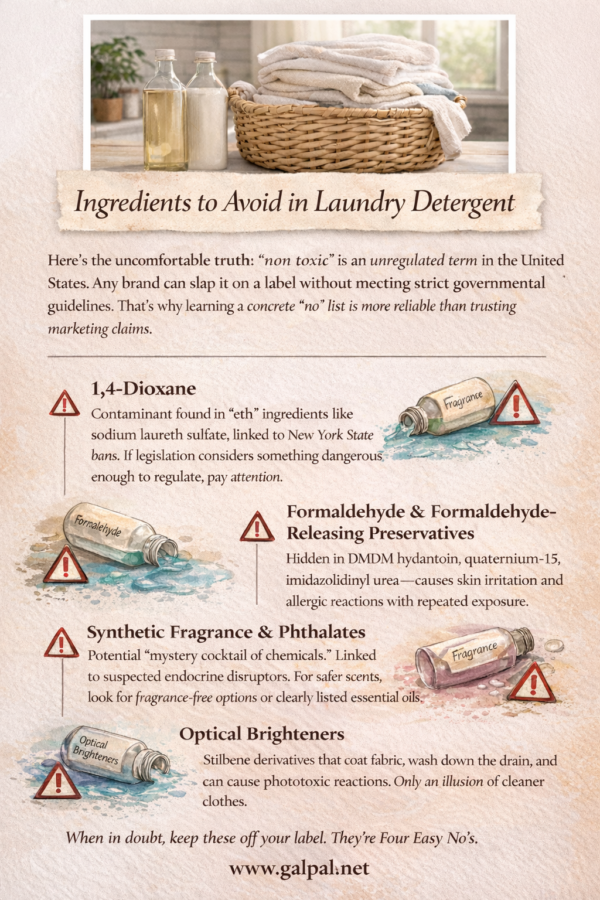
Here’s the uncomfortable truth: “non toxic” is an unregulated term in the United States. Any brand can slap it on a label without meeting strict governmental guidelines. That’s why learning a concrete “no” list is more reliable than trusting marketing claims.
1, 1,4-Dioxane
This contaminant appears in ethoxylated ingredients—look for anything ending in “-eth” on the label, like sodium laureth sulfate. New York State recognized the danger and phased in bans starting in 2022, with 2023 limits restricting detergents above specific parts-per-million levels. If a state legislature considers something dangerous enough to regulate, that’s a signal worth paying attention to.
2. Formaldehyde and Formaldehyde-Releasing Preservatives
Watch for DMDM hydantoin, quaternium-15, and imidazolidinyl urea. These preservatives slowly release formaldehyde over time, which can cause skin irritation and allergic reactions with repeated exposure.
3. Synthetic Fragrance and Phthalates
When you see “fragrance” or “parfum” on a label with no breakdown of components, you’re looking at what researchers describe as “a mystery cocktail of chemicals.” Many synthetic fragrances contain suspected endocrine disruptors. For safer scents, choose fragrance free options or products using clearly listed essential oils.
4. Optical Brighteners
These stilbene derivatives coat fabric and can cause phototoxic reactions in some people. They add to aquatic toxicity when they wash down the drain while creating only an illusion of cleaner clothes.
5. Additional Red Flags
| Ingredient Category | Why It’s Problematic |
|---|---|
| Phosphates | Trigger algal blooms, deplete oxygen in waterways |
| Chlorine bleach (sodium hypochlorite) | Respiratory issues, skin burns with regular exposure |
| Petroleum-based surfactants | Non-renewable, slow to biodegrade |
| SLS/SLES | Strips natural oils, problematic for sensitive skin |
| NPEs (nonylphenol ethoxylates) | Endocrine disruptors, banned in EU and Canada |
Quick red flags when scanning labels: look for “fragrance/parfum” with no breakdown, any “brightener” language, and extremely long ingredient lists with many “-eth” endings.
How to Read a Laundry Detergent Label (Without a Chemistry Degree)
Many mainstream brands—including some marketed as “green”—use vague terms designed to sound safe without actually meaning much. This section will give you a practical, step-by-step approach to cutting through the noise. Here is a guide on how to determine what is a non-toxic laundry detergent.
Finding the ingredient list:
- Check the back panel of the bottle or box
- Visit the brand’s website and look for an “Ingredients” tab
- Search databases like EWG’s Guide to Healthy Cleaning for third-party analysis
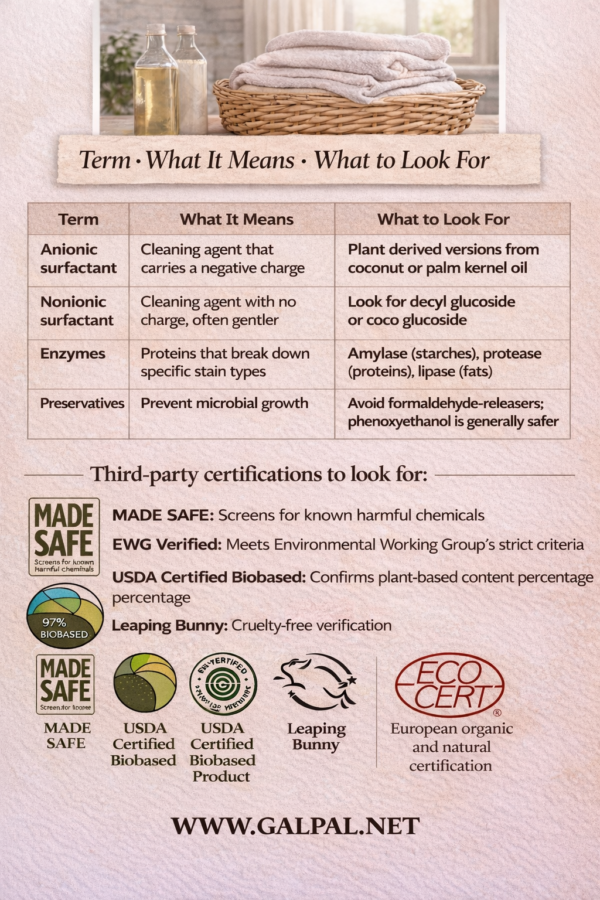
Decoding common TOXIC laundry detergent terms:
Avoid these toxic cleaning ingredients commonly found in cleaning products.
| Term | What It Means | What to Look For |
|---|---|---|
| Anionic surfactant | Cleaning agent that carries a negative charge | Plant derived versions from coconut or palm kernel oil |
| Nonionic surfactant | Cleaning agent with no charge, often gentler | Look for decyl glucoside or coco glucoside |
| Enzymes | Proteins that break down specific stain types | Amylase (starches), protease (proteins), lipase (fats) |
| Preservatives | Prevent microbial growth | Avoid formaldehyde-releasers; phenoxyethanol is generally safer |
Third-party certifications to look for:
- MADE SAFE: Screens for known harmful chemicals
- EWG Verified: Meets Environmental Working Group’s strict criteria
- USDA Certified Biobased: Confirms plant-based content percentage
- Leaping Bunny: Cruelty-free verification
- ECOCERT: European organic and natural certification
Practical label strategies for non-toxic laundry detergent:
- Choose fragrance free if you have very sensitive skin or respiratory issues
- Prefer detergents that list simple ingredients like “sodium carbonate, sodium bicarbonate, sodium percarbonate, soap (from coconut or olive oil)”
- Avoid formulas that only list generic categories like “cleaning agents, stabilizers”
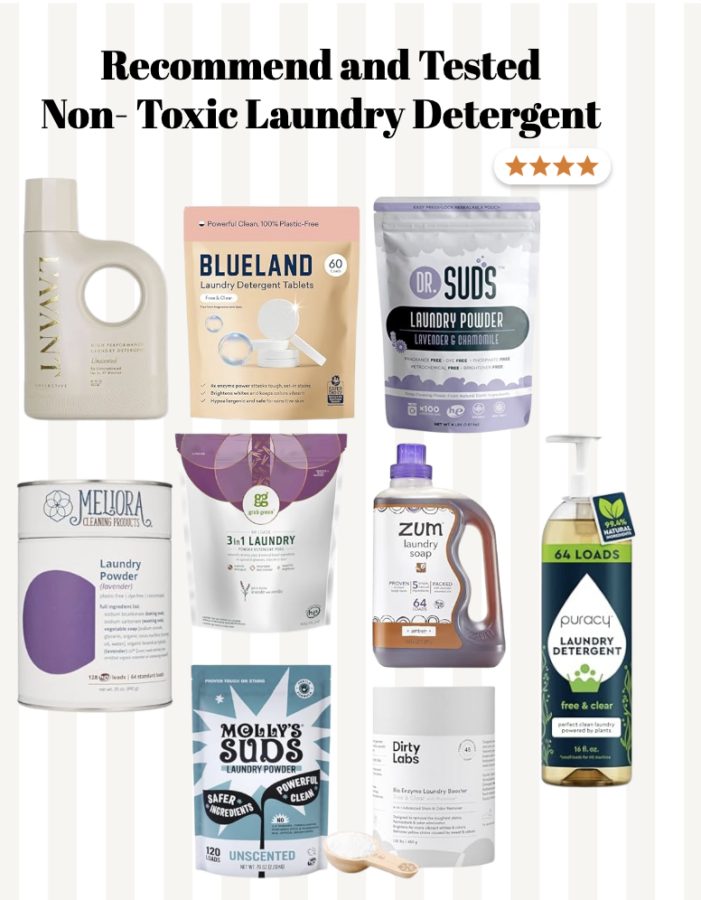
Best Non-Toxic Laundry Detergents -Tested & Recommended
This section highlights specific, widely available options I recommend based on testing them myself. These recommendations balance ingredient safety, performance, and price. Prices are approximate and can change based on retailer and promotions.
The following are the best non-toxic laundry detergents I recommend based on research and trial.
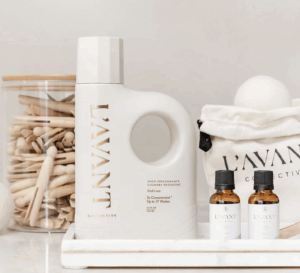
L’AVANT COLLECTIVE
Plant based non-toxic laundry detergent. Uses enzyme-based cleaning power to break down stains effectively without toxic residue
1. L’AVANT Collective- Highly Recommend
L’AVANT Collective was created by a woman who believed that the products we use every day should be just as beautiful, thoughtful, and safe as the homes we live in.
As a women-owned brand, L’AVANT Collective leads with care — for families, for the environment, and for the small daily moments that make a home feel like home. Every bottle reflects that philosophy: clean ingredients, refined fragrances, and a commitment to doing better for our bodies and the planet.
Value:
- Full-size non-toxic laundry detergent (30–32 oz): ~$34–$40 per bottle depending on retailer.
- Refill pouch (32 oz): ~$30 — great eco-friendly option that uses less plastic.
- Luxury laundry care set: ~$85–$95 (includes detergent + extras like laundry oil or accessories).
- Travel pack (5 single-use doses): ~$18 — ideal for trips or small loads.
- Gallon size (bulk): ~$109 on the brand site (equivalent to over 4 bottles). L’AVANT Collective
Best For: People who like liquid laundry soap that has a refreshing fragrance without any chemicals. Soap that words really well. ** I love this product and highly recommend it.
Why I Use L’AVANT Collective Laundry Soap
- Made with plant-based, biodegradable ingredients instead of harsh chemicals
- Free from harmful chemicals including: bleach, dyes, phosphates, parabens, and phthalates commonly found in conventional detergents
- Does not bother my skin
- The enzyme-based cleaning power to break down stains effectively without toxic residue- it really works.
- 5x concentrated formula means you use less per load
- The clothes smell good! Leaves a clean and fresh without synthetic fragrance.
- Cruelty-free and not tested on animals
- Supports a brand committed to sustainability, transparency, and elevated everyday living
Meliora Laundry Detergent
Certified powder using a minimalist formula of about 5-6 ingredients including washing soda, baking soda, and coconut oil soap
2. Meliora Laundry Powder Detergent
Meliora is a Chicago-made, MADE SAFE certified powder using a minimalist formula of about 5-6 ingredients including washing soda, baking soda, and coconut oil soap. If you want ingredient transparency, this is about as good as it gets.
Why I like this brand:
- Only about 1/2 tablespoon needed per standard load
- Despite being gentle, the detergent effectively cleans clothes, removing stains and leaving them fresh.
- Works reliably for everyday grime, sweat, and lightly soiled kids’ clothes
- Comes in reusable steel canisters or paper refills—both plastic free options
- Available unscented or with essential oil scents like wild lavender and lemon
- It’s a woman-owned, social B Corp
Value: The jumbo can provides around 128 loads for about $22, making it one of the most cost-effective non toxic options at roughly $0.17 per load.
Best for: People who prefer powder, want a short ingredient list, have sensitive skin, and don’t mind manual measuring.
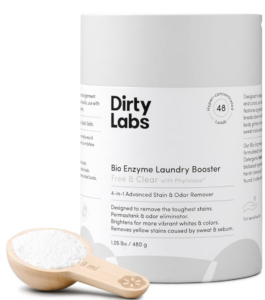
Dirty Labs
Bio Enzyme Laundry Booster. Designed to remove the toughest stains and yellow stains.
3. Dirty Labs Bio Laundry Detergent
Dirty Labs uses a hyper-concentrated liquid with advanced enzyme technology (including Phytolase) designed to break down protein- and starch-based stains at lower temperatures. **I tried this product and think it is great!
- Biodegradable formulas free from dyes, optical brighteners, and California Prop 65 listed carcinogens
- Both scented and fragrance-free versions available
- A small capful treats a full load
- Especially impressive on sweat, body odor, and food stains
- Fabrics don’t feel stiff after washing
- Works great in cold water, reducing energy use
Value: Around $16 for about 32 standard loads—premium pricing but high performance.
Best for: Odor-heavy loads (gym gear, sports uniforms, clothes that have smelled despite previous washes) and households committed to cold-water washing.
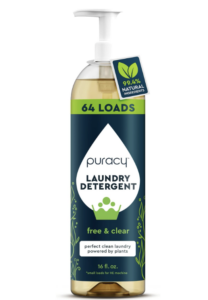
Puracy Liquid Laundry Detergent
Ultra concentrated laundry detergent that is best for sensitive skin. Uses plant-based surfactants and enzyme blend.
4. Puracy Liquid Laundry Detergent
Puracy is a 10x ultra concentrated liquid laundry detergent in a pump bottle, formulated by chemists and doctors specifically for sensitive skin. It uses plant-based surfactants and an enzyme blend for serious cleaning power.
Why I Like This Brand:
- Doubles as a pre-treat for makeup or skincare stains on pillowcases and towels
- Free from sulfates, phosphates, dyes, and optical brighteners
- Available in Free & Clear or a fresh linen scent derived from allergen-conscious fragrance components
- Refill pouches cut plastic packaging by up to 90% compared to rigid bottles
I have to say that I do not like the bottle dispenser, I had some issues with it.
Value: Around $19.99 for about 64 loads, with refills available.
Best for: Families wanting liquid detergent (not powder or sheets), especially those with eczema-prone skin or babies who still need strong stain removal.
5. Blueland Laundry Detergent Tablets
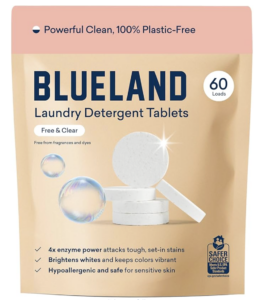
BLUELAND LAUNDRY DETERGENT
Plastic-free, tablet-based detergent, plant based ingredients and cleans well
Blueland offers a plastic-free, tablet-based detergent: dry tablets shipped in a refillable tin, made with plant- and mineral-based ingredients and no polyvinyl alcohol film.
- Pre-measured tablets: 1 per normal load, 2 for heavily soiled or very large loads
- Dissolves in all water temperatures
- Compatible with HE and standard machines
- Free from parabens, phosphates, ammonia, VOCs, chlorine bleach, and phthalates
- B Corp certified, carbon neutral, and cruelty-free
Value: Starter set (tin + tablets) runs around $30 for 60 loads, with cheaper refill packs available on subscription.
Best for: People who prioritize zero plastic waste, a clutter-free laundry room, and simple dosing. Note that very heavy stubborn stains may still need separate spot treatment.
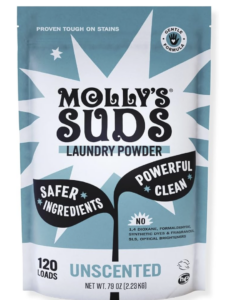
Molly’s Suds
Simple Cleaning Ingredients including baking soda, sea salt and coconut. Very affordable
6. Molly’s Suds Laundry Detergent Powder
Molly’s Suds was founded around 2010 by a pediatric nurse after experiencing personal tragedy related to chemical exposure. The brand maintains a simple ingredient list and focus on family-safe formulas.
Why I like Molly’s Suds:
- Affordable
- Free of optical brighteners, synthetic fragrances, and dyes
- Original peppermint-scented powder leaves a light, crisp fresh scent
- Works well on everyday clothing, towels, and kids’ dirty laundry
Value: Large bag offers around 120 loads for roughly $22.99, comparable to Meliora on cost per load.
Best for: Budget-conscious families wanting a widely available, low-tox powder that’s easy to find online and in some natural grocery stores.
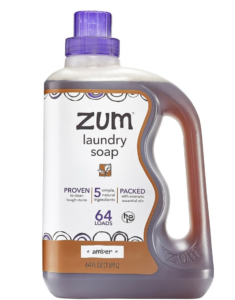
Zum Laundry Soap
“Aromatherapy-forward” approach, using coconut oil-based soap, baking soda, vegetable glycerin (which also acts as a fabric softener), and creative blends of essential oils.
7. ZUM Laundry Soap
ZUM takes an “aromatherapy-forward” approach, using coconut oil-based soap, baking soda, vegetable glycerin (which also acts as a fabric softener), and creative blends of essential oils.
- This is a liquid soap rather than conventional detergent, which tends to be gentler on fabric
- Excels at preserving colors and darks
- Wide variety of scents including frankincense & myrrh, wild lavender, and sea salt—all from essential oils
- Some sensitive users may still need to patch-test despite natural sourcing
Value: About $21 for a 64 fl oz bottle, with typical usage of 1-2 ounces per load.
Best for: People who love strong natural scents, wash mostly casual or lightly soiled clothing, and want a more spa-like laundry experience rather than maximum stain-fighting.
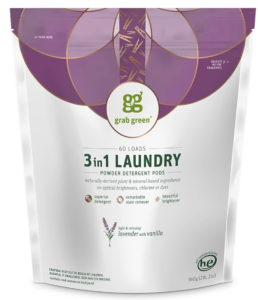
Green Grab Laundry Pods
Mineral and plant based pods with 7 Core Ingredients that really work!
8. Grab Green Stoneworks Laundry Detergent Pods
Grab Green offers mineral- and plant-based pods with 7 core cleaning ingredients plus essential oils for scent, aimed at busy households wanting convenience.
What I Like About This Brand:
- Fragrance options like “Oak Tree” blend cinnamon, geranium, cedarwood, clove, and peppermint essential oils
- Pre-measured pods for easy use
- Pods are wrapped in PVA (polyvinyl alcohol) film, which dissolves in wash water
- PVA remains controversial for some eco-conscious consumers concerned about microplastic fragments
Value: Around $14 for a bag of 50 pods—mid-range cost per load for a non-toxic-leaning pod.
Best for: Those who want a simple, good-smelling pod that’s cleaner than other brands in the mainstream pod category but who are comfortable with PVA film.
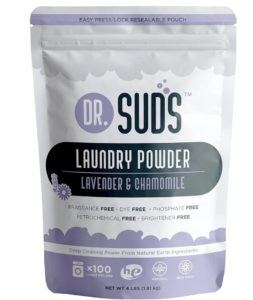
Dr. Suds Laundry Detergent
Powerful non-toxic cleaning with a lavender and chamomile natural fragrance.
9. Dr. Suds Laundry Detergent Powder
Dr. Suds offers an ultra-simple powder formula using about four core ingredients plus lavender and chamomile essential oils for scent.
- Common ingredients include baking soda, Epsom salt, sea salt, and washing soda
- Creates a deodorizing and softening effect along with gentle cleaning
- Users often report fresh-smelling, soft clothes and towels
- Works best in warm water
- Heavy stains may need pre-treating
Value: Under $20 for about 100 loads—among the more affordable simple non toxic powders.
Best for: Readers who want an extremely short ingredient list and deal mostly with lightly to moderately soiled laundry rather than industrial-level stubborn stains.
Popular “Clean” Brands That I Don’t Recommend
Not every “natural” or “plant based” detergent is truly low-tox. Even widely recommended brands may still use ethoxylated ingredients or harsh preservatives. This section provides balanced commentary on what’s good, what’s questionable, and who each might suit.
A Note on Seventh Generation
Seventh Generation is probably the first brand that comes to mind when people think of non-toxic laundry detergent detergent. However, I am cautious about this brand for a few reasons:
- Uses certain ethoxylated surfactants that can contain 1,4-dioxane residue
- Some formulas contain potential irritants for those with very sensitive skin
- Unilever ownership raises concerns for some consumers about future formula changes and ingredient transparency
This doesn’t make Seventh Generation a terrible choice—it’s certainly better than conventional options. But for readers seeking strictly non toxic detergents, especially for babies, eczema, or autoimmune issues, other options may align better with strict criteria. **I can’t highly recommend this product.
Tide Pureclean: Better But Not Perfect
Tide Pureclean represents an improvement over regular Tide with no optical brighteners and partly plant-based surfactants. However, it still contains residual synthetic fragrance and petrochemical content. Consider it a stepping stone rather than a destination for the truly clean laundry detergent seeking shopper. **This product is not my top choice because of the synthetic fragrance.
The Big-Box Store Problem
You will find many eco-brands marketed heavily at Target, Walmart, and other big-box stores still contain artificial fragrances, brighteners, and preservatives comparable to mainstream products. The green packaging creates an expectation that doesn’t match reality. Always read the actual ingredient list rather than relying on brand image or shelf placement. Be careful about toxic laundry ingredients.
I don’t fully “ban” any brand for everyone. But for readers specifically seeking low-tox formulas—especially for babies, eczema, or autoimmune issues—the “best picks” section below is more aligned with strict criteria.
Detergent Sheets & Other Popular Non Toxic Formats (Dip, Earth Breeze, etc.)
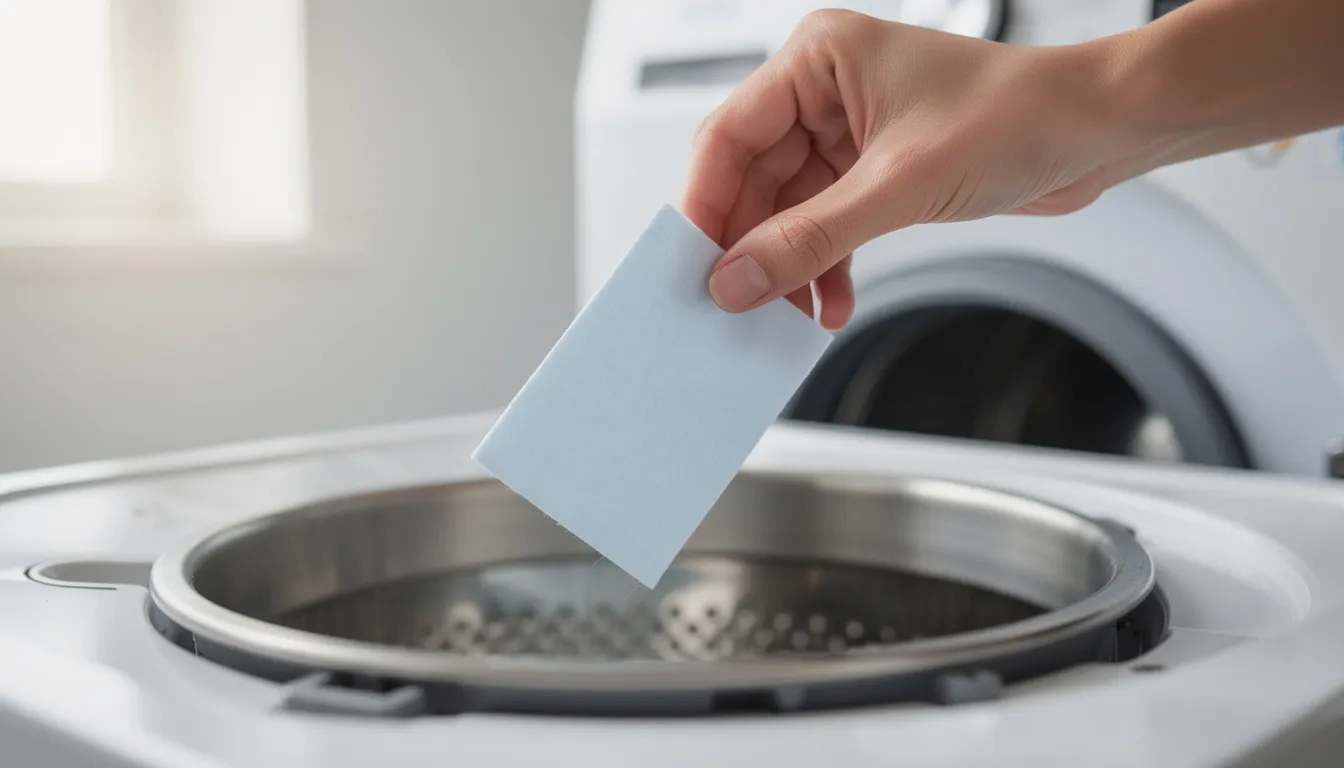
Ultra-light detergent sheets have exploded in popularity since around 2020. Their appeal? Plastic-free packaging, low shipping emissions, and pre-measured convenience that eliminates guesswork.
Earth Breeze:
- B Corp certified and carbon neutral
- Uses plastic-free cardboard envelopes (compostable packaging)
- Available in “Fresh Scent” and “Fragrance Free”
- Works well in both cold water and hot water cycles
Real-world performance note: Sheets do well on sweat, basic food stains, and kids’ clothes. However, deep-set grass stains, oil, or tomato stains may still need targeted stain removers regardless of brand.
Value: Most sheet brands fall in the $0.20-$0.40 per load range, often cheaper with subscription. Their space-saving, travel-friendly nature adds practical value beyond just the cost.
How to Choose the Best Non Toxic Detergent for Your Home
With so many options, how do you pick? Consider your water type, skin sensitivity, machine style, budget, and environmental priorities.
Water Type
For hard water (common across the U.S. Midwest and Southwest), powders like Meliora or Molly’s Suds work well—especially when paired with a water softener like washing soda or a dedicated booster. Enzyme-focused liquids like Dirty Labs also perform reliably in hard water conditions.
Skin Concerns
For eczema, psoriasis, or baby skin, fragrance free formulas are safest:
- Puracy Free & Clear
- Meliora Unscented
- Blueland fragrance-free
Even when using essential oils, patch-testing is wise for sensitive individuals.
Machine Compatibility
High efficiency machines benefit from low-sudsing, highly concentrated formulas. Puracy, Dirty Labs, and most non toxic sheets and tablets work well. Be careful not to use too much powder in front-loaders—excess can create residue and that musty washer smell.
Budget Guidance
Non toxic powders often beat liquids on cost-per-load. Buying in bulk or as refills (rather than single small bottles) keeps price competitive with mainstream popular brands. Subscription discounts on sheets and tablets can reduce per-load costs by 10-20%.
The 80% Rule
Pick one product that meets 80-90% of your criteria rather than waiting for a “perfect” detergent. You can always adjust stain routines or add boosters as needed. Perfect is the enemy of good—and of actually getting started.
Real-World Tips for Getting Great Results with Non Toxic Detergent
Using a safer detergent doesn’t automatically guarantee clean clothes. Technique matters just as much as brand choice. Here’s how to maximize results:
Don’t overload the machine. Leave roughly a hand’s width of space at the top of the drum. Clothes need room to tumble, and water needs space to circulate properly. An overstuffed washer means nothing gets truly clean.
Water temperature guidelines:
- Cold: Use for most everyday loads to preserve colors and save energy
- Warm: Reserve for heavily soiled loads, towels, and sheets
- Hot: Run periodically (every 10-15 washes) to sanitize cloth diapers or kitchen rags
Simple pre-treatment routines:
- Apply a bit of Puracy or Dirty Labs directly to stains before washing
- Use a stain bar (like a coconut oil soap bar) on grease, makeup, or grass stains
- Soak stubborn items overnight in warm water with added washing soda
- For anything heavily soiled, an extra rinse cycle removes loosened grime completely
Correct dosage is critical. Most non toxic products are more concentrated than big-box brands. Overusing can leave residue on fabric and actually reduce cleaning performance. More is not better—follow the recommended amount.
Maintenance washes: Run an empty hot cycle with oxygen bleach or washing soda every month or so. This keeps your machine free from buildup, especially important if you’re switching from conventional detergents that may have left residue behind.
Natural Laundry Detergent Alternatives (Like Soap Berries) – Are They Enough?
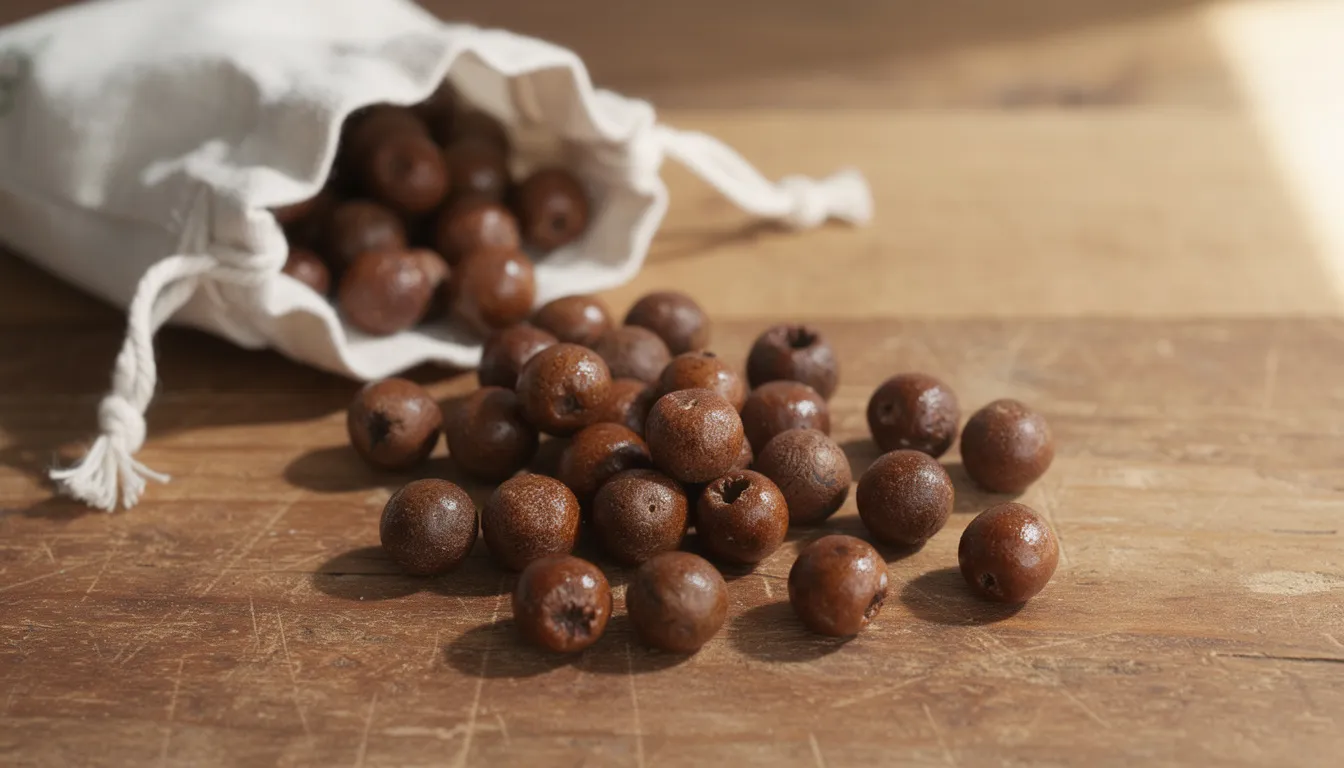
Soap berries (also called soap nuts) are dried shells from trees like Sapindus mukorossi. They’re rich in natural saponins—compounds that create mild suds in water.
How to use them:
- Place 4-8 berries in a small cotton bag or sock
- Tie it closed and toss in the washer with your clothes
- Each set can be reused about 3-4 times until shells appear gray and mushy
The appeal: When bought in bulk, some packages can last for 250-340 loads. They’re completely compostable and fit seamlessly into zero-waste households.
The limitations:
- Often struggle with oil-based stains, heavy soil, and synthetic athletic fabrics
- Results vary significantly with water hardness and temperature
- Removes odors less effectively than enzyme-based alternatives
My recommendation: Soap berries work well as a backup or supplement—great for lightly soiled or delicate loads. But most families will want a tested non toxic detergent as their primary option for consistent, reliable cleaning. Natural laundry detergents with enzymes simply outperform saponins on the tough stuff.
FAQ: Non-Toxic Laundry Detergent
Q: Is non toxic laundry detergent more expensive than regular detergent?
On a per-load basis, many non toxic powders (like Meliora and Molly’s Suds) are roughly comparable to mid-range supermarket brands—especially when bought in bulk. You’re looking at $0.15-$0.25 per load for powders. Some liquids and sheet formats cost slightly more ($0.25-$0.40 per load) but can still fit within a typical household budget. The key is avoiding overuse—measure correctly and you’ll stretch each purchase further.
Q: Will non toxic detergent work in very hard water?
Yes, but you may need adjustments. Choose formulas with water-softening ingredients like washing soda or citrates. Use the recommended dose (sometimes a bit more than in soft water areas). Consider adding a dedicated booster like borax or extra washing soda for heavily soiled loads. Running an occasional hot maintenance cycle also helps prevent mineral buildup in your washer.
Q: Are these detergents safe for babies and cloth diapers?
Most fragrance-free, dye-free, enzyme-conscious non toxic detergents work well for baby clothing and bedding. Many parents successfully use Puracy Free & Clear or Meliora Unscented. For cloth diapers specifically, manufacturers often recommend specific detergents and doses. Generally, avoid fabric softener, heavy fragrances, and residue-prone formulas that can reduce diaper absorbency. When in doubt, check with your diaper brand’s care instructions.
Q: Can I use non toxic detergents with a septic system?
Most plant- and mineral-based detergents labeled biodegradable and septic-safe (including Meliora, Blueland, Earth Breeze, and Dirty Labs) are appropriate for septic systems when used as directed. Avoid pouring large quantities of chlorine bleach and solvents down the drain. Spread heavy laundry days across the week to prevent sudden surges of graywater that could overwhelm your system.
Q: Is DIY laundry detergent (like grated bar soap + washing soda) a good idea?
Homemade blends can work for some households, but they come with trade-offs. Bar soap can build up in HE machines and on fabrics over time, leading to dinginess and odor. DIY recipes typically lack enzymes that help remove proteins and fats—exactly the stuff that makes clothes smelled despite washing.. For most people seeking both safety and strong performance, a well-formulated commercial non toxic detergent delivers more reliable results long-term. The best natural laundry detergents aren’t necessarily homemade—they’re just thoughtfully formulated.