Receipt? No Thank You! Why I Skip Thermal Paper Receipts
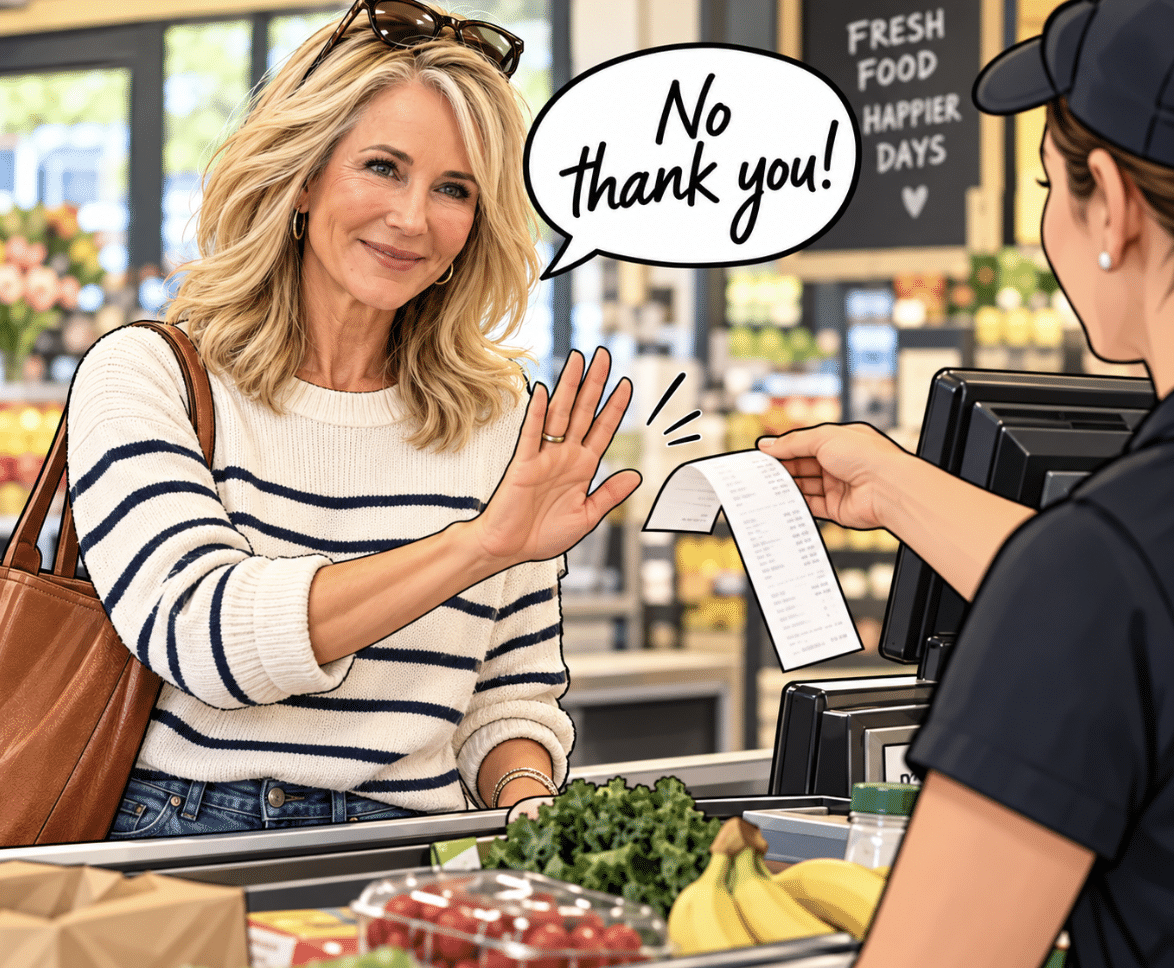
I used to grab a receipt after every shopping trip without giving it a second thought. But not anymore! Did you know that many store receipts are printed on thermal paper that can contain toxic chemicals like BPA or BPS which are linked to hormone disruption? Research suggests these chemicals can transfer from receipts onto our skin, especially when we’re using hand sanitizer or lotion. So now, when the cashier asks, “Would you like your receipt?” my answer is usually a polite “No, thank you!
The Little Paper I Used to Hold Without a Second Thought
I used to be a receipt keeper. I’d grab one at the grocery store, fold it in half, and stuff it in my purse. By Friday, my bag held a little nest of them. I used to fold them and stash them in an organized manner.
I had no idea that most store receipts are coated with BPA or BPS. Then I learned what’s on that shiny paper. Now I say “No receipt, thanks” almost every time.
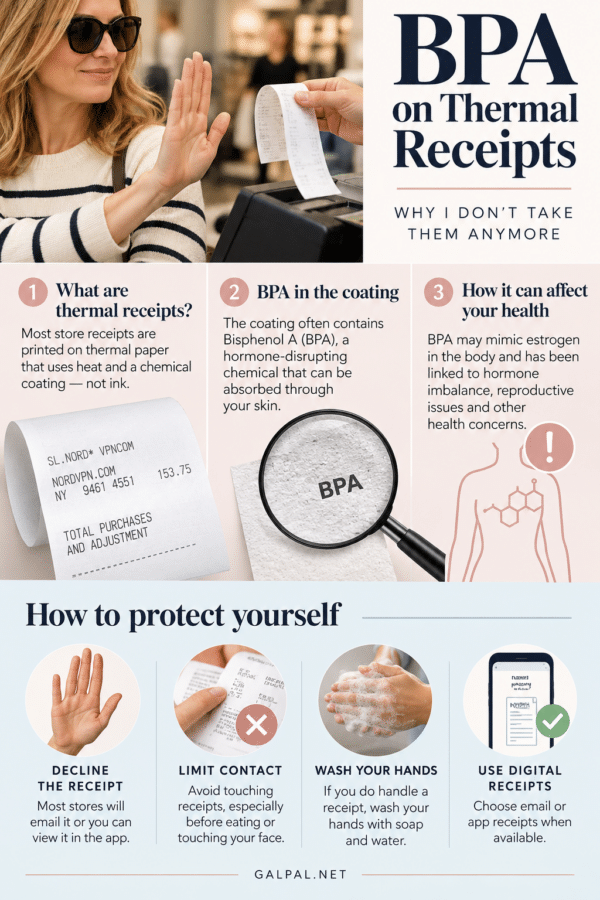
Most store receipts are printed on a special paper called thermal paper. Many of these papers are coated with chemicals called BPA or BPS. Scientists have found that these chemicals can rub off onto your hands and get into your body. They are known hormone disruptors.
Quick Takeaways
- Most store receipts are printed on thermal paper. It uses heat, not ink.
- Many of these papers are coated with BPA or BPS. These chemicals can act like hormones in your body.
- A study in JAMA found that holding receipts for two hours raised BPA levels in people’s bodies. Wearing gloves stopped that rise.
- Lab tests found BPA or BPS on about 8 out of 10 receipts from big chain stores.
- Hand sanitizer and lotion can help the chemicals soak in faster.
- The fix is simple: skip the receipt, go digital, or wash with soap and water.
What Is Actually on a Thermal Receipt?
Most receipts don’t use ink at all. They are printed on thermal paper. This paper has a coating that turns dark when the printer heats it. That’s how the words and numbers show up.
What is “thermal ink”?
You may hear people call the printing on a receipt “thermal ink.” But here’s the surprise: there is no real ink at all. The “ink” is already baked into the paper’s shiny coating before it ever reaches the store.
That coating has two main parts:
- A hidden dye. It has no color until something wakes it up.
- A developer. This is the chemical that makes the dye turn dark. On many receipts, the developer is BPA or BPS.
Inside the register, a tiny printer heats small dots on the paper. The heat melts the coating in those spots. The dye and the developer mix, and the dots turn black. Those dots form every letter and number you see.
Think of it like a magic coloring book. The color is already hiding in the page. Heat just brings it out. It’s also why old receipts fade, and why a receipt left in a hot car can turn gray all over.
So when we talk about “thermal ink,” we are really talking about the same coating that holds the BPA or BPS. That’s why the chemicals can rub off on your fingers. To make that coating work, many paper makers add a chemical called BPA. That stands for bisphenol A. You may know BPA from old plastic water bottles and the lining of soup cans.
Here is the part that surprised me. In a can, BPA is locked inside a hard plastic layer. On a receipt, it sits loose on the surface like a fine powder. University of Missouri researchers wrote that receipts carry “very high” amounts of free BPA on their outer layer. That means it can rub right off onto your fingers.
Try this at home: scratch a receipt with your fingernail. If a dark line shows up, it’s thermal paper.
What Are BPA and BPS?
BPA stands for bisphenol A. It’s a chemical used to make some hard plastics. It’s also in the lining inside many food cans, and in the shiny coating on many store receipts.
BPA is everywhere. When the CDC tested people across the U.S., they found BPA in almost everyone, about 9 out of 10 people.
So why does it matter? BPA can act a little like estrogen, a hormone your body makes on its own. Tiny bits of BPA can move from containers into your food and drinks. That happens more when plastic gets hot or old and scratched.
Because of this, the FDA stopped letting companies use BPA in baby bottles and sippy cups in 2012. Europe has gone further and is banning BPA in anything that touches food.
BPS stands for bisphenol S. It’s BPA’s close cousin. When people started avoiding BPA, many companies switched to BPS instead. That means a “BPA-free” label doesn’t always mean the product is free of chemicals like it. Scientists are still studying BPS, but early research shows it may affect hormones in a similar way.
You might see “BPA-free” and think you’re safe. Not always. Many companies swapped BPA for a close cousin called BPS (bisphenol S). The two chemicals are built in a very similar way. Scientists at the Ecology Center, a nonprofit lab in Michigan, call both of them hormone disruptors. So “BPA-free” does not always mean chemical-free.
The safer kind is called phenol-free paper. It uses no BPA, no BPS, and no other chemicals in that family.
My simple rule: Keep hot food out of plastic, and skip the paper receipt when you can.
What Is a Hormone Disruptor?
Think of your hormones as your body’s text messages. Parts of your body send hormones through your blood to tell other parts what to do. They help control how you grow, sleep, feel, use energy and handle stress.
A hormone disruptor is a chemical that messes with those messages. Scientists also call them endocrine disruptors.
What the Research Shows
I didn’t want to scare anyone (or myself) over a rumor. So I went looking for real studies. Here is what I found.
Study 1: Your skin soaks it up
In 2014, doctors published a small study in JAMA, one of the top medical journals in the country. The lead researcher was Dr. Shelley Ehrlich of Cincinnati Children’s Hospital.
- 24 people handled receipts for two hours with bare hands.
- Before the test, BPA showed up in the urine of 20 of the 24 people. After the test, it showed up in all 24.
- One week later, the same people handled receipts wearing gloves. This time, their BPA levels did not go up in any big way.
The researchers believe this was the first study to show BPA from receipts can pass through skin and into the body.
To be fair, the levels were still lower than what people get after eating canned soup. The doctors said a bigger study is needed. But they also pointed out the people most at risk: cashiers, who handle receipts 40 or more hours a week.
Study 2: Hand sanitizer makes it worse
This is the one that changed my habits. Also in 2014, a team at the University of Missouri tested something we all do. They had people rub on hand sanitizer, hold a receipt, then eat French fries with their fingers. Sound familiar? Hello, every drive-through trip ever.
- Some lotions and hand sanitizers contain ingredients that help things soak into skin. The researchers said these can boost how much BPA gets in by up to 100 times.
- People with sanitizer-wet hands picked up far more BPA. Hands that were dry picked up only about 1 percent as much.
- BPA moved from their hands onto the fries, and then into their bodies. Levels in their blood rose quickly, within about 90 minutes.
The researchers’ common-sense advice was to limit how much you touch receipts. And to wash with soap and water, not sanitizer.
Study 3: Most receipts still have it
The Ecology Center has tested receipts for years.
- In 2017, they found BPA or BPS on 93% of the receipts they tested. BPS was the most common, at 75%.
- In 2023, they tested 374 receipts from 144 big chain stores. About 80% still had BPA or BPS. That list included stores like Walmart and McDonald’s.
The good news is that the number is going down. Some big stores have promised to switch to phenol-free paper. But a promise isn’t the same as a done deal. Later news tests found BPS on some receipts from stores that had already pledged to switch.
Why This Matters for Our Health
BPA and BPS are called hormone disruptors. Hormones are your body’s messengers. They help control growth, mood, sleep, and how we make babies. Dr. Laura Vandenberg, an environmental health professor at UMass Amherst, explains that these chemicals can act like estrogen once they get inside us. That can throw other hormones off, too.
Researchers have linked BPA to problems with reproduction in adults. They have also linked it to brain growth in babies who were exposed before birth.
I want to be honest here. Scientists don’t yet know exactly how much receipt-handling it takes to cause harm. The CDC says the exact risks to people are still unknown. But here is how I see it. We already get BPA from canned food, plastics, and more. A receipt is one more source, and it’s one of the easiest ones to cut out.
Who should be the most careful?
- Pregnant women. European health officials found a risk to unborn babies of pregnant cashiers.
- Babies and kids. The Ecology Center says children should not touch receipts at all. Yes, that means no more handing the receipt to the toddler in the cart to keep her busy. [LISA: did you ever do this? A one-line confession here makes it yours.]
- Cashiers and store workers. They touch receipts all day long.
- Anyone who uses lotion or hand sanitizer often. That’s most of us!
What the U.S. Law & The European Union Says
Governments are starting to take receipts seriously.
- Europe: Since January 2, 2020, the European Union has banned receipt paper with BPA above a tiny limit. Officials made that rule after France showed cashiers and shoppers were at risk. But many stores there switched to BPS instead.
- Washington State: This one made me proud to live here. On January 1, 2026, Washington became the first state to ban all bisphenols in receipt paper. That includes BPA and BPS. It also covers thermal paper used for tickets and labels. The Washington Department of Ecology found that receipts are a big source of people’s exposure to these chemicals.
- Everywhere else in the U.S.: There is no national ban. So if you live outside Washington, or you’re traveling, the receipt in your hand may still be coated.
One small catch, even here at home: the Washington rule doesn’t cover paper made before 2026. So an old roll at a small shop could still be in use for a while.
My Simple Receipt Rules
None of this takes much effort. Here is what I do now.
- Say “No receipt, thanks.” This is the easiest fix of all.
- Ask for an email or text receipt. Most stores offer one now. It’s easier to find later for returns, too.
- Never use hand sanitizer right before you touch a receipt. Wait until after. Better yet, wash instead.
- Wash with soap and water after you handle a receipt, and always before you eat.
- Keep receipts away from kids. Hand your toddler a toy instead.
- Fold it with the shiny side in. The Ecology Center says the back side usually isn’t coated. Grab it by the back.
- Give receipts their own envelope in your purse. That keeps the coating off your wallet, cash, and lip balm.
- Don’t recycle thermal receipts. The chemicals can end up in new recycled paper. Toss them in the trash.
- Snap a photo and throw it away if you need to keep it for a return or a budget.
If you work a register: ask your manager if the store uses phenol-free paper. Wearing gloves made a real difference in the JAMA study.
Frequently Asked Questions
Do all receipts have BPA or BPS?
No, but most still do. Lab tests in 2023 found one of the two on about 8 out of 10 receipts from big chain stores. Receipts printed on regular paper with ink, or on phenol-free paper, don’t have them.
How can I tell if a receipt is thermal paper? Scratch it with your fingernail. If it leaves a dark mark, it’s thermal paper.
Is “BPA-free” receipt paper safe?
Not always. Many “BPA-free” papers use BPS instead, which is a very similar chemical. Look for “phenol-free” paper instead.
Is touching one receipt going to hurt me?
Probably not on its own. The concern is small amounts adding up over time, from receipts plus other sources. Cutting out receipts is just an easy way to lower your total.
Why is hand sanitizer a problem?
Some sanitizers and lotions help things soak into your skin. One study found they can raise how much BPA gets in by up to 100 times. Use soap and water instead.
Can I recycle receipts?
It’s best not to. The chemicals can get mixed into new recycled paper products.
Final Thoughts
I love a health habit that costs nothing and takes two seconds. Saying “no receipt, thanks” is exactly that. I’m not trying to make anyone afraid of the grocery store. I just think that when the science points to an easy swap, it’s worth making.
If this was helpful, share it with a friend who still keeps a stack of receipts in her purse. (We all have one. Some of us were that friend.)
FAQ: BPA in Thermal Paper Receipts
What is thermal paper?
Thermal paper is the smooth, shiny paper most stores use for receipts. It doesn’t need ink. Instead, it has a special coating that turns dark when the printer heats it, and that’s how the words appear.
Do receipts have BPA in them?
Many do. BPA (or its cousin BPS) is often part of the coating that makes the paper change color. Not every receipt has it, but you can’t tell just by looking.
How can I tell if a receipt is thermal paper?
Try the scratch test. Scratch the printed side with your fingernail or a coin. If it leaves a dark line, it’s thermal paper. Thermal receipts also tend to fade over time.
Can BPA get into my body from a receipt?
Yes, it can. Unlike the BPA inside a plastic bottle, the BPA on a receipt sits loose on the surface, so it can rub off onto your fingers. Studies have found that people who handled receipts had more BPA in their bodies afterward.
Does hand sanitizer make it worse?
It can. One study found that people who used hand sanitizer and then held a receipt took in much more BPA than people with dry hands. Lotion and greasy fingers (like after eating fries) may have a similar effect. If your hands are wet or freshly sanitized, wait before grabbing that receipt.
Are “BPA-free” receipts safe?
Not always. Many “BPA-free” receipts just use BPS instead, and early research suggests BPS may affect hormones in similar ways. A better label to look for is “phenol-free,” which means neither BPA nor BPS.
Is touching one receipt dangerous?
No need to panic. For most people, the main source of BPA is food and drink packaging, not receipts. Still, receipts are an easy exposure to cut, especially if you handle a lot of them.
Who should be most careful?
- Cashiers and other retail workers, who handle receipts all day
- Kids, who might play with receipts or put them in their mouths
- Pregnant women, because developing babies can be more sensitive to hormone disruptors
Is BPA in receipts banned?
In Europe, yes. The EU has limited BPA in thermal paper since 2020. In the U.S., there’s no nationwide ban.
This post is for general education, not medical advice. If you’re pregnant or have health concerns, talk with your doctor.
Research & Sources
- Ehrlich, S. et al. (2014). “Handling of Thermal Receipts as a Source of Exposure to Bisphenol A.” JAMA. PMC
- Cincinnati Children’s Hospital (2014). “BPA in Cashier Receipts Might Pose Health Problems.” cincinnatichildrens.org
- Hormann, A.M. et al. (2014). “Holding thermal receipt paper and eating food after using hand sanitizer results in high serum bioactive and urine total levels of bisphenol A (BPA).” PLOS ONE. HAL archive
- ScienceDaily (2014). “Thermal paper cash register receipts account for high BPA levels in humans.” sciencedaily.com
- Discover Magazine (2014). “Receipts May Expose Us to High Levels of BPA.” discovermagazine.com
- Ecology Center (2018). “Healthy Stuff Testing Finds Hormone-Disrupting Chemicals in Receipts.” ecocenter.org
- Environmental Health News (2018). “Paper receipts loaded with hormone-altering chemicals.” ehn.org
- CBS News (2023). “80% of receipts at major store chains contain ‘toxic’ chemicals, report says.” cbsnews.com
- WebMD (2023). “Most Retailers Give Receipts Containing Chemicals Like BPA.” webmd.com
- WSB-TV. Receipt testing with Dr. Laura Vandenberg, UMass Amherst. wsbtv.com
- WPXI 11 Investigates. “Majority of receipts contain potentially dangerous chemicals.” yahoo.com
- Ecomundo. “BPA added to the Candidate List and to Annex XVII of the REACH Regulation” (EU thermal paper ban). ecomundo.eu
- Toxic-Free Future (2026). “Washington state’s first-in-the-nation ban on toxic bisphenols in receipts takes effect.” toxicfreefuture.org
- Bureau Veritas (2025). “Washington State Restricts Bisphenols in Thermal Paper.” bureauveritas.com